

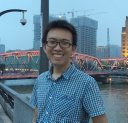
 Muhan Zhang
· 4 previous affiliations
- Peking UniversitySince 2021
- Assistant Professor · Since 2021
- Meta (United States)2019–2021
- Research Scientist · 2019–2021
- Washington University in St. Louis2015–2019
- PhD student · 2015–2019
- Shanghai Jiao Tong University2011–2015
- Undergrad student · 2011–2015
Research Overview
Muhan Zhang focuses on graph machine learning, the theoretical expressivity of neural networks, and the architecture of large language models. His early research established foundational methods for subgraph reasoning and link prediction on complex networks. More recently, his work addresses the reasoning capabilities, long-context understanding, and efficient fine-tuning of foundation models, alongside advancing geometric deep learning for 3D molecular structures.
Research Trajectory
Zhang’s early research established core methodologies for learning on graph-structured data, particularly by moving beyond predefined heuristics. In 2018, he introduced Link Prediction Based on Graph Neural Networks, which demonstrated how to learn link prediction heuristics directly from local subgraphs. This work became a foundational contribution to the broader area of Subgraph Reasoning for Inductive Link Prediction. Concurrently, he developed An End-to-End Deep Learning Architecture for Graph Classification, designing localized graph convolutions to extract features and sequentially read graphs of arbitrary structure. He subsequently extended these graph-based approaches to recommendation systems with Inductive Matrix Completion Based on Graph Neural Networks, enabling matrix completion without relying on side information by factorizing matrices into low-dimensional latent embeddings.
As graph neural networks (GNNs) grew in popularity, Zhang’s focus expanded to address their fundamental theoretical limitations, particularly concerning expressivity and scalability. A major bottleneck in standard GNNs is their reliance on the Weisfeiler-Lehman (1-WL) test, which limits their ability to represent non-tree graphs. To overcome this, he proposed Nested Graph Neural Networks, an architecture that represents graphs using rooted subgraphs rather than rooted subtrees. Around the same time, he investigated the structural constraints of multi-node representation learning. In Labeling Trick: A Theory of Using Graph Neural Networks for Multi-Node Representation Learning, he formalized the inability of standard GNNs to capture dependencies between nodes in a set, advancing the research direction of Relative Distance Labeling for Inductive Link Prediction.
Drawing on his experience working on large-scale graph learning systems as a research scientist at Facebook AI, Zhang sought to address the computational challenges of deploying deep GNNs on massive networks—a problem characterized by oversmoothing and neighborhood explosion. With collaborators, he developed Decoupling the Depth and Scope of Graph Neural Networks. By extracting a localized subgraph before applying a GNN of arbitrary depth, this work contributed significantly to the area of Decoupling Feature Propagation from Graph Neural Network Training. He also explored positional features, participating in the development of Equivariant and Stable Positional Encoding for More Powerful Graph Neural Networks to improve the stability and inductive generalization of GNNs.
By 2023, Zhang’s work increasingly emphasized higher-order graph structures and the theoretical trade-offs inherent in graph representation. He released PyTorch Geometric High Order: A Unified Library for High Order Graph Neural Network, providing specialized data structures that simplify the implementation of complex models in the area of Localized Higher Order Graph Neural Networks. This system-level contribution aligns with his broader interest in the direction of Standardized Benchmarking for Graph Machine Learning. He continued to probe theoretical boundaries in Rethinking the Power of Graph Canonization in Graph Representation Learning with Stability, which examined the tension between distinguishing different graphs and treating similar graphs consistently, a core problem in the research direction of The Stability-Expressivity Trade-off in Graph Representation Learning. Building on these insights, his group introduced An Efficient Subgraph GNN with Provable Substructure Counting Power, an architecture that achieves the theoretical expressiveness of subgraph GNNs while maintaining the speed of standard message-passing models.
In recent years, Zhang’s trajectory has broadened to encompass geometric deep learning and the architecture of large language models (LLMs). In the geometric domain, he provided a rigorous theoretical foundation for 3D point cloud models in On the Completeness of Invariant Geometric Deep Learning Models, proving that several popular architectures are E(3)-complete. He also advanced molecular modeling with GeoRecon: Graph-Level Representation Learning for 3D Molecules via Reconstruction-Based Pretraining, which shifts self-supervised pretraining from local denoising to global reconstruction, and VecMol: Vector-Field Representations for 3D Molecule Generation, which reimagines molecule generation by modeling continuous vector fields rather than discrete atoms.
Simultaneously, Zhang has investigated the scaling and reasoning capabilities of foundation models. In What Affects the Effective Depth of Large Language Models?, his team systematically analyzed how the utilization of computational layers varies with model scale and task difficulty. To improve LLM efficiency and context handling, he oversaw the development of SHINE: A Scalable In-Context Hypernetwork for Mapping Context to LoRA in a Single Pass, which embeds in-context knowledge directly into model parameters, and LIFT: A Novel Framework for Enhancing Long-Context Understanding of LLMs via Long Input Fine-Tuning, which shifts information from temporary context windows into permanent model weights. He has also explored the intersection of foundation models and structured data, introducing Relational In-Context Learning via Synthetic Pre-training with Structural Prior, a model trained entirely on synthetic data to perform in-context learning on relational databases.
Current Directions
The most recent papers in the evidence highlight a dual focus on the architecture of large language models and advanced geometric deep learning. In the domain of foundation models, recent work investigates the computational efficiency and context-handling limits of LLMs. This includes analyzing the "effective depth" of scaled models and developing novel frameworks—such as scalable hypernetworks and long-input fine-tuning—that efficiently map extensive context into model parameters without the quadratic costs of traditional attention mechanisms. Additionally, recent research explores the application of in-context learning to structured environments like relational databases using synthetic pre-training.
Parallel to his work on language models, Zhang continues to advance the representation and generation of 3D molecular structures. Recent geometric deep learning projects address the theoretical completeness of invariant models for 3D point clouds. This theoretical grounding is complemented by applied methods that utilize global reconstruction-based pretraining and continuous vector-field representations to improve the stability, scalability, and physical accuracy of 3D molecule generation.
Profile updated
Loading new papers…
Other researchers whose papers cluster into the same research directions — a proxy for overlapping technical interests and shared intellectual neighborhoods.
See something wrong? Report a mistake