

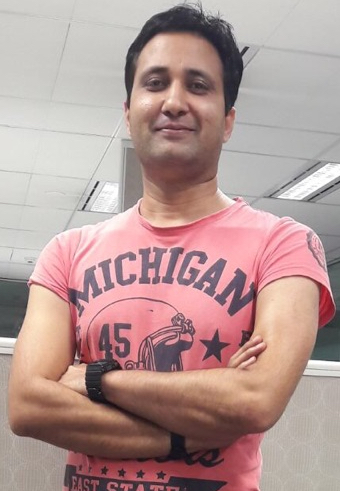
 Muhammad Ikram
· 3 previous affiliations
- Macquarie UniversitySince 2019
- Associate Professor · Since 2019
- Current
- University of Michigan2018–2019
- Postdoc · 2018–2019
- UNSW Sydney2014–2018
- PhD student · 2014–2018
Research Overview
Muhammad Ikram focuses on online fraud detection, the micro-economics of black-hat marketplaces, and behavioral anomaly detection in social networks. His trajectory initially centered on characterizing and detecting reputation manipulation services, such as stealthy social media like farms. His most recent collaborative work examines the technical mechanisms of malware evasion, specifically the use of cryptography in obfuscation.
Research Trajectory
Ikram’s early research focused heavily on the mechanics and detection of reputation manipulation on social media platforms. In 2015, he led a study on the evasion tactics used by fraudulent accounts. As the first author of Spying on Spammers: Tracking Like Farm Accounts on Facebook, he demonstrated how stealthy "like farms" successfully bypassed Facebook's graph co-clustering fraud detection algorithms. The research highlighted that these malicious actors evaded detection by spreading their activity over longer timespans and mimicking the behavior of regular users. This work contributed significantly to the research direction of Adversarial Mimicry in Behavioral Anomaly Detection and the broader area of Long Horizon Correlation for Stealthy Cyber Attack Detection, illustrating the limitations of traditional, burst-based anomaly detection when faced with low-and-slow adversarial strategies.
Parallel to his work on the technical detection of fraud, Ikram investigated the economic infrastructure that supports these activities. He was a key collaborator in analyzing the underground economy of reputation manipulation, serving as the second author on Characterizing Seller-Driven Black-Hat Marketplaces (2015). This research provided a detailed micro-economic analysis of SEOClerks.com, a popular platform for purchasing fake Facebook likes, fraudulent search engine optimization, and bogus reviews. By examining non-anonymized data, the study shed light on the dynamics of buyers and sellers, identifying the factors that made certain black-hat services successful. He continued to participate in this line of inquiry as a co-author on a subsequent 2017 paper, Characterizing key stakeholders in an online black-hat marketplace, which further detailed the operational realities of these illicit economies.
Returning to first-author leadership in the technical measurement of social network fraud, Ikram published Measuring, Characterizing, and Detecting Facebook Like Farms in 2017. In this work, he deployed a honeypot-based comparative measurement study to systematically analyze how Facebook pages artificially inflate their popularity. This research provided empirical grounding for understanding the underground market of services that operate alongside official targeted advertising platforms, offering new methodologies for identifying artificially promoted pages.
Current Directions
The most recent paper in the evidence is from 2022, indicating a broadening of Ikram's research scope from social network fraud toward core systems security and malicious software. Recent collaborative work investigates the intersection of cryptography and malware. Specifically, as a co-author of SoK: Use of Cryptography in Malware Obfuscation, he participated in systematizing knowledge around how cryptographic techniques are actively employed by malware authors to obscure their code and evade detection. This represents a shift from his earlier focus on behavioral mimicry and marketplace economics toward the structural and cryptographic analysis of malware evasion tactics.
Profile updated
Loading new papers…
Other researchers whose papers cluster into the same research directions — a proxy for overlapping technical interests and shared intellectual neighborhoods.
See something wrong? Report a mistake