

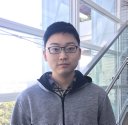
 Mucong Ding
· 3 previous affiliations
- Current
- PhD student · 2019–2024
- Bachelor of Science (BSc), Mathematics and Computer Science · 2015–2019
- Researcher · 2017–2018
Research Overview
Mucong Ding focuses on machine learning and representation learning, with a particular emphasis on the efficiency and alignment of large-scale models. His work spans several domains, including graph neural networks (GNNs), generative adversarial networks (GANs), and large language models (LLMs). His research trajectory reflects a transition from applied data science in educational contexts to foundational investigations into model optimization, dataset condensation, and reinforcement learning from human feedback.
Research Trajectory
The early phase of Ding’s research, beginning around 2017, was centered on learning analytics and the temporal modeling of student behavior in Massive Open Online Courses (MOOCs). During this period, he investigated how unsupervised representation learning and transductive transfer learning could improve predictive models for student performance. This work addressed the challenge of applying models trained on historical course data to ongoing courses where outcomes were not yet known, utilizing clickstream data to extract problem-agnostic features.
By 2020, Ding’s focus shifted toward more theoretical and structural aspects of deep learning. He began exploring the intersection of graphical models and generative modeling, specifically investigating Subadditivity of Probability Divergences in Graphical Models. This research sought to incorporate known independence structures—such as those found in Bayesian networks or Markov Random Fields—into the design of GANs. Concurrently, he participated in research regarding Simultaneous Optimization for Efficient Adversarial Training, contributing to methods that enhance model robustness through gradient-based perturbations.
In the subsequent years (2022–2024), Ding’s work increasingly addressed the computational bottlenecks associated with training on massive datasets. He developed techniques for dataset condensation and coreset selection, particularly for graph-structured data. This research aimed at Improving Generalization for Deep Graph Neural Networks by ensuring that condensed synthetic datasets or selected coresets could generalize across different model architectures and hyperparameters. His work in this area introduced spectral methods to overcome the limitations of traditional node-sampling approaches.
Most recently, Ding has focused on the alignment of large language models. His work in 2024 and 2025 addresses the limitations of offline alignment methods by proposing online, self-improving frameworks. This research treats the alignment problem as a bilevel optimization task, seeking to mitigate distribution shifts and improve the efficiency of reinforcement learning from human feedback (RLHF). Additionally, his recent collaborative work has touched upon Scaling Watermark Attribution for Global Generative AI and maintaining Detection Performance Under Strict False Positive Constraints, reflecting a growing interest in the forensic and safety aspects of generative systems.
Current Directions
Ding’s current research is primarily concentrated on three pillars: efficient model alignment, dataset distillation, and physics-informed learning. In the realm of LLMs, he is developing first-order optimization methods that allow models to iteratively refine their alignment with human preferences in an online manner. In the area of data efficiency, he continues to refine coreset selection methods, extending these techniques to neural operators for solving partial differential equations. This involves leveraging physics-informed losses to identify informative training samples without requiring expensive ground-truth labels. His work remains grounded in the pursuit of Global Consistency in Localized Probabilistic Modeling, seeking to bridge the gap between local data structures and global model performance.
Representative Work
Transfer Learning using Representation Learning in Massive Open Online Courses In this lead-author work, Ding addresses the performance gap in predictive models for MOOCs when transferring knowledge between different course offerings. The paper introduces an automated transductive transfer learning approach that utilizes the temporal organization of clickstream data. By focusing on representation learning, the method identifies predictive attributes common to both source and target courses, improving the reliability of interventions in ongoing educational environments.
GANs with Conditional Independence Graphs: On Subadditivity of Probability Divergences As the first author, Ding explores the integration of domain knowledge—specifically conditional independence structures—into Generative Adversarial Networks. The paper provides a theoretical foundation for model-based GANs by studying the subadditivity properties of probability divergences. This approach allows practitioners to leverage known graphical structures (like Markov Random Fields) to guide the learning of underlying data distributions, moving beyond purely model-free synthesis.
Calibrated Dataset Condensation for Faster Hyperparameter Search This work tackles the lack of theoretical guarantees in dataset condensation, where synthetic data often fails to generalize across different hyperparameters. Ding proposes a condensation objective specifically designed for hyperparameter optimization. By generating a synthetic validation set that preserves the performance rankings of various models, the method enables significantly faster hyperparameter searches without the severe overfitting typically observed in standard gradient-matching approaches.
Spectral Greedy Coresets for Graph Neural Networks In this paper, Ding introduces Spectral Greedy Graph Coresets (SGGC), a method for selecting representative subgraphs to train GNNs efficiently. Unlike traditional node-sampling methods that often ignore the interdependencies of graph structures, SGGC selects "ego-graphs" based on their spectral properties. This approach achieves state-of-the-art performance in reducing dataset size while maintaining the predictive power of the GNN, offering substantial speedups over complex graph condensation techniques.
SAIL: Self-improving Efficient Online Alignment of Large Language Models As the lead author, Ding addresses the limitations of static preference datasets in aligning LLMs. The paper formalizes online alignment as a bilevel optimization problem and reduces it to a computationally efficient single-level first-order method. By utilizing reward-policy equivalence, the proposed SAIL framework allows for iterative self-improvement and online refinement, mitigating the distribution shift issues common in offline RLHF.
FLAG: Adversarial Data Augmentation for Graph Neural Networks In this collaborative work, Ding participated in the development of Free Large-scale Adversarial Augmentation on Graphs (FLAG). The method focuses on augmenting node features rather than manipulating graph topology. By iteratively adding gradient-based adversarial perturbations during training, the approach makes GNNs invariant to small fluctuations in input data, thereby improving their generalization capabilities on large-scale benchmarks.
Profile updated
| Paper | Venue | Year |
|---|---|---|
| PICore: Physics-Informed Unsupervised Coreset Selection for Data Efficient Neural Operator TrainingGitHubAsatheesh6561/ | Neurips2025-ai4science | 2025 |
Loading new papers…
Other researchers whose papers cluster into the same research directions — a proxy for overlapping technical interests and shared intellectual neighborhoods.
See something wrong? Report a mistake