

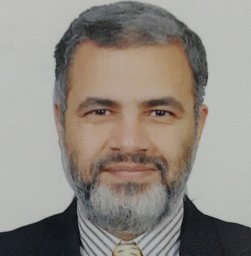
 Moustafa Youssef
· 6 previous affiliations
- American University in CairoSince 2018
- Professor · Since 2020
- Full Professor · Since 2018
- UNSW SydneySince 2021
- Adjunct Professor · Since 2021
- National Institute of InformaticsSince 2015
- Visiting Professor · Since 2015
- Google (United States)Since 2018
- Visiting Scholar · Since 2018
- Alexandria University1997–2022
- Professor · 2018–2022
- Full Professor · 2017–2022
- Associate Professor · 2013–2018
- Master’s Degree, Computer Engineering · 1997–1999
- University of Maryland, College Park2001–2004
- Doctor of Philosophy (Ph.D.), Computer Science · 2001–2004
Research Overview
Moustafa Youssef focuses on wireless localization, device-free passive sensing, and spatial data analysis using ambient radio signals. His trajectory spans foundational probabilistic models for indoor positioning to large-scale crowdsourced navigation and physical layer security. Most recently, his work explores the integration of deep learning, quantum algorithms, and low Earth orbit satellite networks for next-generation ubiquitous positioning systems.
Research Trajectory
Moustafa Youssef’s early research established foundational techniques for probabilistic wireless local area network (WLAN) localization. He introduced the Horus system, which addressed the high autocorrelation of signal strength samples from access points. By developing an autoregressive model to handle these correlated samples, he demonstrated significant improvements in location determination accuracy, detailed in Handling Samples Correlation in the Horus System (2004) and the subsequent system overview, The Horus WLAN location determination system (2005).
Following this work on active device localization, his focus expanded to tracking individuals who do not carry any transmitting devices. He outlined the foundational problems for this domain in Challenges: device-free passive localization for wireless environments (2007). This initiated a sustained effort in the research direction of Device-Free Passive Sensing with Ambient Radio Signals. His group later realized these concepts in Nuzzer: A Large-Scale Device-Free Passive Localization System for Wireless Environments (2013), a system that tracks human presence in real-world environments by analyzing variations in existing Wi-Fi signal strength. Concurrently, he contributed to the broader area of Autonomous Navigation for GPS Denied Environments. This included collaborative efforts to reduce the overhead of indoor mapping, such as No need to war-drive: unsupervised indoor localization (2012), and the development of CrowdInside: automatic construction of indoor floorplans (2012), which leveraged crowdsourced smartphone sensor data and novel anchor-point error correction to automatically generate detailed indoor maps.
Beyond localization, his research has addressed the area of Physical Layer Security for Line of Sight Wireless Networks. In Opportunistic Secrecy with a Strict Delay Constraint (2013), his group proposed a two-stage key-sharing approach to maintain non-zero delay-limited secrecy rates even when an eavesdropper possesses a strong channel. Returning to ambient signal analysis, he also collaborated on WiGest: A ubiquitous WiFi-based gesture recognition system (2015), which demonstrated that standard WiFi signals could be used to recognize in-air hand gestures for mobile device control without specialized hardware.
In recent years, his lab has increasingly integrated deep learning into localization pipelines to reduce infrastructure overhead and improve accuracy. He led the development of DeepLoc: A Ubiquitous Accurate and Low-Overhead Outdoor Cellular Localization System (2021), which achieves GPS-like accuracy by applying deep learning to ubiquitous cellular signals and crowd-sensed data. This work advanced the research direction of Scalable Indoor Localization Without Manual Site Surveys and the area of Efficient Continuous Sensing for Long Term Wearable Monitoring. His group has also explored novel sensing modalities, such as utilizing the spectral distribution of ambient light for high-accuracy indoor positioning in Spectral-Loc: Indoor Localization Using Light Spectral Information (2023).
The most recent phase of his trajectory demonstrates a significant expansion into emerging technologies and network architectures for spatial positioning. His group has investigated the application of quantum computing to spatial problems, proposing novel algorithms that offer exponential improvements in space and time complexity over classical methods. This includes A Quantum Fingerprinting Algorithm for Next Generation Cellular Positioning (2024) and An Efficient Quantum Binary-Neuron Algorithm for Accurate Multi-Story Floor Localization (2024). He has also articulated a broader architectural perspective in Vision: Leveraging Low Earth Orbit Satellites for Future Ubiquitous Positioning (2024) and explored the use of explainable AI to improve system reliability in Enhancing Trust in Localization Systems: An XAI Approach (2024).
Further integrating modern machine learning paradigms, his lab developed LocaLingua: Leveraging Language Models for Cross-Building WiFi Mapping (2024) and SimDeep: An Efficient Federated Learning Indoor Localization System with Similarity Aggregation Strategy (2024). In the domain of device-free tracking, he led the design of TimeSense: Multiperson Device-Free Indoor Localization via RTT (2024), which uses Wi-Fi Round-Trip Time measurements and deep learning to track multiple people simultaneously. His work continues to refine cellular-based sensing and crowdsourcing, recently introducing Robust and Ubiquitous Mobility Mode Estimation Using Limited Cellular Information (2025) to perform automatic feature extraction from serving cell towers, as well as methods for generating high-accuracy elevation data in Ubiquitous and Low-Cost Generation of Elevation Pseudo Ground Control Points (2024).
Current Directions
The most recent papers in the evidence indicate a focus on integrating next-generation computational paradigms and network infrastructures into ubiquitous positioning systems. A major current direction involves designing quantum algorithms for spatial tasks, such as cellular fingerprinting and multi-story floor localization, aiming to overcome the computational and storage bottlenecks of classical large-scale localization. Additionally, recent work investigates the use of large language models for cross-building WiFi mapping and federated learning strategies to enable efficient, privacy-preserving indoor localization. His group is also exploring the potential of Low Earth Orbit (LEO) satellite networks for future global positioning, alongside ongoing efforts to improve the robustness of mobility mode estimation and multi-person device-free tracking using standard wireless protocols like Wi-Fi RTT.
Profile updated
| Title | Venue | Year |
|---|---|---|
| Robust and Ubiquitous Mobility Mode Estimation Using Limited Cellular Information | IEEE Trans. Vehicular Technology | 2025 |
| LocaLingua: Leveraging Language Models for Cross-Building WiFi Mapping | Sigspatial/gis | 2024 |
| SEAGULL: Low-Cost Pervasive Sensing for Monitoring and Analysing Underwater Plastics | Iotdi | 2024 |
| Mobility Data Science: Perspectives and Challenges | ACM Trans. Spatial Algorithms Syst | 2024 |
| An Efficient Quantum Binary-Neuron Algorithm for Accurate Multi-Story Floor Localization | Ipin | 2024 |
| Enhancing Trust in Localization Systems: An XAI Approach | Sigspatial/gis | 2024 |
| TimeSense: Multiperson Device-Free Indoor Localization via RTT | IEEE Internet of Things Journal | 2024 |
| ModeSense: Ubiquitous and Accurate Transportation Mode Detection using Serving Cell Tower Information | Sigspatial/gis | 2024 |
| Poster: SmartScale: Your Pocket-Sized Weight Estimator Powered by Your Smartphone | Mobisys | 2024 |
| Vision: Leveraging Low Earth Orbit Satellites for Future Ubiquitous Positioning | Sigspatial/gis | 2024 |
Loading new papers…
Other researchers whose papers cluster into the same research directions — a proxy for overlapping technical interests and shared intellectual neighborhoods.
See something wrong? Report a mistake