

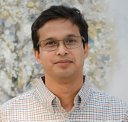
 Mostofa Patwary
· 3 previous affiliations
- Nvidia (United States)Since 2019
- Principal Researcher · Since 2019
- Baidu (China)2017–2019
- Researcher · 2017–2019
- Intel (Israel)2013–2017
- Researcher · 2013–2017
Research Overview
Mostofa Patwary focuses on natural language processing, large-scale deep learning, and high-performance computing. His trajectory spans from early distributed algorithms for extreme-scale scientific data to foundational architectures that enable the training of massive language models. Currently, his research investigates hybrid state-space architectures and reinforcement learning pretraining to optimize reasoning and inference efficiency in foundation models.
Research Trajectory
Patwary’s early research addressed extreme-scale data processing and distributed algorithms for high-performance computing environments. In BD-CATS: big data clustering at trillion particle scale (2015), he developed methods to scale clustering algorithms to massive datasets. He expanded on distributed architectures with PANDA: Extreme Scale Parallel K-Nearest Neighbor on Distributed Architectures (2016), introducing highly optimized, parallel kd-tree algorithms for computing k-nearest neighbors to overcome the sequential bottlenecks of traditional methods. This focus on scaling computational workloads extended to astrophysics in Galactos: computing the anisotropic 3-point correlation function for 2 billion galaxies (2017), where he and collaborators designed a parallel algorithm to analyze massive galaxy datasets. Around this time, his focus began shifting toward the empirical scaling properties of neural networks, participating in research that demonstrated how generalization error follows predictable power-law relationships with data size in Deep Learning Scaling is Predictable, Empirically (2017).
As a researcher and later Director of Large Foundational Language Models at NVIDIA, Patwary became centrally involved in the infrastructure and architecture required to train massive transformer models. He co-developed foundational techniques for intra-layer model parallelism in Megatron-LM: Training Multi-Billion Parameter Language Models Using Model Parallelism (2019), allowing models to scale beyond single-GPU memory constraints without requiring custom compilers. This work matured into comprehensive systems combining tensor, pipeline, and data parallelism. In Efficient large-scale language model training on GPU clusters using megatron-LM (2021), he contributed to scaling training to a trillion parameters, advancing the research direction of Communication Efficient Distributed Training of Large Models and addressing challenges in the area of Eliminating Pipeline Bubbles in Distributed Model Training. The culmination of these scaling efforts was demonstrated in Using DeepSpeed and Megatron to Train Megatron-Turing NLG 530B, A Large-Scale Generative Language Model (2022), which utilized a novel 3D parallelism strategy to train a 530-billion parameter model capable of strong zero- and few-shot performance.
Beyond raw parameter scaling, Patwary explored methods to improve model accuracy and efficiency. In Context Generation Improves Open Domain Question Answering (2023), he helped introduce a two-stage framework that leverages language models to generate relevant context prior to answering, matching open-book performance without external retrieval. To address the computational expense of large models, he participated in developing pipelines for the area of Compressing Large Foundation Models via Knowledge Distillation. This was detailed in Compact Language Models via Pruning and Knowledge Distillation (2024), which combined structured pruning and distillation to create smaller, highly accurate models using a fraction of the training tokens required to train from scratch.
In recent years, Patwary has led efforts to design architectures that maintain high reasoning capabilities while reducing inference costs, contributing to the broader area of Mitigating the Inference Latency of Chain of Thought. He introduced Nemotron-H: A Family of Accurate and Efficient Hybrid Mamba-Transformer Models (2025), which replaces the majority of attention layers with Mamba-2 layers to significantly reduce the KV cache overhead. He further advanced this hybrid approach in NVIDIA Nemotron Nano 2: An Accurate and Efficient Hybrid Mamba-Transformer Reasoning Model (2025), optimizing for high-throughput reasoning. Concurrently, he developed open-weights reasoning models with dynamic inference controls in Llama-Nemotron: Efficient Reasoning Models (2025).
His most recent work investigates how reasoning abilities are instilled during the pretraining phase. In Front-Loading Reasoning: The Synergy between Pretraining and Post-Training Data (2026), he and his collaborators demonstrated that injecting diverse reasoning data early in pretraining yields substantial performance gains on expert benchmarks. To support this, he contributed to the curation of massive, structured datasets, such as the one presented in Nemotron-CC-Math: A 133 Billion-Token-Scale High Quality Math Pretraining Dataset (2026). Furthermore, he has explored integrating reinforcement learning directly into the pretraining objective. In RLP: Reinforcement as a Pretraining Objective (2026), he participated in developing methods that reward models for generating internal thoughts to predict subsequent tokens, advancing the research directions of Scaling Language Model Reasoning Beyond Verifiable Rewards and General Purpose Reasoning from Specialized Reinforcement Learning.
Current Directions
The most recent papers in the evidence address the architectural and data-centric foundations of reasoning in large language models. A primary focus is the development of hybrid state-space and transformer architectures, such as Mamba-Transformer models, designed to reduce inference latency and KV cache overhead while preserving complex reasoning capabilities. Additionally, recent work investigates the pretraining phase as the critical locus for instilling reasoning skills. This includes "front-loading" diverse reasoning data before supervised fine-tuning, curating massive structured mathematical datasets, and integrating reinforcement learning directly into pretraining objectives to encourage independent thinking behaviors without relying on external verifiers.
Profile updated
Loading new papers…
Other researchers whose papers cluster into the same research directions — a proxy for overlapping technical interests and shared intellectual neighborhoods.
See something wrong? Report a mistake