

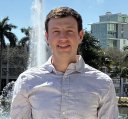
 Morris Alper
· 7 previous affiliations
- Carnegie Mellon UniversitySince 2025
- Research Analyst (Postdoctoral) · Since 2025
- Tel Aviv University2019–2025
- PhD student · 2023–2025
- MS student · 2019–2023
- Research Scientist Intern · 2024
- Israel Tech Challenge <itc2019–2023
- Data Science Lead and Lecturer · 2019–2023
- Pipl, inc.2019–2021
- NLP Data Scientist · 2019–2021
- Reverso - Softissimo2018–2019
- NLP Data Scientist · 2018–2019
- Undergrad student · 2012–2016
Research Overview
Morris Alper focuses on multimodal machine learning, computational linguistics, and the intersection of language and vision. His trajectory spans from probing the emergent linguistic properties of foundation models to developing creative applications for low-resource languages and 3D scene generation. Currently, he investigates how linguistic structures can serve as tools for interpreting and controlling visual and audio modalities.
Research Trajectory
Morris Alper’s early work addressed foundational challenges in natural language processing, particularly in bridging lexical gaps across languages. This is evident in his 2017 work, Auto-generating Bilingual Dictionaries: Results of the TIAD-2017 Shared Task Baseline Algorithm, which explored automated methods for cross-lingual lexicon generation.
By 2023, his focus expanded significantly into the intersection of vision and language, particularly probing how multimodal foundation models process and align different types of information. In Is BERT Blind? Exploring the Effect of Vision-and-Language Pretraining on Visual Language Understanding, he investigated whether models trained on both text and images acquire implicit visual reasoning capabilities that improve their performance on text-only tasks. This work contributed to the research direction of Preserving Linguistic Intelligence During Multimodal Instruction Tuning, introducing zero-shot probing methods to evaluate visual common sense in text encoders.
Continuing to explore the unexpected cognitive alignments in foundation models, he co-authored Kiki or Bouba? Sound Symbolism in Vision-and-Language Models. This research demonstrated that models like CLIP and Stable Diffusion exhibit human-like sound symbolism—associating specific phonetic patterns with visual shapes (such as sharpness or roundness)—despite lacking auditory input. This finding advanced the broader area of Phonetic Intuition and Sound Symbolism in Large Language Models and provided new insights into the domain of Semantic Axis Projection in Latent Spaces. Around the same time, he also explored how complex, heavy-tailed social situations could be modeled from still images. In Learning Human-Human Interactions in Images from Weak Textual Supervision, his team utilized knowledge distillation from large language models to generate synthetic captions, enabling the flexible learning of human interactions without relying on categorical labels.
In 2024, Alper’s research deepened its focus on the structural properties of multimodal latent spaces and the reliability of vision-language models. In Emergent Visual-Semantic Hierarchies in Image-Text Representations, he demonstrated that existing foundation models naturally encode hierarchical relationships between images and text. To optimize and probe this knowledge, he introduced the Radial Embedding framework, contributing to the area of Radial Specificity in Hyperbolic Embedding Spaces. Concurrently, he addressed the critical issue of data quality and model reliability in multimodal generation. He participated in the development of an unsupervised metric for evaluating dataset quality in ICC : Quantifying Image Caption Concreteness for Multimodal Dataset Curation, which measures information loss to isolate the most concrete text-image pairs. He also helped tackle the long-tailed nature of generation errors in Mitigating Open-Vocabulary Caption Hallucinations, proposing a reinforcement learning-based framework and a new benchmark to reduce spurious details in image captioning. Extending semantic understanding to 3D environments, he collaborated on HaLo-NeRF: Learning Geometry-Guided Semantics for Exploring Unconstrained Photo Collections, which leveraged vision-and-language models to provide a semantic interface for navigating large-scale, unconstrained 3D reconstructions of tourist landmarks.
Most recently, in 2025, Alper has driven forward creative and specialized applications of machine learning across both linguistics and spatial AI. Returning to his linguistic roots, he introduced ConlangCrafter: Constructing Languages with a Multi-Hop LLM Pipeline, a modular system that leverages the metalinguistic reasoning of LLMs to generate typologically diverse constructed languages. He also led the development of Phonikud: Hebrew Grapheme-to-Phoneme Conversion for Real-Time Text-to-Speech, an open-source system designed to resolve the orthographic ambiguities of Modern Hebrew by outputting fully-specified phonetic transcriptions. His work on historical linguistics includes ProtoSnap: Prototype Alignment For Cuneiform Signs, which aligns prototype skeletons to ancient sign scans to facilitate downstream optical character recognition.
In the visual and spatial domain, his 2025 work tackles the complexities of "in-the-wild" data. He developed WildCAT3D: Appearance-Aware Multi-View Diffusion in the Wild, a multi-view diffusion framework that decouples underlying 3D content from transient environmental appearances (like lighting or weather) to generate consistent novel views from unconstrained internet photos. Additionally, he contributed to WAFFLE: Multimodal Floorplan Understanding in the Wild, introducing a diverse dataset of nearly 20,000 floorplan images to advance the research direction of Global Generalization for Architectural and Spatial AI.
In 2026, Alper expanded into historical vision benchmarks and multilingual speech representations. Collaborating on Domain-Specific Self-Supervised Learning for Cuneiform Sign Representation, they evaluated CuneiMAE, demonstrating that pretraining masked autoencoders on unlabeled sign crops yields superior representations and transfer performance over generic vision backbones, especially under label scarcity. Investigating multilingual speech processing, Alper also senior-authored Phonological Interference in Multilingual Speech Models, which identified how models override local phonetic distinctions by imposing a single language's phonology during code-switching and introduced windowed language estimation to repair interference at inference time.
Current Directions
The most recent papers in the evidence indicate two primary, ongoing research themes. The first centers on computational linguistics and creative language generation, where recent work investigates how large language models can be structured to handle complex linguistic tasks. This includes building modular pipelines for end-to-end language construction, investigating phonological interference and inference-time steering in multilingual speech models, and developing specialized self-supervised representations for ancient cuneiform.
The second major theme addresses spatial AI and 3D scene understanding from unconstrained, real-world data. Recent projects focus on disentangling static 3D geometry from transient environmental factors in 2D image collections, enabling high-quality novel view synthesis and appearance control. This is complemented by efforts to build robust, multimodal datasets that capture the structural diversity of real-world architecture, pushing the boundaries of how models interpret complex spatial environments in the wild.
Profile updated
Loading new papers…
Other researchers whose papers cluster into the same research directions — a proxy for overlapping technical interests and shared intellectual neighborhoods.
See something wrong? Report a mistake