

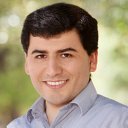
 Mohsen Bayati
· 5 previous affiliations
- Stanford UniversitySince 2011
- Full Professor · Since 2022
- Associate Professor · 2015–2022
- Assistant Professor · 2011–2015
- Ph.D., Electrical Engineering, · 2000–2003
- The Alan Turing InstituteSince 2025
- Distinguished Professor · Since 2025
- Amazon (United States)2019–2025
- Amazon Scholar · 2019–2025
- Prognos Health2017–2019
- Data Science Advisor · 2017–2019
- Microsoft (United States)2007–2012
- Research Consultant · 2009–2012
- Postdoctoral Researcher · 2007–2009
Research Overview
Mohsen Bayati focuses on the mathematics of learning and decision-making, graphical models, and artificial intelligence applications in healthcare. His trajectory spans foundational work in message-passing algorithms and high-dimensional inference to recent methodologies for causal inference under network interference. Currently, he investigates AI alignment and the use of large language models for clinical and social simulation.
Research Trajectory
Mohsen Bayati’s early research established foundational theoretical results in high-dimensional statistics and information theory, with a particular focus on the behavior of message-passing algorithms. This work began with investigations into the theoretical properties of these algorithms, such as The Dynamics of Message Passing on Dense Graphs, with Applications to Compressed Sensing. Building on this foundation, he contributed significantly to the research area of State Evolution for High Dimensional Inference with The LASSO Risk for Gaussian Matrices. This paper provided the first rigorous, explicit formula for the asymptotic mean squared error of the LASSO estimator when applied to Gaussian random matrices, offering a precise mathematical understanding of LASSO’s performance and enabling more accurate tuning of regularization parameters. He further advanced the broader area of Predictable Iterative Estimation via Onsager Correction in Universality in polytope phase transitions and message passing algorithms. By rigorously proving that Approximate Message Passing (AMP) algorithms exhibit universality—meaning their performance depends only on the first two moments of the random sensing matrix rather than its specific distribution—this work resolved a long-standing conjecture regarding phase transitions in high-dimensional geometry.
By 2022, his research expanded into continuous-time dynamic decision-making and reinforcement learning. In Thompson Sampling Efficiently Learns to Control Diffusion Processes, he addressed the challenge of data-driven control for diffusion processes governed by linear stochastic differential equations with uncertain drift matrices. This work demonstrated how Thompson sampling can effectively balance the exploration-exploitation tradeoff while ensuring system stability, contributing to the direction of Adaptive Control for Partially Observable Dynamical Systems.
Following this, a major theme emerged in his trajectory concerning the complexities of A/B testing and the area of Causal Inference under Network Interference. Traditional randomized experiments rely on the assumption that treating one unit does not affect others, an assumption frequently violated in modern networked environments like social platforms and marketplaces. To address this, he introduced Causal-MP in Causal Message Passing for Experiments with Unknown and General Network Interference. By adapting approximate message-passing techniques from statistical physics, this framework accurately estimates the Total Treatment Effect even when units interfere in complex, unknown ways. He expanded on these techniques in Higher-Order Causal Message Passing for Experimentation with Complex Interference, tackling severe violations of the stable unit treatment value assumption (SUTVA). Recognizing the difficulty of validating these models without observable ground-truth counterfactuals, he and his collaborators developed a distribution-preserving network bootstrap in Can We Validate Counterfactual Estimations in the Presence of General Network Interference?. Additionally, On Evolution-Based Models for Experimentation Under Interference provided a novel framework for estimating causal effects by observing how outcome distributions evolve over time, allowing researchers to implicitly sample hidden interference channels without needing to map the underlying network structure.
Parallel to his work in causal inference, Bayati has focused heavily on aligning machine learning models with domain-specific constraints and clinical intuition. In Aligning Model Properties via Conformal Risk Control, he provided a statistical framework that combines property testing with conformal risk control to post-process pre-trained tabular regression models, ensuring they adhere to mathematical properties like monotonicity or concavity without requiring expensive retraining. This theoretical alignment was applied directly to healthcare in On Aligning Prediction Models with Clinical Experiential Learning: A Prostate Cancer Case Study. By enforcing monotonicity constraints—ensuring that predicted survival does not nonsensically increase as risk factors rise—the work addressed model underspecification, resulting in models that are both accurate and logically sound to clinicians.
His recent work also explores the deployment of multi-agent Large Language Model (LLM) systems for complex tasks in both medicine and the social sciences. Contributing to the domain of Transforming Unstructured Clinical Text into Structured Data, he helped develop SNOW (Scalable Note-to-Outcome Workflow) in Agent-Based Feature Generation from Clinical Notes for Outcome Prediction. This multi-agent LLM system automates the extraction of complex clinical features from unstructured medical notes, matching human expert accuracy while drastically reducing clinician effort. In the social sciences, Simulating and Experimenting with Social Media Mobilization Using LLM Agents introduced LLM-SocioPol, an agent-based simulation framework grounded in real-world census data and network structures. This study demonstrated that AI agents can qualitatively mirror human responses to political mobilization, highlighting the power of social proof over simple information dissemination.
Most recently, his trajectory has addressed the critical challenges of AI safety and scalable oversight as systems become increasingly autonomous. In The Oversight Game: Learning to Cooperatively Balance an AI Agent's Safety and Autonomy, his work modeled the interaction between an AI agent and a human supervisor as a Markov Potential Game, creating a structure where the agent's drive for independence is inherently coupled to human welfare. This was complemented by Calibrating Conservatism for Scalable Oversight, which tackled the problem of how weaker supervisors can reliably constrain highly capable, agentic systems that operate over long horizons and exceed human capabilities in specific domains.
Current Directions
Recent work investigates the safety, alignment, and practical deployment of highly capable AI agents. A primary focus is scalable oversight—developing frameworks that allow human supervisors to reliably constrain autonomous systems as they begin to exceed human capabilities in specific environments. This includes game-theoretic approaches designed to balance an AI agent's drive for autonomy with strict, cooperative safety guarantees. Concurrently, ongoing research explores the use of multi-agent large language models to simulate complex social dynamics and automate intricate clinical workflows, such as extracting predictive features from unstructured medical records. Finally, the development of robust causal inference techniques remains a central theme, particularly for evaluating treatment effects and conducting A/B testing in environments characterized by complex, unobserved network interference.
Profile updated
Loading new papers…
Other researchers whose papers cluster into the same research directions — a proxy for overlapping technical interests and shared intellectual neighborhoods.
See something wrong? Report a mistake