

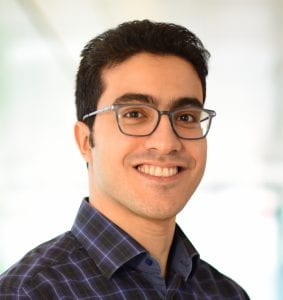
 Mohammad Mahdi Khalili
· 5 previous affiliations
- The Ohio State UniversitySince 2023
- Assistant Professor · Since 2023
- Current
- Yahoo (United States)2022–2024
- Research Scientist · 2022–2024
- University of Delaware2020–2022
- Assistant Professor · 2020–2022
- Postdoc · 2020
- University of Michigan2015–2019
- PhD student · 2015–2019
Research Overview
Mohammad Mahdi Khalili focuses on theoretical and applied machine learning, with an emphasis on algorithmic fairness, differential privacy, and model interpretability. His trajectory spans from early work on network incentive design to foundational contributions in trustworthy machine learning. Currently, he investigates mechanistic interpretability and efficient model compression for large-scale language models.
Research Trajectory
Khalili’s early research examined incentive structures and security in networked systems. He modeled operator-user interactions for mobile Wi-Fi hotspots in Incentive design and market evolution of mobile user-provided networks, formulating the data usage pricing and quota mechanisms as a two-stage game. He subsequently analyzed the impact of security externalities on contract design in Designing Cyber Insurance Policies: The Role of Pre-Screening and Security Interdependence. Moving toward machine learning and privacy, he collaborated on Improving the Privacy and Accuracy of ADMM-Based Distributed Algorithms, which investigated how to manage noise and local computations in distributed optimization frameworks.
By 2019, his focus shifted toward the intersection of algorithmic fairness, privacy, and sequential decision-making. In Group Retention when Using Machine Learning in Sequential Decision Making: the Interplay between User Dynamics and Fairness, he explored how representation disparity worsens over time when models are less favorable to minority groups, contributing to the research area of Feedback Loops and Group Attrition in Machine Learning and the broader direction of Optimization Under Performative Distribution Shifts. He then addressed the tension between protecting sensitive data and ensuring equitable outcomes in Improving Fairness and Privacy in Selection Problems, advancing the areas of Mitigating Algorithmic Bias Under Strict Privacy Constraints and Differentially Private Selection with the Exponential Mechanism. Continuing this trajectory, he tackled the non-convex optimization challenges associated with equalized loss constraints in Non-convex Optimization for Learning a Fair Predictor under Equalized Loss Fairness Constraint.
As a principal investigator and an assistant professor at The Ohio State University, Khalili expanded his work on trustworthy AI to encompass synthetic data, quantization, and counterfactual reasoning. His research group developed methods to remove historical biases prior to model training in Imposing Fairness Constraints in Synthetic Data Generation. In the domain of data privacy, his lab introduced unbiased discrete output mechanisms in Privacy-Aware Randomized Quantization via Linear Programming. Addressing the downstream effects of machine learning on strategic individuals, he formalized new fairness criteria in Lookahead Counterfactual Fairness, which accounts for how humans adapt their behaviors in response to algorithmic decisions. Concurrently, his lab investigated model efficiency and robustness, proposing techniques to reduce inference costs in An Efficient Training Algorithm for Models with Block-wise Sparsity and analyzing how toxic fine-tuning alters internal model behaviors in Neuroplasticity and Corruption in Model Mechanisms: A case study of Indirect Object Identification.
Most recently, Khalili’s work has bridged performative prediction, post-processing fairness, and mechanistic interpretability for large language models. He developed an explainable singular value decomposition approach to satisfy statistical parity in Post-processing for Fair Regression via Explainable SVD. Returning to environments where model deployment shifts data distributions, he participated in designing a variance-reduced algorithm for non-convex settings in SPRINT: Stochastic Performative Prediction With Variance Reduction. In the realm of model compression and interpretability, he demonstrated that sparse autoencoders can transfer effectively to pruned models in On the transferability of Sparse Autoencoders for interpreting compressed models. This line of inquiry culminated in AbsTopK: Rethinking Sparse Autoencoders For Bidirectional Features, which introduced a novel autoencoder variant capable of capturing both positive and negative activations, significantly advancing the research direction of Bidirectional Feature Representation in Latent Spaces.
Current Directions
The most recent papers in the evidence indicate a strong focus on the mechanistic interpretability and efficient compression of large language models. Recent work investigates how internal model mechanisms adapt or degrade during fine-tuning and pruning, and explores the design of sparse autoencoders that can capture bidirectional semantic features without redundant fragmentation. Additionally, ongoing research addresses the stability and fairness of machine learning systems in dynamic, performative environments where the deployment of a model actively shifts the underlying data distribution.
Profile updated
Loading new papers…
Other researchers whose papers cluster into the same research directions — a proxy for overlapping technical interests and shared intellectual neighborhoods.
See something wrong? Report a mistake