

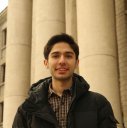
 Mohammad Amin Shabani
· 5 previous affiliations
- Borealis AISince 2024
- Researcher · Since 2024
- Intern · 2022
- Simon Fraser University2019–2025
- Graduate Research Assistant · 2019–2025
- Research Intern · 2023
- Seoul National University2017–2019
- Graduate Research Assistant · 2017–2019
- Sharif University of Technology2012–2017
- Undergrad student · 2012–2017
Research Overview
Mohammad Amin Shabani focuses on generative models, computer vision, and large language models, with specific applications in spatial reasoning and time series forecasting. His trajectory spans early work in graph theory and multi-task learning to recent advancements in diffusion models for architectural layout generation. Currently, his research addresses retrieval-augmented generation and agentic workflows for complex tabular and document reasoning.
Research Trajectory
Shabani’s early research encompassed both computer vision and theoretical computer science. In 2017, he contributed to techniques for audio recovery from visual data in Local Visual Microphones: Improved Sound Extraction from Silent Video. Following this, he directed research in graph theory, establishing new bounds for uniquely k-list colorable graphs embedded on surfaces and providing novel results for planar and regular graphs in On Uniquely k-List Colorable Planar Graphs, Graphs on Surfaces, and Regular Graphs.
Transitioning toward machine learning optimization and robust feature learning, Shabani participated in developing facial analysis models designed to operate when perfectly labeled data is scarce. This framework, detailed in Distill-2MD-MTL: Data Distillation based on Multi-Dataset Multi-Domain Multi-Task Frame Work to Solve Face Related Tasks, contributed to several methodological areas, including the research direction of Progressive Multi Stage Knowledge Distillation and the broader area of Multi-Task Learning under Incomplete Supervision. The work also explored techniques relevant to the area of Adaptive Step Size Selection in Neural Optimization.
A significant portion of his subsequent trajectory addresses 3D reconstruction and spatial layout generation. He introduced an algorithm for residential indoor panoramas lacking visual overlaps in Extreme Structure from Motion for Indoor Panoramas without Visual Overlaps. Because traditional structure-from-motion algorithms struggle when only a single panorama is present in a room, this work utilized top-down semantic space to evaluate the realism of room, door, and window arrangements, returning camera poses based on the most realistic configurations.
This spatial reasoning work naturally evolved into leveraging generative models for complex structural tasks. With collaborators, he explored the area of Efficient Training Strategies for Generative Diffusion Models in JigsawPlan: Room Layout Jigsaw Puzzle Extreme Structure from Motion using Diffusion Models, treating room layout assembly as a jigsaw puzzle. This concept was further generalized in Puzzlefusion: Unleashing the Power of Diffusion Models for Spatial Puzzle Solving, which framed spatial puzzle solving—from jigsaw puzzles to floorplan assembly—as a conditional generation task. By using diffusion models to denoise randomly placed pieces into aligned arrangements, the system offered an alternative to traditional optimization-based methods.
He expanded on these generative approaches for architectural design in HouseDiffusion: Vector Floorplan Generation via a Diffusion Model with Discrete and Continuous Denoising. By combining continuous denoising for coordinate regression with discrete denoising to enforce geometric constraints, this transformer-based diffusion model generates vector floorplans directly from bubble diagrams, advancing the research direction of Relaxing the Manhattan World Assumption.
Parallel to his vision and spatial work, Shabani has investigated sequence modeling and forecasting. He developed a general multi-scale framework for state-of-the-art transformer architectures in Scaleformer: Iterative Multi-scale Refining Transformers for Time Series Forecasting. By iteratively refining forecasted time series at multiple scales with shared weights and a specialized normalization scheme, the method improved performance in time series forecasting with minimal additional computational overhead.
Most recently, his focus has shifted toward large language models, retrieval systems, and agentic workflows. He introduced an agentic workflow in FACTS: Table Summarization via Offline Template Generation with Agentic Workflows, which addresses query-focused table summarization through offline template generation, contributing to the area of Scaling Tabular Reasoning for Large Language Models. He also collaborated on Embedding-Based Context-Aware Reranker, a lightweight framework operating directly on dense embeddings to improve cross-passage inference and document ranking in retrieval-augmented generation systems.
Current Directions
Recent work investigates large language models applied to complex reasoning tasks, specifically in retrieval-augmented generation (RAG) and tabular data summarization. The most recent papers in the evidence address the challenges of cross-passage inference—such as resolving coreferences, disambiguating entities, and aggregating scattered evidence—by operating directly on dense embeddings rather than raw text to improve both accuracy and efficiency. Additionally, his current research explores agentic workflows designed to generate natural language summaries of tabular data, emphasizing privacy-compliant and scalable offline template generation over costly fine-tuning or prompt-heavy methods.
Profile updated
| Paper | Venue | Year |
|---|---|---|
| Embedding-Based Context-Aware RerankerGitHubBorealisAI/ | ICLR | 2026 |
Loading new papers…
Other researchers whose papers cluster into the same research directions — a proxy for overlapping technical interests and shared intellectual neighborhoods.
See something wrong? Report a mistake