

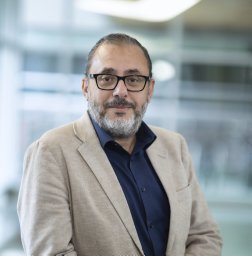
 Mohamed S. Shehata
· 4 previous affiliations
- University of British ColumbiaSince 2019
- Professor of Computer Science · Since 2024
- Associate Professor of Computer Science · 2019–2024
- Memorial University of Newfoundland2013–2019
- Associate Professor · 2019
- Assistant Professor of Computer Engineering · 2013–2019
- Intelliview Technologies Inc.2007–2012
- Vice President Research and Development · 2007–2012
- University of Calgary2001–2006
- Post Doctor Fellow · 2005–2006
- PhD student · 2001–2005
Research Overview
Mohamed S. Shehata focuses on computer vision, image processing, and pattern recognition, particularly in the context of illumination-invariant face recognition and visual object tracking. Early work concentrated on discrete cosine transform techniques to mitigate lighting variations in facial imagery, alongside comprehensive reviews of automatic license plate recognition systems. More recently, this trajectory has expanded to include participation in large-scale visual object tracking benchmarking initiatives.
Research Trajectory
Mohamed S. Shehata’s research trajectory is grounded in applied computer vision, with a particular early emphasis on overcoming environmental artifacts in image recognition tasks. In 2012, Shehata co-authored A novel algorithm for illumination invariant DCT-based face recognition, which addressed the significant degradation of face recognition performance caused by varying lighting conditions. This work introduced a pre-processing approach that converted face images into the logarithm domain and modified discrete cosine transform (DCT) coefficients to strip away illumination variations, achieving high recognition rates on standard benchmarking databases.
The following year, this methodology was refined in Eliminating illumination effects by discrete cosine transform (DCT) coefficients' attenuation and accentuation. As a second author, Shehata contributed to a technique that specifically targeted the frequency bands most affected by lighting. By attenuating low-frequency DCT coefficients—where illumination variations are typically concentrated—and accentuating high-frequency coefficients to preserve critical facial features, the approach further stabilized recognition under poor lighting conditions.
During this same period, Shehata also contributed to broader surveys of applied computer vision systems. As a co-author of Automatic License Plate Recognition (ALPR): A State-of-the-Art Review (2013), Shehata participated in synthesizing the literature on vehicle identification technologies. The review detailed the extraction of license plate information across diverse environmental conditions and analyzed the hardware and algorithmic dependencies required for successful real-time deployment in traffic surveillance and electronic payment systems.
Following these foundational works in image processing and recognition, the available evidence indicates a shift toward broader community-driven computer vision evaluations. In 2021, Shehata participated as a contributing author to The Ninth Visual Object Tracking VOT2021 Challenge Results. This large-scale collaborative paper documented the benchmarking of 71 state-of-the-art trackers across multiple domains, including short-term RGB tracking, real-time tracking, and long-term tracking involving target disappearance and reappearance.
Current Directions
Based on the most recent paper in the evidence from 2021, Shehata’s recent activity involves visual object tracking and algorithmic benchmarking. Participation in the VOT2021 challenge suggests an interest in the comparative evaluation of tracking algorithms under complex, real-world constraints. This includes assessing how state-of-the-art computer vision models handle target occlusion, real-time processing requirements, and multi-modal data streams such as combined RGB and depth information.
Profile updated
| Title | Venue | Year |
|---|---|---|
| The Ninth Visual Object Tracking VOT2021 Challenge Results | Iccvw | 2021 |
| Automatic License Plate Recognition (ALPR): A State-of-the-Art Review | IEEE TCSVT | 2013 |
| Eliminating illumination effects by discrete cosine transform (DCT) coefficients' attenuation and accentuation | Image Processing: Machine Vision Applications | 2013 |
| A novel algorithm for illumination invariant DCT-based face recognition | Ccece | 2012 |
Loading new papers…
Loading research neighbors…
See something wrong? Report a mistake