

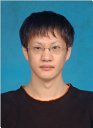
 Mo Yu
· 2 previous affiliations
- Tencent (China)Since 2022
- Principal Researcher · Since 2022
- Research Staff Member · 2016–2022
Research Overview
Mo Yu focuses on natural language processing, representation learning, and the reasoning capabilities of large language models. His early work explored lexical semantics and open-domain question answering, gradually shifting toward robust evaluation and model interpretability. Currently, he investigates long-context retrieval-augmented generation and the fundamental limits of machine reasoning, including fluid intelligence and planning horizons.
Research Trajectory
Early work involved natural language processing pipelines, including participation in research on Target-dependent Twitter Sentiment Classification. This project sought to assign sentiments to specific queries rather than entire documents, addressing the limitations of target-independent strategies that often assigned irrelevant sentiments. He subsequently focused on representation learning, introducing methods for Improving Lexical Embeddings with Semantic Knowledge. By combining neural language model objectives with prior knowledge from semantic resources, this work improved performance on language modeling and human judgment predictions, contributing to the broader area of Why Neural Networks Misrepresent Low Frequency Words. Continuing in the domain of text representations, he collaborated on A STRUCTURED SELF-ATTENTIVE SENTENCE EMBEDDING, which proposed using a 2D matrix and multi-head self-attention to capture sentence semantics. By utilizing a specialized penalization term to ensure different attention heads focused on distinct parts of a sentence, this research provided clear interpretability and addressed challenges in the research direction of Overcoming the Information Bottleneck in Text Embeddings.
As the field shifted toward more complex reasoning tasks, his focus expanded to open-domain question answering and model interpretability. He developed R3: Reinforced Ranker-Reader for Open-Domain Question Answering, a reinforcement learning framework that jointly trains a ranker to select passages and a reader to extract answers. This approach allowed systems to navigate noisy search results and identify semantically relevant contexts that traditional keyword searches missed. Later, he explored causal explanations in neural networks through Invariant Rationalization, formulating a game-theoretic approach to identify features that remain predictive across different data environments, thereby filtering out spurious correlations like punctuation in favor of robust rationales.
With the rise of large language models (LLMs), his trajectory incorporated prompt engineering and the evaluation of complex social and commonsense reasoning. He designed a unified framework for event detection in The Art of Prompting: Event Detection based on Type Specific Prompts, leveraging comprehensive prompts—combining event names, definitions, and seed triggers—to bridge supervised and zero-shot learning. He also participated in the creation of JECC: Commonsense Reasoning Tasks Derived from Interactive Fictions, a benchmark testing functional commonsense reasoning in text-based games that revealed significant gaps between human experts and state-of-the-art models. Expanding on AI social reasoning, he introduced Few-Shot Character Understanding in Movies as an Assessment to Meta-Learning of Theory-of-Mind. This work utilized a novel dataset of movie scripts to evaluate whether models can rapidly grasp fictional characters' motivations from limited context, highlighting ongoing deficits in machine Theory-of-Mind.
In recent years, his research has heavily emphasized the fundamental limitations and architectural capabilities of LLMs, particularly concerning long-context understanding and fluid intelligence. He led the development of Mindscape-Aware Retrieval Augmented Generation for Improved Long Context Understanding, a framework that uses hierarchical summarization to maintain a global view of long documents, allowing smaller models to outperform much larger baselines. Complementing this, he contributed to the area of Shifting from Static Benchmarks to Dynamic Evaluation by helping design PRELUDE: A Benchmark Designed to Require Global Comprehension and Reasoning over Long Contexts, which tests models on narrative consistency between hypothetical prequels and canonical book plots. He further investigated the gap between memorization and true comprehension in The Stochastic Parrot on LLM's Shoulder: A Summative Assessment of Physical Concept Understanding, demonstrating that models often fail to grasp concepts when presented in abstract, grid-based formats. This theme continued in Understanding LLMs' Fluid Intelligence Deficiency: An Analysis of the ARC Task, which identified key bottlenecks preventing autoregressive models from solving novel problems, such as struggles with skill composition and abstract matrix inputs.
Most recently, his work has probed the internal mechanics of Chain-of-Thought (CoT) reasoning and advanced retrieval-augmented generation. He investigated the latent planning horizons of LLMs in How Far Ahead Do LLMs Plan? Uncovering the Latent Horizon in Chain-of-Thought Reasoning, revealing that models often exhibit a myopic focus rather than long-term global planning, an insight used to improve uncertainty estimation. He also collaborated on Many-Shot CoT-ICL: Making In-Context Learning Truly Learn, which improved reasoning performance by introducing Curvilinear Demonstration Selection to carefully order examples for a smooth conceptual progression. Finally, he directed research on HGMem: Hypergraph-based Working Memory to Improve Multi-step RAG for Long-Context Complex Relational Modeling, introducing a dynamic working memory system that builds high-order correlations between facts to enhance complex relational reasoning over extensive texts.
Current Directions
Recent work investigates the fundamental reasoning limits of large language models and architectures for processing massive, complex contexts. A major focus is diagnosing deficiencies in fluid intelligence and physical concept understanding, exploring how autoregressive models often rely on memorization rather than genuine abstraction or long-term planning. To overcome these limitations, current research explores advanced retrieval-augmented generation (RAG) systems. By developing dynamic, hypergraph-based working memory and hierarchical summarization techniques, these approaches aim to equip models with a global "mindscape," enabling robust multi-step reasoning and complex relational modeling over extensive documents.
Profile updated
Loading new papers…
Other researchers whose papers cluster into the same research directions — a proxy for overlapping technical interests and shared intellectual neighborhoods.
See something wrong? Report a mistake