

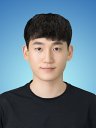
 Minsoo Kang
· 5 previous affiliations
- SKTelecomSince 2025
- Research Engineer · Since 2025
- SK Telecom (South Korea)Current
- Current
- Seoul National University2018–2024
- PhD student · 2018–2024
- Staff Engineer · 2024
- Undergrad student · 2011–2018
Research Overview
Minsoo Kang focuses on generative modeling, knowledge distillation, and continual learning within computer vision. His early work addressed model compression and incremental learning to bridge the capacity gap between large neural networks and resource-constrained environments. Recently, his research has shifted toward training-free, high-fidelity image editing and translation using diffusion models.
Research Trajectory
Kang’s early research concentrated on optimizing deep neural networks for efficiency and deployment in resource-constrained settings. In 2020, he introduced Towards Oracle Knowledge Distillation with Neural Architecture Search, a framework designed to maximize the transfer of knowledge from ensemble teacher networks to student models. By employing neural architecture search to augment useful structures and introducing an oracle knowledge distillation loss, this work addressed the inherent capacity gap between teachers and students. This contributed to the research direction of Bridging the Capacity Gap with Progressive Distillation and the broader area of Training Efficient Models Without Large Teacher Supervision. Concurrently, he advanced methods for network compression in Operation-Aware Soft Channel Pruning using Differentiable Masks, proposing a data-driven algorithm that exploits operation characteristics to compress networks differentiably, aligning with work in the area of End-to-End Sparsification during Training.
Expanding into continual learning, Kang investigated how models can acquire new information sequentially without catastrophic forgetting. With collaborators, he participated in developing Class-Incremental Learning for Action Recognition in Videos, which utilized time-channel importance maps for selective knowledge distillation and enforced frame-wise feature orthogonality to preserve spatio-temporal features across tasks. This contributed to the research direction of Temporal Decorrelation for Spiking and Video Neural Networks. Building on these principles, he subsequently developed Class-Incremental Learning by Knowledge Distillation with Adaptive Feature Consolidation. This method provided a principled approach to maintaining the representations of older models by estimating the relationship between representation changes and resulting loss increases, thereby minimizing the upper bound of loss during model updates. This work advanced the area of Balancing Stability and Plasticity for Incremental Learning.
Bridging his expertise in distillation and generative modeling, Kang introduced Information-Theoretic GAN Compression with Variational Energy-based Model. Because direct computation of mutual information in continuous domains is intractable, this approach maximized the variational lower bound of mutual information between teacher and student networks using an energy-based model, enabling the compression of generative adversarial networks for high-dimensional images. Following this, his focus shifted toward text-to-image generation. In Variational Distribution Learning for Unsupervised Text-to-Image Generation, he proposed an algorithm that optimizes generation models by maximizing data log-likelihood conditioned on image-text CLIP embeddings. This allowed for effective generation and alignment in a joint space even when explicit text captions are unavailable during training.
Most recently, Kang’s trajectory has centered on training-free, high-fidelity image editing using diffusion models. He collaborated on Conditional Score Guidance for Text-Driven Image-to-Image Translation, introducing a conditional score function that allows users to swap objects or styles while preserving the original image's structure and background. He further refined text-driven editing in Diffusion-Based Image-to-Image Translation by Noise Correction via Prompt Interpolation, developing a noise correction method that interpolates between source and target prompts to improve background preservation and inference speed. This work directly advanced the research direction of High Fidelity Latent Space Inversion for Image Editing. Continuing this arc, he proposed Diffusion-Based Conditional Image Editing Through Optimized Inference with Guidance, which incorporates a representation guidance mechanism based on triplet loss during the denoising process to achieve precise image translations without the need for expensive fine-tuning.
Current Directions
The most recent papers in the evidence indicate a sustained focus on optimizing inference processes for diffusion models, particularly for conditional image editing and translation. Current work investigates training-free methodologies that allow for precise, text-driven manipulation of images—such as object swapping or style transfer—while strictly maintaining the structural integrity and background consistency of the original source. By designing novel guidance mechanisms, noise correction techniques, and prompt interpolation strategies during the denoising phase, this research aims to achieve high-fidelity generative editing without the computational overhead of model fine-tuning.
Profile updated
| Paper | Venue | Year |
|---|---|---|
| Conditional Score Guidance for Text-Driven Image-to-Image TranslationGitHubHleephilip/ | NeurIPS | 2023 |
Loading new papers…
Other researchers whose papers cluster into the same research directions — a proxy for overlapping technical interests and shared intellectual neighborhoods.
See something wrong? Report a mistake