

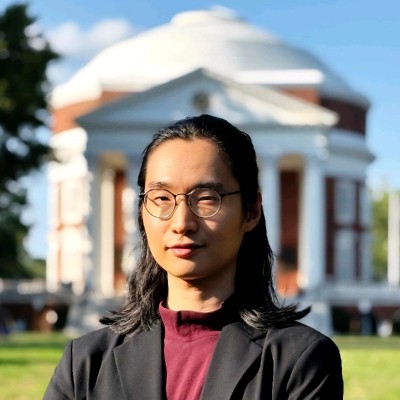
 Minjae Kwon
· 3 previous affiliations
- University of VirginiaSince 2022
- PhD student · 2022–2027
- Current
- University of Toronto2021–2022
- Visiting Scholar · 2021–2022
- Kyungpook National University2017–2022
- PhD, Mathematics (Abstract Algebra, Ring Theory) · 2017–2022
Research Overview
Minjae Kwon focuses on safe reinforcement learning, time series analysis, and reward design for complex environments. His trajectory spans from developing recursive data augmentation techniques for dynamical systems to designing robust, constraint-aware reinforcement learning algorithms. His most recent work investigates safety generalization under distribution shift and safe in-context learning for critical applications like healthcare.
Research Trajectory
Kwon’s early research addressed challenges in time series analysis, specifically focusing on the problem of overfitting when training models on limited realizations of underlying dynamical systems. With collaborators, he contributed to Recursive Time Series Data Augmentation (2023), which introduced a general recursive framework known as the Recursive Interpolation Method (RIM). This work generated new augmented time series using recursive interpolation functions to improve model generalization. The methodology advanced the research direction of Preserving Semantic Integrity in Time Series Data Augmentation and intersected with broader efforts in the area of Training Neural Networks on Convex Combinations of Data as well as the area of Phase Space Reconstruction from Time Series Data.
Transitioning toward decision-making and control, Kwon began investigating how to effectively specify complex tasks for autonomous agents. In Adaptive Reward Design for Reinforcement Learning (2025), he addressed the limitations of sparse reward structures often derived from formal languages like Linear Temporal Logic (LTL). Because providing feedback solely upon task completion fails to encourage progress on intermediate goals—especially in environments with inherent uncertainty—he proposed a suite of adaptive reward functions designed to incentivize reliable subtask completion.
By 2026, his focus expanded significantly into safe reinforcement learning, emphasizing the deployment of constraint-aware agents in high-stakes or out-of-distribution scenarios. He introduced Safety Generalization Under Distribution Shift in Safe Reinforcement Learning: A Diabetes Testbed (2026), which identified a critical "safety generalization gap" where algorithms that satisfy constraints during training fail on unseen patients. To bridge this gap, he developed GlucoSim, a unified diabetes simulator, alongside a personalized dynamics model that powers a test-time predictive shield to filter dangerous actions before they occur. This contribution advanced the research direction of Predictive Monitoring for Proactive Safety and the broader area of Decoupled Safety Layers for Modular Reinforcement Learning, while also offering insights relevant to the area of Sensor Noise Robustness for Sim-to-Real Transfer.
Concurrently, Kwon collaborated on Safe In-Context Reinforcement Learning (2026), which introduced a method called SCARED. This approach allows agents to adapt to new tasks without parameter updates while strictly adhering to user-defined safety budgets, facilitating the deployment of in-context reinforcement learning in real-world environments where safety is paramount.
Current Directions
The most recent papers in the evidence indicate a strong ongoing focus on safe reinforcement learning and robust generalization. Current work investigates how RL agents can maintain strict safety constraints when facing distribution shifts or when adapting to new tasks without parameter updates. This involves developing predictive shielding mechanisms, personalized dynamics models, and safe in-context learning frameworks. By utilizing testbeds in critical domains like healthcare, this research aims to ensure that autonomous decision-making systems remain reliable and safe when deployed in complex, real-world environments.
Profile updated
Loading new papers…
Other researchers whose papers cluster into the same research directions — a proxy for overlapping technical interests and shared intellectual neighborhoods.
See something wrong? Report a mistake