

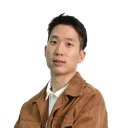
 Minho Choi
· 5 previous affiliations
- University of WashingtonSince 2022
- Postdoc · Since 2022
- Postdoctoral Researcher · 2022–2025
- Assistant Professor · Since 2025
- Visiting Researcher · 2024
- Postdoctoral Research Scientist · 2016–2022
- Postdoc · 2022
- Bachelor's degree in Physics · 2011–2016
- Centre de Nanosciences et de Nanotechnologies2017
- Visiting Researcher · 2017
Research Overview
Minho Choi focuses on nanophotonics, meta-optics, and optical computing. His research spans the development of angle-insensitive metasurfaces using photonic flatbands to the integration of phase-change materials for reconfigurable photonic circuits. Recently, his work emphasizes hybrid optical-digital neural networks and all-dielectric metasurfaces for advanced imaging and edge computing applications.
Research Trajectory
The evolution of Minho Choi’s research begins with foundational work in scalable silicon photonics and reconfigurable optical materials. In 2023, he contributed to the development of deterministic control mechanisms for phase-change materials (PCMs). Specifically, his work on Deterministic quasi-continuous tuning of phase-change material integrated on a high-volume 300-mm silicon photonics platform demonstrated how to integrate low-loss PCMs into standard manufacturing processes. By utilizing a digital multi-segment heater design, this research achieved multilevel optical tuning with zero static power consumption, effectively overcoming the unpredictability typically associated with analog PCM control. This advanced the area of Multi-level Control of Integrated Phase-Change Photonics and contributed to the broader field of Robust Inverse Design for Nanophotonic Manufacturing.
Moving into 2024, Choi’s focus expanded to include meta-optics and quantum nonlinear optics. He explored the use of flat-band structures to enhance light-matter interactions, leading to the development detailed in Nonlocal, Flat-Band Meta-Optics for Monolithic, High-Efficiency, Compact Photodetectors. This research introduced a photodetector design that significantly boosts light absorption efficiency across a wide range of incident angles, facilitating more compact and efficient components for autonomous systems and augmented reality. Concurrently, he investigated the theoretical and practical hurdles of quantum photonics, co-authoring Opportunities and Challenges of Solid-State Quantum Nonlinear Optics. This comprehensive review examined efforts to force single-particle photon interactions on solid-state chips by coupling trapped light in nanoscopic cavities to materials like quantum dots. The review touched upon several complex challenges, including the research direction of Achieving Indistinguishability in Inhomogeneous Solid-State Quantum Emitters.
In 2025, Choi’s trajectory shifted toward the intersection of optics and artificial intelligence, alongside continued advancements in metasurface engineering. He introduced novel architectures for optical computing, notably in Transferable polychromatic optical encoder for neural networks. This work presented a hybrid optical-digital computer vision system that replaces the initial layers of a standard neural network with a specially engineered meta-optical lens. By performing early-stage image processing optically, the system drastically reduces the digital computational load while maintaining high accuracy on complex, colored image datasets.
Parallel to his work on optical encoders, Choi addressed the deployment challenges of Optical Neural Networks (ONNs). In Neural Tangent Knowledge Distillation for Optical Convolutional Networks, he and his collaborators tackled the notorious "sim-to-real" gap—where physical fabrication errors degrade the performance of theoretically sound photonic models. This research intersects with the fields of All-Optical Nonlinearity for Photonic Deep Learning and Linearizing Deep Learning via the Neural Tangent Kernel, aiming to make light-speed edge computing more robust and accurate.
Throughout 2025, Choi also continued to push the boundaries of flatband metasurfaces. In All-Dielectric Metasurface with a Two-Dimensional Locally Flat Photonic Band, he engineered a polarization-independent photonic flatband using an all-dielectric silicon structure. By carefully breaking the symmetries of a Lieb lattice through partial etching and elliptical holes, the resulting low-loss optical structure maintains stable resonant behavior across various viewing angles, representing a major contribution to the area of Angle Insensitive Metasurfaces through Photonic Flat Bands. Building on these nonlocal metasurface concepts, he further demonstrated structures with strong chiral responses in Observation of Photonic Chiral Flatbands. This study achieved a high circular dichroism over a wide range of incident angles, optimizing the quality factor and resonant frequency to enable new capabilities in spin-angular-momentum-based imaging and sensing.
Current Directions
The most recent papers in the evidence indicate a dual focus on optical computing architectures and the fundamental design of advanced metasurfaces. Recent work investigates the integration of meta-optical lenses as physical encoders for neural networks, aiming to offload heavy computational burdens from digital processors directly into the optical domain. This includes developing distillation techniques to ensure these physical neural networks remain accurate despite manufacturing imperfections. Alongside this computational focus, Choi continues to explore the fundamental properties of photonic flatbands. His latest efforts involve engineering all-dielectric and chiral metasurfaces that maintain stable, high-efficiency optical responses across wide incident angles. Together, these directions address both the physical hardware challenges and the algorithmic adaptations required to deploy nanophotonics in next-generation edge computing, augmented reality displays, and advanced sensing environments.
Profile updated
Loading new papers…
Other researchers whose papers cluster into the same research directions — a proxy for overlapping technical interests and shared intellectual neighborhoods.
See something wrong? Report a mistake