

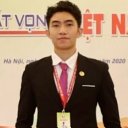
 Minh-Quan Le
· 7 previous affiliations
- Stony Brook UniversitySince 2023
- Doctor of Philosophy - PhD, Computer Science · 2023–2027
- Google (United States)Since 2025
- Student Researcher · 2025–2026
- Microsoft (United States)2024–2025
- Intern · 2024–2025
- Visiting Student · 2025
- Research Intern · 2022–2023
- Bachelor's degree, Computer Science · 2018–2022
- University of Science2018–2022
- Undergrad student · 2018–2022
Research Overview
Minh-Quan Le focuses on computer vision and machine learning, with an emphasis on visual generative models and vision-language alignment. His early work addressed complex segmentation tasks, including interactive video annotation and camouflaged object detection. More recently, he investigates post-training methods for diffusion models to improve physical consistency, multimodal fidelity, and large-scale image synthesis.
Research Trajectory
His early research addressed challenging segmentation problems across diverse visual domains. He contributed to the area of Unified Multi-modal Prompting for Interactive Visual Segmentation through the development of Interactive Video Object Mask Annotation (2021), a system designed to propagate user scribbles into precise object masks across video frames to streamline the annotation process. Concurrently, he investigated specialized ecological domains, developing a multimodal framework and the GUNNEL dataset for aquatic animal segmentation in Multimodal-based Scene-Aware Framework for Aquatic Animal Segmentation. This interest in difficult-to-segment subjects extended to camouflaged objects. With collaborators, he introduced the CAMO++ dataset and a fusion learning framework to identify objects blended into their environments in Camouflaged Instance Segmentation In-the-Wild: Dataset, Method, and Benchmark Suite (2022).
Expanding into 3D modalities in 2023, he participated in the SHREC challenge track for natural language-driven exploration of 3D assets, contributing to the broader area of Point Cloud Understanding through Multi-View 2D Projections with TextANIMAR: Text-based 3D animal fine-grained retrieval. Returning to camouflaged object detection, he explored frequency-domain data augmentation to reveal underlying object structures. This work began with Unveiling Camouflage: A Learnable Fourier-based Augmentation for Camouflaged Object Detection and Instance Segmentation (2023) and culminated in CamoFA: A Learnable Fourier-Based Augmentation for Camouflage Segmentation (2025), advancing the research direction of Segmenting Camouflaged Objects via Global Context and Edge Refinement.
In 2024, his focus shifted toward generative modeling, specifically leveraging diffusion probabilistic models for both segmentation and high-resolution image synthesis. He introduced MaskDiff: Modeling Mask Distribution with Diffusion Probabilistic Model for Few-Shot Instance Segmentation, which models the conditional distribution of binary masks to overcome the instability of traditional prototype learning in few-shot scenarios. Addressing the computational bottlenecks of generating massive images in fields like digital histopathology and remote sensing, he contributed to Learned Representation-Guided Diffusion Models for Large-Image Generation, which uses self-supervised learning embeddings as proxies for fine-grained labels. He further expanded on this challenge by developing ∞-Brush: Controllable Large Image Synthesis with Diffusion Models in Infinite Dimensions, a conditional diffusion approach designed to synthesize high-fidelity images beyond their training resolution without losing spatial coherence.
His most recent trajectory emphasizes post-training methods and multimodal alignment for complex generative tasks. During an internship at Microsoft, he developed Hummingbird: High Fidelity Image Generation via Multimodal Context Alignment (2025), a diffusion-based generator that uses a novel evaluator and consistency rewards to strictly preserve scene attributes—such as spatial relationships and human-object interactions—from a reference image and text query. Extending post-training frameworks to the temporal domain, he addressed the lack of physical realism in synthesized video clips with What about gravity in video generation? Post-Training Newton's Laws with Verifiable Rewards (2025). This physics-grounded approach extracts measurable proxies, like optical flow for velocity, to enforce physical consistency without relying on human feedback. Continuing this trajectory of annotation-free refinement, he introduced PISCES: Annotation-free Text-to-Video Post-Training via Optimal Transport-Aligned Rewards (2026), which utilizes optimal transport to correct distributional misalignments between text and video embeddings, enhancing both visual quality and semantic accuracy.
Current Directions
The most recent papers in the evidence indicate a strong focus on post-training methodologies for visual generative models, particularly in aligning generated outputs with complex multimodal contexts and physical laws. Recent work investigates how to refine text-to-video and text-to-image diffusion models without relying on expensive human preference labels. This includes developing verifiable reward systems that enforce physical consistency—such as gravity and object interactions—using measurable proxies like optical flow. Additionally, current research addresses the distributional misalignment between vision and language modalities, employing techniques such as optimal transport and dual consistency rewards to ensure that synthesized media strictly adheres to fine-grained semantic prompts and reference images.
Profile updated
Loading new papers…
Other researchers whose papers cluster into the same research directions — a proxy for overlapping technical interests and shared intellectual neighborhoods.
See something wrong? Report a mistake