

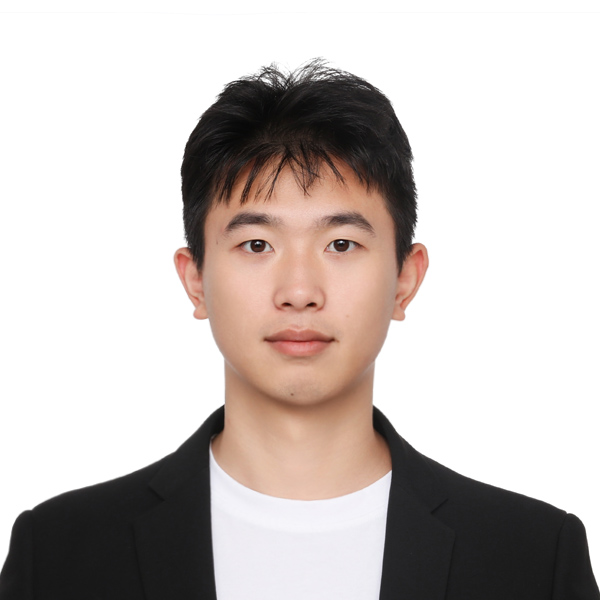
 Mingzhen He
· 2 previous affiliations
- Shanghai Jiao Tong UniversitySince 2020
- PhD student · Since 2020
- Current
- South China University of Technology2016–2020
- Undergrad student · 2016–2020
Research Overview
Mingzhen He focuses on the theoretical foundations and practical applications of asymmetric kernels in machine learning, with a particular emphasis on extending kernel-based methods to non-reciprocal data structures such as directed graphs and conditional probabilities. His work addresses the inherent limitations of traditional kernel methods—which typically require symmetric, positive definite kernels—by developing mathematical frameworks for asymmetric feature representation, dimension reduction, and scalable approximation. Currently, his research explores the primal-dual relationships of asymmetric kernels to optimize the efficiency of Graph Transformers and investigates the training dynamics of deep neural networks.
Research Trajectory
The early phase of He’s research, beginning around 2021, was characterized by a focus on the fundamental constraints of kernel methods. Traditional approaches like the Support Vector Machine (SVM) and Diffusion Maps (DM) rely on symmetric kernels to define similarity. However, real-world data in domains such as ecology (food webs), sociology (citation networks), and web link analysis are inherently directional. He’s initial work sought to bridge this gap by developing the "Asymmetric Kernel" (AsK) framework. This involved redefining the kernel trick to accommodate source and target features, allowing for the direct processing of asymmetric relationships without the loss of information incurred by symmetrization.
By 2022 and 2023, He’s work transitioned toward the challenge of scalability. While asymmetric kernels provided a more accurate representation of directional data, they suffered from the same $O(N^2)$ or $O(N^3)$ computational complexities as their symmetric counterparts. To resolve this, he extended the Random Fourier Features (RFF) method—a popular technique for approximating symmetric kernels—to the asymmetric case. This period also saw the development of new manifold learning techniques, specifically extending Diffusion Maps to handle asymmetric matrices through complex-valued transforms. This allowed for nonlinear dimension reduction that preserved the "flow" or directional geometry of the data.
In 2024 and 2025, the focus of He’s work shifted toward the integration of asymmetric kernel theory with modern deep learning architectures and decentralized systems. He began investigating how the attention mechanisms in Transformers, which are inherently asymmetric, could be better understood and optimized through kernel theory. This led to the development of efficient Graph Transformer architectures that utilize primal representations to achieve linear complexity. During this time, he also contributed to research in decentralized learning, addressing the problem of data heterogeneity across networks, and participated in benchmarking the continual learning capabilities of text-to-image diffusion models.
Current Directions
He’s current research is centered on three primary pillars: machine learning theory, graph representation learning, and training dynamics. In the theoretical domain, he is investigating the potential function space for asymmetric kernels, seeking to provide more rigorous guarantees for learning in non-Hermitian spaces. This work aims to establish a more complete mathematical foundation for how asymmetric features interact during the learning process.
In the realm of applications, He is applying these theoretical insights to Graph Neural Networks (GNNs) and Transformers. By reformulating self-attention as an optimization problem within a primal space defined by asymmetric kernels, he is working to create models that are both computationally efficient and theoretically expressive. Additionally, he is exploring the reconstruction of training data through the simulation of training dynamics, a direction that intersects with privacy and the interpretability of deep neural networks.
Representative Work
The following papers represent key milestones in the development of He’s research program, moving from foundational kernel theory to scalable deep learning applications.
In Random Fourier Features for Asymmetric Kernels, He addresses the scalability of asymmetric kernel methods. Traditional RFF relies on Bochner’s Theorem, which is restricted to symmetric, shift-invariant kernels. He proposes the AsK-RFF framework, which utilizes complex measures and Jordan decomposition to approximate asymmetric kernels. This method allows kernel-based learning on directed graphs and conditional probabilities to scale to large datasets while maintaining theoretical convergence guarantees.
The work presented in Diffusion Representation for Asymmetric Kernels via Magnetic Transform extends nonlinear dimension reduction to asymmetric data. Standard Diffusion Maps are limited to symmetric affinity matrices; He introduces MagDM, a framework that employs a magnetic transform to map asymmetric relationships into a complex-valued Hermitian space. This approach successfully preserves diffusion distances in directed scenarios, such as trophic networks, where the intrinsic geometry is non-reciprocal.
In Learning with Asymmetric Kernels: Least-Squares and Feature Interpretation, He introduces AsK-LS, a classification framework based on the least squares support vector machine that directly utilizes asymmetric kernels. The paper provides a dual-feature interpretation, conceptualizing the learning process as an interaction between "source" and "target" features. This work represents the first formal classification method capable of leveraging the inherent asymmetry in data without requiring a prior symmetrization step.
The shift toward efficient deep learning is exemplified in Primphormer: Efficient Graph Transformers with Primal Representations. He proposes Primphormer, a Graph Transformer that achieves $O(N)$ linear complexity relative to the number of nodes. By reformulating the attention mechanism—traditionally an $O(N^2)$ operation—as an optimization problem in the primal space of asymmetric kernels, the model scales to massive graphs while retaining the expressivity of standard Transformers and the 1-WL graph isomorphism test.
He also contributed to the development of Decentralized Kernel Ridge Regression Based on Data-Dependent Random Feature. As a second author, he participated in designing DeKRR-DDRF, an algorithm for decentralized learning where nodes possess heterogeneous data distributions. The method allows individual nodes to use unique, data-dependent random features while achieving consensus on the global decision function, significantly improving accuracy in decentralized environments without increasing communication overhead.
Finally, He participated in the development of T2I-ConBench: Text-to-Image Benchmark for Continual Post-training. As a middle author, he contributed to the creation of a unified benchmark for evaluating how text-to-image diffusion models adapt to new tasks sequentially. The work identifies critical challenges in "continual post-training," specifically the trade-off between learning new concepts and preserving the model’s original generative generality and compositional abilities.
Profile updated
Loading new papers…
Other researchers whose papers cluster into the same research directions — a proxy for overlapping technical interests and shared intellectual neighborhoods.
See something wrong? Report a mistake