

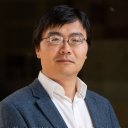
 Mingyu Guo
· 5 previous affiliations
- Adelaide UniversitySince 2013
- Senior Lecturer · Since 2026
- Senior Lecturer · 2024–2025
- Lecturer · 2013–2023
- University of Liverpool2010–2013
- Lecturer · 2010–2013
- Duke University2006–2010
- PhD student · 2006–2010
- University of Florida2004–2006
- MS student · 2004–2006
- Zhejiang University2000–2004
- Undergrad student · 2000–2004
Research Overview
Mingyu Guo focuses on algorithmic mechanism design, cyber security games, and graph combinatorial optimization. His trajectory spans early foundational work on VCG payment redistribution to recent applications of machine learning and evolutionary algorithms for defending enterprise networks. Currently, he investigates neural-augmented algorithms and dynamic graph analysis to solve complex structural optimization problems.
Research Trajectory
Beginning in the late 2000s, Guo's early research concentrated on algorithmic mechanism design, particularly addressing the inefficiencies of Vickrey-Clarke-Groves (VCG) mechanisms. In allocation problems where items lack a central owner, standard VCG mechanisms generate undesirable surplus payments. To address this, he introduced methods in Worst-case optimal redistribution of VCG payments to redistribute these payments back to agents without violating strategy-proofness or individual rationality. He subsequently extended this approach to multi-unit auctions with nonincreasing marginal values in Worst-case optimal redistribution of VCG payments in multi-unit auctions, optimizing for worst-case budget balance. This foundational work naturally progressed into broader methodologies for the field, culminating in Computationally Feasible Automated Mechanism Design: General Approach and Case Studies. These early contributions align closely with the research direction of Learning Optimal Auctions from Finite Samples.
In the early 2020s, Guo's focus expanded significantly into cyber security, specifically the defense of enterprise networks modeled as attack graphs. Much of this work addresses Active Directory (AD) environments, formulating the interaction between attackers and defenders as optimization problems within the broader area of Stackelberg Games for Proactive Security and Robust Learning. In Practical Fixed-Parameter Algorithms for Defending Active Directory Style Attack Graphs, he modeled AD defense as a shortest-path edge interdiction problem, developing budget-constrained strategies to maximize the expected path length for an attacker. Building on this framework, Scalable Edge Blocking Algorithms for Defending Active Directory Style Attack Graphs incorporated edge failure rates, allowing defenders to systematically revoke access rights to minimize the attacker's maximum success rate. This trajectory reflects a sustained engagement with work in the area of Modeling Security as a Dynamic Game Against Adaptive Adversaries.
Alongside security applications, Guo has made substantial contributions to combinatorial optimization and graph algorithms. Addressing the challenge of balancing objective quality with solution variety, he proposed efficient greedy algorithms in Diverse Approximations for Monotone Submodular Maximization Problems with a Matroid Constraint. This work provided theoretical approximation guarantees for both metrics, advancing the area of Diverse Sets of High-Quality Solutions.
Recently, Guo has integrated machine learning techniques into both his mechanism design and graph optimization research. Returning to VCG redistribution, he leveraged multilayer perceptrons and mixed-integer programming in Worst-Case VCG Redistribution Mechanism Design Based on the Lottery Ticket Hypothesis to identify worst-case type profiles and train more robust mechanisms. He further explored machine learning approaches for public projects in Mechanism design for public projects via three machine learning based approaches, identifying sufficient conditions under which existing mechanisms remain optimal for both nonexcludable and excludable models.
In the domain of network analysis, his recent work investigates the identification of Structural Hole Spanners (SHSs)—critical nodes that bridge disparate communities in a network. With collaborators, he developed GraphSHS and Meta-GraphSHS in Effective graph-neural-network based models for discovering Structural Hole Spanners in large-scale and diverse networks to accelerate SHS discovery across diverse network topologies. This was subsequently adapted for evolving topologies in Tracking top-k structural hole spanners in dynamic networks, which introduced algorithms capable of efficiently updating SHS identifications after edge additions and deletions.
Guo's ongoing research synthesizes these threads of security, optimization, and machine learning. Motivated by cyber security use cases, he formulated a combinatorial optimization model in Limited Query Graph Connectivity Test to determine source-destination connectivity under strict query budgets, contributing to the research direction Adversarial Learning Under Information Asymmetry. He has also continued to refine AD defense strategies, overseeing the development of evolutionary algorithms in Hardening Active Directory Graphs via Evolutionary Diversity Optimization-based Policies. Most recently, he participated in the development of the N-FPT framework in Neural Tractability via Structure: Learning-Augmented Algorithms for Graph Combinatorial Optimization. This framework bridges fast neural solvers with exact classical algorithms, utilizing dynamic programming to optimally solve structurally complex graph components, advancing the area of Dynamic Programming on Tree Decompositions.
Current Directions
The most recent themes in Guo's research reflect a synthesis of artificial intelligence and classical combinatorial optimization to solve complex, large-scale structural problems. A primary focus is the development of learning-augmented algorithms that combine the speed of neural heuristics with the exactness of traditional dynamic programming, particularly for NP-hard graph problems. Additionally, his work addresses the dynamic nature of modern networks, focusing on the real-time maintenance of structural properties—such as identifying critical bridging nodes—as network edges continuously evolve. In the security domain, he continues to explore proactive defense mechanisms for enterprise environments, increasingly utilizing evolutionary diversity optimization to generate robust, unpredictable policies against adaptive adversaries.
Profile updated
Loading new papers…
Other researchers whose papers cluster into the same research directions — a proxy for overlapping technical interests and shared intellectual neighborhoods.
See something wrong? Report a mistake