

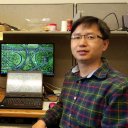
 Mingli Song
· 1 previous affiliation
- Zhejiang UniversitySince 2002
- Full Professor · Since 2015
- Associate Professor · 2009–2014
- Lecturer · 2006–2008
- PhD student · 2002–2006
Research Overview
Mingli Song focuses on model-driven deep learning, graph machine learning, and the optimization of large-scale neural architectures. His earlier work established robust frameworks for synthetic human mobility generation and graph-based anomaly detection in complex physical systems. More recently, his research investigates sample-efficient reinforcement learning for large language models, autonomous agent reasoning, and ultra-low-bit model quantization.
Research Trajectory
Song’s recent trajectory begins with significant contributions to the area of Synthetic Generation and Proxy Modeling of Human Mobility. Addressing the challenge of data scarcity in urban planning and epidemic modeling, his team developed COLA: Cross-city Mobility Transformer for Human Trajectory Simulation (2024). This framework transfers universal human mobility patterns from data-rich source cities to target environments by decoupling universal behaviors from specific geographies and applying a lightweight long-tail calibration. Building on this foundation, he introduced Holistic Semantic Representation for Navigational Trajectory Generation (2025), a framework known as HOSER. By combining multi-level road encoding with a destination-oriented navigator, HOSER bridges road network topology and destination intent to produce high-fidelity synthetic travel patterns that preserve the nuances of real-world dynamics.
Concurrently, Song applied graph machine learning to complex physical infrastructures, particularly electrical grids. He guided the development of Disentangled Table-Graph Representation for Interpretable Transmission Line Fault Location (2025), which tackles the high-stakes, needle-in-a-haystack problem of pinpointing transmission line failures across thousands of connections. Expanding on grid optimization, his lab proposed Powerformer: A Section-adaptive Transformer for Power Flow Adjustment (2025). By integrating graph neural networks with a novel section-adaptive attention mechanism, this architecture solves power flow dispatch problems on massive 9,000-node systems significantly faster than traditional solvers.
A major theme in Song’s work is optimizing neural architectures for efficiency and multi-task capability, contributing to the broader field of Consolidating Specialized Models into Unified Multi Task Architectures. In 2025, he presented Training-free Heterogeneous Model Merging, introducing techniques like "Layer Alignment" and "Elastic Neuron Zipping" to combine networks of varying depths and widths into a single multi-task model without additional fine-tuning. He also advanced model compression with Quantizing Diffusion Models from a Sampling-Aware Perspective (2025), addressing the computational bottlenecks of generative AI to make diffusion models smaller and faster without sacrificing image quality.
This focus on efficiency continued into 2026 with SHARP-Q: Spectral Hessian Alignment and Rectification for Post-training Quantization, a unified framework that leverages information geometry to rectify warped optimization landscapes. This approach enables high-accuracy compression at ultra-low bit-widths (such as 2-bit and 3-bit) across CNNs, Transformers, and State Space Models. Alongside quantization, he explored fundamental architectural components, introducing Activation with Intrinsic-Extrinsic Consensus (2026). This novel activation mechanism suppresses noisy feature channels by penalizing those that lack consensus between their firing frequency and their actual contribution to the final decision, yielding sparser and more interpretable representations.
As large language models became central to AI research, Song’s group explored their grounding in interactive environments. He led the creation of the ODYSSEY framework, detailed across foundational and expanded studies including Odyssey : Empowering Minecraft Agents with Open-World Skills (2025) and its parallel evaluation benchmark Odyssey : Empowering Minecraft Agents with Open-World Skills (2025). By combining a massive library of 223 pre-defined skills with a fine-tuned LLaMA-3 model, ODYSSEY enables autonomous agents to execute complex long-term planning and open-world discovery beyond simple predefined tech-tree tasks.
Current Directions
The most recent papers in the evidence indicate a strong focus on sample-efficient reinforcement learning (RL) to enhance the reasoning and instruction-following capabilities of large language models. Addressing the sparse reward problem inherent in LLM training, Song’s lab developed Replay Failures as Successes: Sample-Efficient Reinforcement Learning for Instruction Following (2026). This work introduces Hindsight Instruction Replay (HiR), a method that dynamically rewrites instructions in hindsight to match a model's failed outputs, thereby converting failures into high-quality training signals.
Parallel to this, his team is investigating structured exploration in RL through Breaking the Exploration Bottleneck: Rubric-Scaffolded Reinforcement Learning for Open-Ended LLM Reasoning (2026). By utilizing checklist-style rubrics as instructional scaffolding during training and gradually annealing this external guidance, the approach enables smaller models to solve complex, open-ended reasoning tasks—such as medical consultations—often matching or exceeding the performance of much larger proprietary models. These recent efforts point toward a sustained interest in building more robust, autonomous, and reasoning-capable AI systems through innovative reinforcement learning paradigms.
Profile updated
Loading new papers…
Other researchers whose papers cluster into the same research directions — a proxy for overlapping technical interests and shared intellectual neighborhoods.
See something wrong? Report a mistake