

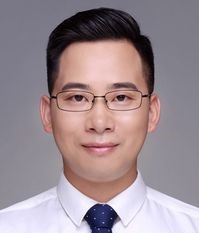
 Mingkui Tan
· 3 previous affiliations
- South China University of TechnologySince 2016
- Full Professor · 2016–2050
- Current
- Adelaide University2014–2016
- Postdoc · 2014–2016
- Nanyang Technological University2010–2014
- PhD student · 2010–2014
Research Overview
Mingkui Tan focuses on large-scale optimization, model compression, and test-time adaptation for deep learning systems. His early work addressed high-dimensional feature selection and low-rank matrix recovery, establishing foundational methods for efficient computation. More recently, his research investigates adaptive architectures for large language models, reinforcement learning, and high-resolution image synthesis.
Research Trajectory
Mingkui Tan's early research focused on high-dimensional optimization and feature selection. He introduced a mixed-integer programming approach for l0-norm Sparse Support Vector Machines in Learning Sparse SVM for Feature Selection on Very High Dimensional Datasets (2010), developing an efficient cutting plane algorithm combined with multiple kernel learning. This work in large-scale optimization continued with Towards ultrahigh dimensional feature selection for big data (2014), where he proposed an Adaptive Feature Scaling method and a Feature Generating Machine to iteratively identify informative features. These contributions align with the broader area of Iterative Constraint Generation for Large Scale Optimization. Around the same time, he addressed the challenges of ill-conditioned and large-scale matrices in Riemannian Pursuit for Big Matrix Recovery (2014), formulating a sequence of fixed-rank optimization problems solved via a nonlinear Riemannian conjugate gradient method.
Moving to deep learning efficiency, he participated in research on model compression. With collaborators, he developed Discrimination-aware Channel Pruning for Deep Neural Networks (2018), which introduced discrimination-aware losses to intelligently remove redundant channels and boost the discriminative power of intermediate layers. This work contributed to the research direction of Enhancing Model Performance via Structural Sparsity.
In recent years, his focus shifted toward adapting models to dynamic environments. He directed work in the area of Selective Entropy Filtering for Stable Test-Time Adaptation, investigating why online model updating often fails under distribution shifts. In Towards Stable Test-time Adaptation in Dynamic Wild World (2023), his group identified batch normalization layers as a key factor hindering stability. Building on this, they proposed the CEMA framework in Towards Robust and Efficient Cloud-Edge Elastic Model Adaptation via Selective Entropy Distillation (2024), enabling resource-constrained edge devices to adapt by selectively uploading informative samples to a cloud server for distillation, significantly reducing communication costs.
His lab has also expanded into reinforcement learning and robotics. In Continual Knowledge Adaptation for Reinforcement Learning (2025), they introduced a scalable method for agents to learn sequential tasks without catastrophic forgetting by pooling and merging task-specific knowledge vectors. Concurrently, they developed a large-scale benchmark and a goal-centered reinforcement learning strategy for open-world drone tracking in Open-World Drone Active Tracking with Goal-Centered Rewards (2025), demonstrating successful zero-shot transfer to physical drones.
A major recent theme is the efficiency and adaptation of Large Language Models (LLMs). His group explored test-time adaptation for LLMs in Test-Time Learning for Large Language Models (2025), adapting models during inference by minimizing input perplexity on unlabeled data. They refined this approach in Future-Gain Guided Test-Time Learning for Large Language Models (2026), selectively updating models based on tokens predicted to reduce future uncertainty.
To address architectural bottlenecks in LLMs, his team proposed Core Context Aware Transformers for Long Context Language Modeling (2025), which dynamically compresses redundant global information to process up to 128K tokens with linear complexity. They further optimized pretraining with LoKiFormer: Locality-aware Attention with Decoupled Knowledge Memory for Efficient Large Language Model Pretraining (2026), introducing modules for local patterns and global memory to decouple knowledge and computation.
His recent work also tackles reasoning and reliability in LLMs. In Intervene When It Doubts: Conjunction-Guided Interactive Reasoning (2026), they developed a framework that identifies "doubt" markers in a model's thought process to inject external feedback, mitigating overthinking. Additionally, they introduced a zero-source hallucination detection framework in Zero-source LLM Hallucination Detection with Human-like Criteria Probing (2026), which decomposes judgments into interpretable criteria without relying on internal model states.
Beyond text, his group has advanced visual generation. In Frequency-Aware Autoregressive Modeling for Efficient High-Resolution Image Synthesis (2026), they proposed SparseVAR, an acceleration framework that dynamically excludes low-frequency tokens during inference to reduce the computational overhead of next-scale prediction.
Current Directions
The most recent papers in the evidence indicate a strong focus on the efficiency, reasoning capabilities, and real-time adaptation of Large Language Models (LLMs) and generative systems. Current work investigates test-time learning strategies that allow LLMs to adapt to out-of-distribution data during inference without labeled examples, utilizing techniques like future-gain guidance and perplexity minimization. Additionally, recent research addresses architectural bottlenecks in foundational models, proposing novel attention mechanisms and decoupled memory structures to handle ultra-long contexts and accelerate pretraining. Beyond language, this focus on inference efficiency extends to high-resolution image synthesis through frequency-aware autoregressive modeling, as well as the development of robust, continual learning frameworks for reinforcement learning agents in dynamic environments.
Profile updated
Loading new papers…
Other researchers whose papers cluster into the same research directions — a proxy for overlapping technical interests and shared intellectual neighborhoods.
See something wrong? Report a mistake