

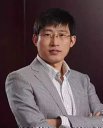
 Ming Gao
· 3 previous affiliations
- East China Normal UniversityCurrent
- Current
- Full Professor · 2018–2026
- Associate Professor · 2014–2018
- Singapore Management University2011–2014
- Postdoc · 2011–2014
- Fudan University2008–2011
- PhD student · 2008–2011
4 other authors named Ming Gao: Ming Gao (26 papers), Ming Gao (University of Chicago · 3 papers), Ming Gao (1 paper), Ming Gao (Dongbei University of Finance and Economics · 1 paper)
Research Overview
Ming Gao focuses on network representation learning, federated learning, and the optimization of large language models. His early work developed embedding techniques for bipartite networks and methods for tracking data streams. More recently, his research addresses parameter-efficient tuning, robustness in heterogeneous federated learning, and in-context learning dynamics for language models.
Research Trajectory
Gao’s early research addressed data mining and web analytics. His initial work included Tracking High Quality Clusters over Uncertain Data Streams, which investigated clustering methodologies for probabilistic streaming data. He subsequently explored predictive modeling for social web platforms, participating in the development of techniques for Predicting the popularity of web 2.0 items based on user comments to forecast resource trends without relying exclusively on limited view histories.
In the late 2010s, his focus expanded to network representation learning, specifically targeting the unique properties of bipartite graphs. He contributed to BiRank: Towards Ranking on Bipartite Graphs, establishing foundational ranking mechanisms for these structures. Recognizing that generic homogeneous network embedding methods were suboptimal for bipartite data, he introduced BiNE: Bipartite Network Embedding. This approach utilized purposefully biased random walks to preserve the long-tail vertex distributions inherent in original bipartite networks. He later formalized and expanded these representation techniques in Learning Vertex Representations for Bipartite Networks.
Concurrently, Gao began investigating natural language processing and parameter-efficient adaptation. He collaborated on TransPrompt: Towards an Automatic Transferable Prompting Framework for Few-shot Text Classification, which improved few-shot learning by transferring prompting knowledge across similar NLP tasks via continuous prompt embeddings. This trajectory led to the release of HugNLP: A Unified and Comprehensive Library for Natural Language Processing and the development of structure-aware tuning methods for code representation in Pass-Tuning: Towards Structure-Aware Parameter-Efficient Tuning for Code Representation Learning.
A significant portion of his recent NLP research examines how large language models utilize factual knowledge. In Knowledgeable In-Context Tuning: Exploring and Exploiting Factual Knowledge for In-Context Learning, his team designed a framework to systematically integrate factual data into in-context learning pipelines through knowledge-aware pre-training and prediction calibration. This work advances several distinct research areas, including the area of Entities as Factual Anchors for Language Model Reasoning, the broader field of Dynamic Retrieval for In-Context Learning, and the study of Contextual Calibration for Robust In-Context Learning.
Parallel to his NLP research, Gao has led extensive work in federated learning (FL), focusing on robustness, heterogeneity, and security. To address catastrophic forgetting caused by partial client participation and data heterogeneity, he developed GradMA: A Gradient-Memory-based Accelerated Federated Learning with Alleviated Catastrophic Forgetting. He also investigated security vulnerabilities in personalized FL, demonstrating in You Can Backdoor Personalized Federated Learning that parameter-decoupled methods remain susceptible to targeted attacks. Further addressing heterogeneous environments, his group proposed DFRD: Data-Free Robustness Distillation for Heterogeneous Federated Learning.
His recent methodological contributions also span graph learning and model steering. He introduced SeeGera: Self-supervised Semi-implicit Graph Variational Auto-encoders with Masking, which integrates semi-implicit variational inference to enhance generative graph autoencoders. In the domain of large language models, he developed Cross-model Control: Improving Multiple Large Language Models in One-time Training, a technique that trains a portable tiny language model to capture fine-tuning logit shifts, allowing those capabilities to be transferred to various other LLMs without retraining. Most recently, his dual interests in federated learning and parameter-efficient tuning have converged in Towards Instance-wise Personalized Federated Learning via Semi-Implicit Bayesian Prompt Tuning.
Current Directions
The most recent papers in the evidence indicate a focus on the intersection of parameter-efficient tuning and distributed machine learning. Current work investigates how to efficiently steer and upgrade large language models without extensive retraining, utilizing portable control models to transfer capabilities across diverse architectures and vocabularies. Additionally, ongoing research explores personalized federated learning, specifically leveraging semi-implicit Bayesian prompt tuning to achieve instance-wise personalization in decentralized environments.
Profile updated
Loading new papers…
Other researchers whose papers cluster into the same research directions — a proxy for overlapping technical interests and shared intellectual neighborhoods.
See something wrong? Report a mistake