

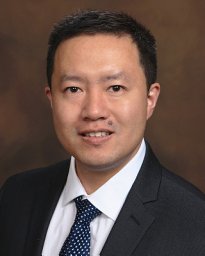
 Min Xu
· 4 previous affiliations
- Carnegie Mellon UniversitySince 2016
- Co-Director of MS in Computational Biology Program · Since 2022
- Courtesy Faculty · Since 2021
- Associate Professor · Since 2016
- Affiliated Associate Professor · Since 2021
- Petuum, Inc.2018–2020
- Senior Engineering Manager and Tech Lead · 2018–2020
- University of Southern California2004–2016
- Senior Research Associate · 2009–2016
- Master of Arts, Applied Mathematics · 2007–2009
- PhD, Computational Biology and Bioinformatics · 2004–2009
6 other authors named Min Xu: Min Xu (University of Technology Sydney · 55 papers), Min Xu (5 papers), Min Xu (3 papers), Min Xu (2 papers), Min Xu (1 paper), and 1 more
Research Overview
Min Xu focuses on computational methods for structural biology, medical image analysis, and advanced computer vision. His trajectory spans from deep learning techniques for cryo-electron tomography to the adaptation of foundation models for complex visual and physical reasoning tasks. Recently, his work investigates physical system identification from video, parameter-efficient model adaptation, and zero-shot medical segmentation.
Research Trajectory
Min Xu’s early research concentrated on overcoming the severe imaging limitations inherent in cellular electron cryotomography (cryo-ET). In 2017, he introduced a Deep learning-based subdivision approach for large scale macromolecules structure recovery from electron cryo tomograms, addressing the challenge of systematically discovering highly heterogeneous structural classes within noisy cellular environments. Building on this foundation, he later developed Gum-Net: Unsupervised Geometric Matching for Fast and Accurate 3D Subtomogram Image Alignment and Averaging (2020). This end-to-end trainable architecture preserved spatial hierarchies to align subtomograms without manual supervision, contributing significantly to the research direction of The Missing Wedge Problem in Tomographic Reconstruction.
Expanding his methodological scope to broader medical imaging challenges, Xu began exploring hybrid neural architectures. In 2022, he presented TransResNet: Integrating the Strengths of ViTs and CNNs for High Resolution Medical Image Segmentation via Feature Grafting. By fusing global semantic context from Vision Transformers with local spatial details from Convolutional Neural Networks, this work advanced the area of Hybrid CNN-Transformer Architectures for Global-Local Vision.
His interest in geometric computer vision and scale calibration led to novel approaches in monocular depth estimation. In 2024, he and his collaborators developed Metric from Human: Zero-shot Monocular Metric Depth Estimation via Test-time Adaptation. This framework utilized generative models to insert human figures into images as known-size landmarks, enabling the system to calibrate scene scale on the fly without labeled target data. This innovative approach aligns with the broader area of The Human Body as a Universal Metric Ruler.
By 2025, Xu’s research portfolio expanded significantly across biological imaging, foundation model adaptation, and physical reasoning. He continued to push the boundaries of cryo-ET and structural biology through several specialized frameworks. To reduce the reliance on manual annotations in 3D imaging, he proposed Vox-UDA: Voxel-wise Unsupervised Domain Adaptation for Cryo-Electron Subtomogram Segmentation with Denoised Pseudo-Labeling. He also applied masked autoencoders to the domain in CryoMAE: Few-Shot Cryo-EM Particle Picking with Masked Autoencoders, enabling efficient single-particle selection with minimal labeled data. Furthermore, he extended generalized category discovery to 3D structures with Towards molecular structure discovery from cryo-ET density volumes via modelling auxiliary semantic prototypes. Together, these contributions heavily support the research direction of 3D Reconstruction from Low Signal to Noise Projections.
In parallel, Xu addressed the clinical deployment of deep learning through test-time adaptation and semi-supervised learning. He introduced AutoMiSeg: Automatic Medical Image Segmentation via Test-Time Adaptation of Foundation Models, a zero-shot pipeline combining vision-language and segmentation foundation models to automate clinical annotation. For histopathology, he developed Semi-MoE: Mixture-of-Experts meets Semi-Supervised Histopathology Segmentation, utilizing specialized experts to handle ambiguous gland boundaries and noisy pseudo-labels. This focus on adapting large models to specialized medical tasks continued into 2026 with Ultra-ECP: Ellipse-Constrained and Point-Robust Foundation Model Adaptation for Fetal Cardiac Ultrasound Segmentation, which employed parameter-efficient fine-tuning and shape regularization to adapt general-purpose models for prenatal biometrics.
Xu’s recent work also encompasses broader challenges in computer vision, explainability, and multimodal learning. He explored dynamic, instance-dependent prompting in Visual Variational Autoencoder Prompt Tuning. In the realm of explainable AI, he proposed DiffCAM: Data-Driven Saliency Maps by Capturing Feature Differences to overcome the limitations of traditional gradient-based class activation maps. Addressing open-world scientific discovery, he extended category discovery to heterogeneous data streams in Multimodal Generalized Category Discovery. He has also applied deep learning to practical monitoring tasks, such as Deep video anomaly detection in automated laboratory setting.
A distinct and emerging theme in his latest research is the extraction of physical dynamics from visual data. In 2025, he introduced MASIV: Toward Material-Agnostic System Identification from Videos, a framework utilizing neural constitutive models to identify object dynamics and predict future behaviors without prior knowledge of material properties. He expanded this concept in 2026 with Multi-Object System Identification from Videos, integrating dynamic 3D Gaussian Splatting with differentiable physics simulators to create high-fidelity digital twins capable of predicting complex, contact-rich interactions.
Current Directions
The most recent papers in the evidence indicate a strong focus on bridging the gap between visual perception and physical reasoning, as well as the parameter-efficient adaptation of foundation models for specialized domains. Recent work investigates how to infer continuous physical properties—such as stiffness and friction—directly from multi-view video by coupling 3D Gaussian Splatting with differentiable physics engines. Concurrently, Xu is actively developing methods to adapt large-scale vision and language models to data-scarce and highly specialized fields like fetal ultrasound and cryo-electron tomography, emphasizing zero-shot inference, test-time adaptation, and unsupervised domain adaptation to reduce the burden of manual expert annotation.
Profile updated
Loading new papers…
Other researchers whose papers cluster into the same research directions — a proxy for overlapping technical interests and shared intellectual neighborhoods.
See something wrong? Report a mistake