

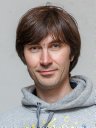
 Mikhail Burtsev
· 3 previous affiliations
- Researcher · Since 2023
- Head of the lab · 2015–2022
- Scientific Director · 2021–2022
Research Overview
Mikhail Burtsev focuses on memory-augmented neural networks, long-context sequence modeling, and the mathematical foundations of artificial intelligence. His early work centered on open-source conversational AI and dialogue systems before shifting toward overcoming the architectural limitations of transformers. His current research investigates recurrent memory mechanisms, multi-step reasoning, and neural theorem proving to build more capable and efficient AI systems.
Research Trajectory
The early phase of Mikhail Burtsev's research explored complex systems and conversational artificial intelligence. His initial work included investigations into evolutionary dynamics, as seen in Measuring the Dynamics of Artificial Evolution. He later focused heavily on dialogue systems, leading the development of DeepPavlov: Open-Source Library for Dialogue Systems. This modular framework was designed to bridge academic research and production-ready conversational AI by allowing developers to integrate rule-based components with deep learning models. Around this time, he also helped organize The First Conversational Intelligence Challenge to benchmark and advance open-domain dialogue agents. This interest in conversational AI naturally evolved into addressing ambiguity in human-computer interactions. With collaborators, he participated in the development of ConvAI3: Generating Clarifying Questions for Open-Domain Dialogue Systems (ClariQ), a challenge framework aimed at training systems to recognize ambiguity and proactively seek missing information. This work advanced the research directions of Proactive Clarification for Ambiguous Agent Instructions and Proactive Clarification in Interactive Agent Planning.
Beginning in 2022, his focus shifted toward fundamental transformer architectures, specifically addressing the quadratic computational complexity of self-attention that limits sequence length. He introduced the Recurrent Memory Transformer (RMT), a memory-augmented architecture that processes text in segments. By allowing the model to store and pass local and global information between segments via recurrence, RMT achieved linear computational scaling. This foundational work contributed significantly to the broader areas of The Memory Bottleneck of Fixed-Size Recurrent States and Segment Level Recurrence for Long Context Transformers. Building on this mechanism, he explored extreme context scaling in Scaling Transformer to 1M tokens and beyond with RMT, demonstrating that the plug-and-play recurrent memory could handle contexts of up to two million tokens without altering the underlying transformer architecture. This pushed boundaries in the direction of Staged Context Extension for Large Language Models.
To rigorously evaluate models operating over such massive contexts, he developed BABILong: Testing the Limits of LLMs with Long Context Reasoning-in-a-Haystack. This benchmark tests a model's ability to perform complex reasoning—such as fact chaining and deduction—across facts scattered throughout extremely long documents, contributing to the area of Measuring Reasoning Limits in Extreme Context Windows. Alongside scaling context length, he investigated the internal representations of these models. In Complexity of Symbolic Representation in Working Memory of Transformer Correlates with the Complexity of a Task, he explored how augmenting a transformer decoder with a symbolic working memory—a plain-text scratchpad—reveals that the diversity of stored information directly correlates with task difficulty.
The RMT architecture and long-context techniques subsequently found applications across diverse domains. In computational genomics, he participated in creating GENA-LM: a family of open-source foundational DNA language models for long sequences, designed to decode complex contextual information across thousands of nucleotides. He then applied memory augmentation directly to this domain in Recurrent memory augmentation of GENA-LM improves performance on long DNA sequence tasks, addressing the challenge of processing sequences comparable to complete genes. In the realm of reinforcement learning, he extended memory mechanisms to distributed settings with Shared Recurrent Memory Improves Multi-agent Pathfinding, allowing multiple agents to implicitly exchange information and coordinate behavior by pooling and broadcasting individual working memories.
Most recently, his trajectory has focused on formal reasoning, test-time compute, and dynamic memory writing. He investigated the capacity of transformers to learn and apply logical rules in Learning Elementary Cellular Automata with Transformers, finding that while models can generalize for next-state prediction, they require explicit rule-prediction objectives or increased depth to handle multi-step sequential computations. In the domain of AI-assisted mathematics, he developed Lean4trace: Data augmentation for neural theorem proving in Lean, introducing tactic decomposition and automatic application to extract richer training data for proof-generating models. Continuing his work on memory efficiency, he introduced GradMem: Learning to Write Context into Memory with Test-Time Gradient Descent, a mechanism that writes context into a compact memory state using test-time optimization. Finally, in Beyond Memorization: Extending Reasoning Depth with Recurrence, Memory and Test-Time Compute Scaling, he examined how multi-step reasoning is executed in controlled environments, demonstrating that extending effective model depth via recurrence and test-time compute is crucial for chaining logical rules without relying on memorization.
Current Directions
Recent work investigates the mechanisms of multi-step reasoning and the dynamic allocation of memory during inference. The most recent papers in the evidence address how test-time compute scaling, recurrence, and memory augmentation can extend the effective depth of neural architectures. This research focuses on enabling models to chain logical rules over multiple steps without relying on memorization, using controlled environments like cellular automata to isolate true reasoning capabilities. Additionally, this work extends into AI-assisted mathematics, exploring data augmentation techniques for neural theorem proving to bootstrap formal reasoning and improve the performance of proof-generating models in systems like Lean.
Profile updated
Loading new papers…
Other researchers whose papers cluster into the same research directions — a proxy for overlapping technical interests and shared intellectual neighborhoods.
See something wrong? Report a mistake