

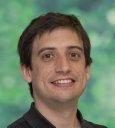
 Mikel Hernaez
· 3 previous affiliations
- Universidad de NavarraSince 2020
- Principal Researcher · Since 2020
- PhD student · 2009–2012
- Researcher · 2016–2020
- Stanford University2013–2016
- Postdoc · 2013–2016
Research Overview
Mikel Hernaez focuses on the development of computational frameworks and machine learning architectures for high-dimensional biological data, with a particular emphasis on single-cell genomics, gene regulatory network inference, and drug-target interaction prediction. His work bridges the gap between information theory and clinical discovery, moving from foundational signal processing and data transmission techniques to the design of scalable, interpretable models for understanding cellular heterogeneity and disease progression. By leveraging graph neural networks, causal representation learning, and joint integration strategies, he addresses the challenges of batch effect correction, cell-type annotation, and the modeling of dynamic biological systems.
Research Trajectory
The trajectory of Hernaez’s research reflects a transition from classical information theory and communication systems toward the complex landscape of computational biology. In the early 2010s, his work was grounded in signal processing, specifically focusing on the optimization of transmission systems in bandwidth-limited regimes. This period was characterized by research into joint source-channel coding and the use of Turbo codes to manage cycle-stationary information sources. These foundational efforts in managing noisy, high-dimensional data streams provided a methodological precursor to his later work in genomic data processing, where the extraction of signal from biological noise is a central challenge.
By the late 2010s, Hernaez shifted his focus toward bioinformatics and the refinement of genomic quantification methods. This period saw an increased engagement with the "forest versus the trees" problem in transcriptomics—the tension between the broad clinical insights offered by bulk RNA sequencing and the granular, cell-specific resolution provided by emerging single-cell technologies. He contributed to benchmarking efforts for long non-coding RNA (lncRNA) quantification in cancer samples, identifying the lack of gold-standard pipelines and advocating for more rigorous processing of public datasets like The Cancer Genome Atlas (TCGA). This work underscored the importance of Integrating Bulk and Single-Cell Transcriptomics to better understand tumor-suppressor and oncogenic functions.
As single-cell RNA sequencing (scRNA-seq) became a primary tool in the field, Hernaez’s work evolved to address the computational bottlenecks of cell-type annotation and data integration. He participated in the development of frameworks like JIND, which utilized asymmetric alignment strategies to map unlabelled datasets onto pre-trained models. This approach moved away from traditional "winner-take-all" categorization, aligning with the principles of Probabilistic Soft Assignment for Overlapping Data Structures to capture the inherent ambiguity of cells transitioning between biological states.
In the early 2020s, Hernaez’s research matured into the study of complex biological networks and their modulation. As a senior investigator, he led the development of frameworks to infer gene regulatory dynamics, moving beyond static snapshots of cellular activity to capture how networks evolve across different phenotypes. This work frequently employs Sparse Graphical Models for Network Discovery to distinguish true regulatory interactions from spurious correlations in high-dimensional datasets. His recent efforts have increasingly focused on the intersection of deep learning and pharmacology, particularly in the Multi-Target Modulation of Complex Biological Networks, where he applies graph neural networks to accelerate drug-target interaction inference and drug repurposing.
Throughout this evolution, Hernaez has maintained a strong collaborative presence in clinical research, particularly in hematology. He has contributed to large-scale studies characterizing transcriptional alterations in Myelodysplastic Syndromes (MDS) and the epigenomic landscape of Light Chain Amyloidosis. While these contributions are often as part of large multi-disciplinary teams, they demonstrate the application of his computational methodologies to real-world clinical problems, such as identifying aberrant myeloid differentiation and organ-damaging plasma cell behavior.
Current Directions
Hernaez’s current research is centered on three primary pillars: scalability in drug discovery, interpretability in causal learning, and the cross-modal integration of single-cell data.
A major focus is the development of "ultrafast" inference methods for drug-target interactions (DTIs). Recognizing that traditional computational methods for DTI are often too slow for large-scale drug repurposing, his recent work utilizes Graph Sage layers to achieve significant speedups without sacrificing accuracy. This direction aims to make the exploration of the vast chemical-biological space computationally feasible, allowing for the rapid identification of potential therapies for complex diseases.
Simultaneously, Hernaez is advancing the field of Causal Representation Learning (CRL). Current deep learning models in biology often function as "black boxes," providing predictions without clear biological justification. Hernaez is working on models that reconcile latent representations with known biological pathways. By enforcing intervention-guided mappings to causal meta-pathways, this research seeks to provide interpretable insights into how genomic and drug perturbations affect cellular function. This is particularly relevant for predicting the effects of unseen combinatorial perturbations, a critical task in precision medicine.
Finally, his work continues to push the boundaries of automated annotation for single-cell atlases. The current focus is on "JIND-Multi" frameworks that can leverage multiple labeled datasets simultaneously to annotate both RNA and ATAC-seq data. This addresses the persistent challenge of batch effects and the need for consistent labeling across diverse experimental conditions and rare cell types.
Representative Work
Joint Turbo Coding and Source-Controlled Modulation of Cycle-Stationary Sources in the Bandwidth-Limited Regime (2012) This early work establishes Hernaez’s background in information theory. The paper proposes a one-layer coding and shaping transmission system designed for bandwidth-limited regimes. By combining Turbo codes with sigma-mappers and asymmetric energy allocation, the research demonstrates how to achieve high spectral efficiency in data transmission. The iterative decoding process described here—exchanging extrinsic probabilities between components—foreshadows the complex integration and alignment strategies he would later apply to genomic data.
JIND: Joint Integration and Discrimination for Automated Single-Cell Annotation (2020) In this work, Hernaez participated in the development of a neural-network framework designed to automate cell-type labeling in scRNA-seq data. JIND addresses the "batch effect" problem by using an asymmetric alignment strategy that maps new, unlabeled datasets onto a pre-trained model. This approach avoids the need for retraining, significantly increasing the speed and accuracy of cell annotation compared to previous gold-standard methods. This paper marks a significant step in his focus on scalable single-cell integration.
SimiC enables the inference of complex gene regulatory dynamics across cell phenotypes (2022) As the senior author, Hernaez introduced SimiC, a computational framework designed to infer gene regulatory networks (GRNs) that change across cell states. Unlike methods that provide a static view of regulation, SimiC jointly infers related networks to reveal hidden regulatory shifts. The framework was applied to diverse biological contexts, including CAR T cell exhaustion and liver regeneration, demonstrating its ability to capture the dynamic nature of gene regulation in complex systems.
GeNNius: An ultrafast drug-target interaction inference method based on graph neural networks (2023) In this senior-author paper, Hernaez presents the Graph Embedding Neural Network Interaction Uncovering System (GeNNius). The framework addresses the computational bottleneck in drug discovery by using Graph Sage (SAGEConv) layers to predict drug-target interactions. GeNNius achieved a 1500x speedup over existing state-of-the-art methods while maintaining high accuracy and cross-dataset generalization. This work is pivotal for large-scale drug repurposing efforts.
Interpretable Causal Representation Learning for Biological Data in the Pathway Space (2024) This research, led by Hernaez as senior author, introduces a model (SENA-discrepancy-VAE) that brings interpretability to Causal Representation Learning. By grounding latent factors in known biological pathways, the model allows researchers to understand the causal mechanisms governing biological systems. This approach is specifically designed to predict the impact of genomic and drug perturbations, facilitating the discovery of improved therapies through a more principled understanding of cellular responses.
Leveraging multiple labeled datasets for the automated annotation of single-cell RNA and ATAC data (2025) This work extends the JIND framework to handle multiple reference datasets and multi-modal data (RNA and ATAC-seq). The JIND-Multi framework is designed to create consistent single-cell atlases by transferring labels across diverse datasets, even in the presence of significant batch effects. This research addresses the limitations of tools that rely on single external databases, providing a more adaptable solution for identifying rare cell types and integrating multi-omic information.
Profile updated
Loading new papers…
Other researchers whose papers cluster into the same research directions — a proxy for overlapping technical interests and shared intellectual neighborhoods.
See something wrong? Report a mistake