

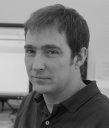
 Mike Davies
· 1 previous affiliation
- University of EdinburghSince 2006
- Full Professor · Since 2006
Research Overview
Mike Davies focuses on computational imaging, sparse signal processing, and self-supervised learning for inverse problems. His early work established foundational algorithms in compressed sensing and audio source separation before expanding into neuromorphic hardware design. Currently, he investigates equivariant imaging frameworks that reconstruct high-fidelity medical and hyperspectral images from incomplete measurements without requiring ground-truth data.
Research Trajectory
Davies’s early research concentrated on the theoretical and practical challenges of signal recovery, particularly in audio processing and sparse representations. In 2003, he explored techniques for the Audio source separation of convolutive mixtures. This interest in recovering structured information from complex mixtures naturally extended into the emerging field of compressed sensing. He provided a rigorous theoretical analysis of a deceptively simple gradient-based algorithm in Iterative Hard Thresholding for Compressed Sensing (2008), proving that it offered near-optimal error guarantees and robustness to noise comparable to more complex state-of-the-art methods. He continued to formalize the mathematical boundaries of signal recovery in Sampling Theorems for Signals From the Union of Finite-Dimensional Linear Subspaces (2009). These theoretical insights were subsequently applied back to his earlier domain in Sparse Representations in Audio and Music: From Coding to Source Separation (2010), and he further expanded the mathematical framework for sparsity by introducing The Cosparse Analysis Model and Algorithms (2011).
Moving into the 2010s, Davies began applying compressed sensing principles to medical imaging and hardware design. He participated in developing A Compressed Sensing Framework for Magnetic Resonance Fingerprinting (2013), which introduced the BLIP algorithm to actively cancel aliasing and improve tissue parameter maps from highly undersampled data. This work contributed to the broader research area of Physics Informed Deep Learning for Accelerated MRI Reconstruction. He also advanced the direction of Automated Parameter Tuning via Stein Unbiased Risk Estimation with the publication of Near Optimal Compressed Sensing Without Priors: Parametric SURE Approximate Message Passing (2015). Concurrently, his research encompassed novel computing architectures, leading to the introduction of the Loihi Asynchronous Neuromorphic Research Chip (2018).
In recent years, Davies has focused heavily on overcoming the limitations of supervised deep learning in computational imaging, specifically the reliance on clean, fully sampled ground-truth data. His group established the foundation for the research direction of Geometric Symmetry Priors for Visual Reconstruction with Equivariant Imaging: Learning Beyond the Range Space (2022). This self-supervised framework exploits natural signal symmetries, such as rotation or shift invariance, to recover information beyond the limitations of the measurement operator. They expanded this approach to handle degraded inputs in Robust Equivariant Imaging: a fully unsupervised framework for learning to image from noisy and partial measurements (2022) and formalized the mathematical requirements for such recovery in Unsupervised Learning From Incomplete Measurements for Inverse Problems (2022).
This equivariant approach has since been adapted to a variety of complex imaging domains, driving forward the area of Self-Supervised Learning for Imaging Inverse Problems. Davies developed Scale-Equivariant Imaging (SEI) in Self-Supervised Learning for Image Super-Resolution and Deblurring (2023), allowing models to recover high-frequency details by analyzing downscaled versions of their own reconstructions. In 2024, he introduced Perspective-Equivariant Imaging: an Unsupervised Framework for Multispectral Pansharpening, which utilizes the geometric principles of camera movement as a reconstruction prior. He also applied these concepts to remote sensing in Equivariant Imaging for Self-supervised Hyperspectral Image Inpainting (2024), addressing the challenge of missing stripes and pixel clusters in hyperspectral data.
His most recent work tackles the highly constrained environment of dynamic medical imaging. In Fully Unsupervised Dynamic MRI Reconstruction via Diffeo-Temporal Equivariance (2025), he and his collaborators proposed a framework to reconstruct real-time MRI sequences of cardiac and respiratory motion from undersampled measurements alone. Recognizing the need for standardized evaluation in this rapidly growing field, he co-authored Benchmarking Self-Supervised Methods for Accelerated MRI Reconstruction (2025), introducing the SSIBench framework and a novel hybrid loss function. Finally, he integrated his earlier work on risk estimation with modern deep learning in UNSURE: self-supervised learning with Unknown Noise level and Stein's Unbiased Risk Estimate (2025), creating a flexible framework that achieves near-optimal reconstruction across diverse tasks without requiring prior knowledge of noise levels.
Current Directions
The most recent papers in the evidence point to a sustained focus on fully unsupervised frameworks for complex, dynamic imaging environments where ground-truth data is impossible to obtain. A primary direction involves developing diffeomorphic equivariance models capable of reconstructing high-resolution, real-time MRI sequences of non-periodic physiological motion, such as free breathing and cardiac activity. Additionally, there is a strong emphasis on standardizing the evaluation of self-supervised imaging methods through comprehensive, modular benchmarking frameworks. Finally, current work continues to refine statistical risk estimation techniques, relaxing restrictive constraints in self-supervised learning to perform robust image reconstruction across modalities like CT and Cryo-EM without requiring prior knowledge of noise levels.
Profile updated
Loading new papers…
Other researchers whose papers cluster into the same research directions — a proxy for overlapping technical interests and shared intellectual neighborhoods.
See something wrong? Report a mistake