

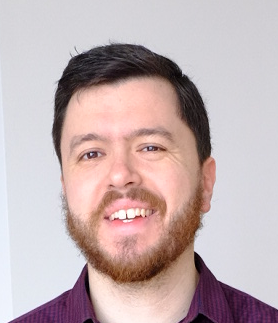
 Michael Shvartsman
· 6 previous affiliations
- FAIRCurrent
- Current
- Meta (United States)2018–2026
- Research Scientist, FAIR · 2023–2026
- Research Technical Lead / Manager · 2022–2023
- Research Scientist · 2018–2021
- Princeton University2014–2018
- Postdoctoral Research Associate, Princeton Neuroscience Institute · 2014–2018
- University of Michigan2009–2014
- PhD student · 2009–2014
- University of Maryland, College Park2008–2009
- Post-Bac Research Assistant, Linguistics · 2008–2009
- Yale University2003–2007
- Undergrad student · 2003–2007
Research Overview
Michael Shvartsman focuses on computational models of human cognition, adaptive experimentation, and the development of autonomous AI research agents. His early work investigated the dynamics of decision-making and perception through probabilistic models and psychophysics. More recently, his research addresses foundation models for physiological signals and the orchestration of large language models for automated scientific discovery.
Research Trajectory
The early trajectory of this research was rooted in cognitive science and linguistics, exploring how human processing adapts to environmental and architectural constraints. He investigated how eye movements adapt to task structures in The Adaptive Nature of Eye Movements in Linguistic Tasks: How Payoff and Architecture Shape Speed-Accuracy Trade-Offs. He subsequently proposed a computational model where reading eye movements are governed by a rational agent balancing perception and memory, explaining spillover effects even without parafoveal preview in Computationally Rational Saccadic Control: An Explanation of Spillover Effects Based on Sampling from Noisy Perception and Memory.
This interest in cognitive modeling naturally extended to broader decision-making frameworks. He introduced a computational theory for decisions made under dynamically shifting contexts, generalizing fixed-context random walk models in A Theory of Decision Making Under Dynamic Context. Collaborating on further psychophysical research, he investigated how humans develop context-dependent priors to maximize reward in Adaptive response priors in context-dependent decision-making.
Transitioning into broader machine learning applications for biological and sensory data, he developed probabilistic latent variable models, such as Matrix-normal models for fMRI analysis. His work also expanded into computer vision, contributing to the research direction of Shared Semantic Spaces for Open-Vocabulary Visual Recognition. In this area, he co-authored Unifying Few- and Zero-Shot Egocentric Action Recognition, which introduced deep metric-learning losses to a joint video-text embedding space to improve zero-shot classification without sacrificing few-shot accuracy.
A major theme in his trajectory involves adaptive experimentation and psychophysics, particularly leveraging Gaussian processes. He participated in hardware and perceptual research for virtual reality, evaluating gaze-contingent distortions in Perceptual Requirements for Eye-Tracked Distortion Correction in VR. To improve the efficiency of such psychophysical experiments, he guided research on active sampling strategies. This included deriving analytic expressions for look-ahead posteriors in Look-Ahead Acquisition Functions for Bernoulli Level Set Estimation, which advanced the broader areas of Boundary Bias in High Dimensional Global Optimization and Exact Bayesian Inference through Closed Form Posterior Updates. Continuing this focus on high-dimensional sensory tasks, he oversaw the development of a semi-parametric model that combines traditional psychophysical models with Gaussian process priors in A Semi-parametric Model for Decision Making in High-Dimensional Sensory Discrimination Tasks. He further refined these approaches by incorporating response times alongside binary choices to improve latent value estimation in Response Time Improves Gaussian Process Models for Perception and Preferences.
In his most recent work, the focus has shifted toward foundation models for physiological signals and the orchestration of autonomous AI agents. Addressing the area of Overcoming Inter-Subject Variability in Myoelectric Control, he collaborated on Scaling and Distilling Transformer Models for sEMG, demonstrating that transformers can learn generalizable representations from relatively small surface electromyography datasets.
Simultaneously, he has made significant contributions to the study of AI research agents. Participating in the research direction of Program Synthesis as Search in the Space of Code, he co-authored The Automated LLM Speedrunning Benchmark: Reproducing NanoGPT Improvements, which evaluates the ability of language models to replicate scientific code optimizations. He also investigated the factors driving agent success, showing in What Does It Take to Be a Good AI Research Agent? Studying the Role of Ideation Diversity that generating a diverse set of initial hypotheses is critical for complex data science tasks. This culminated in formalizing AI research agents as search algorithms in AI Research Agents for Machine Learning: Search, Exploration, and Generalization in MLE-bench, a paper that advances the broader area of Autonomous Environment Orchestration for LLM Agents by introducing a framework that achieves strong performance on machine learning benchmarks.
Current Directions
The most recent papers in the evidence address two primary domains: the application of transformer architectures to physiological data, and the development and evaluation of autonomous AI research agents. In the physiological domain, recent work investigates how to scale and distill models for surface electromyography (sEMG) to overcome data scarcity and computational constraints. Concurrently, a major focus lies in understanding and improving AI agents tasked with automated scientific discovery and machine learning engineering. This involves benchmarking large language models on their ability to reproduce code optimizations, studying the causal role of ideation diversity in agent success, and formalizing agent workflows as search processes over the space of code to improve benchmark performance.
Profile updated
| Paper | Venue | Year |
|---|---|---|
| Scaling and Distilling Transformer Models for sEMGGitHubfacebookresearch/ | TMLR | 2025 |
Loading new papers…
Other researchers whose papers cluster into the same research directions — a proxy for overlapping technical interests and shared intellectual neighborhoods.
See something wrong? Report a mistake