

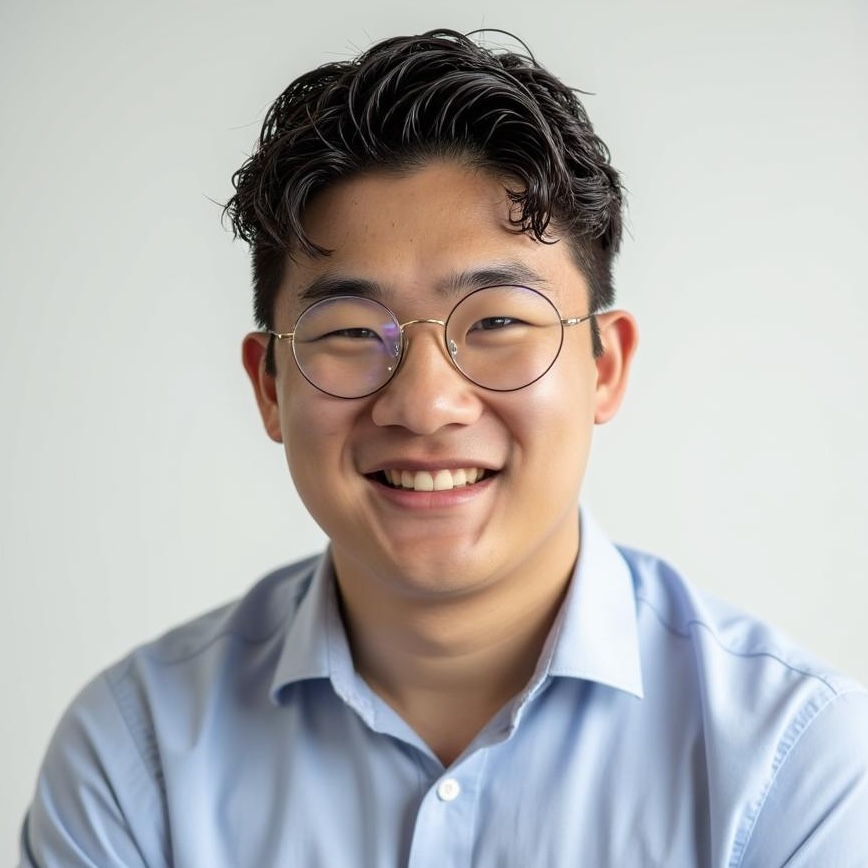
 Michael S Yao
· 7 previous affiliations
- University of PennsylvaniaSince 2021
- Researcher · Since 2021
- Current
- Master of Science - MS, Computer Science · 2023–2025
- PhD student · 2021–2025
- MD-PhD Candidate · 2021
- Scale AI2025
- Human Frontier Collective Intern · 2025
- Genentech2025
- Intern · 2025
- Glass Health2023–2024
- AI Clinical Fellow · 2023–2024
- 25madison2024
- Health VC Fellow · 2024
- Intern · 2022
- California Institute of Technology2017–2021
- Undergrad student · 2017–2021
Research Overview
Michael S Yao focuses on the development of trustworthy machine learning systems for clinical medicine, with a specific emphasis on addressing distribution shift and integrating prior medical knowledge into algorithmic frameworks. His work explores how statistical methods and generative modeling can be leveraged to improve the reliability of AI in high-stakes environments, such as rare disease diagnostics, personalized treatment optimization, and hospital workflows. As an MD-PhD candidate at the University of Pennsylvania, Yao’s research trajectory reflects a transition from developing specific diagnostic tools to establishing generalizable frameworks for Robust Design via Conservative Model Based Optimization and knowledgeable language model alignment.
Research Trajectory
Yao’s early research, beginning around 2022, was characterized by the application of machine learning to specific clinical challenges in radiology and metabolic health. During this period, he focused on "opportunistic screening"—the use of routine clinical data, such as CT scans, to identify risks for conditions unrelated to the original reason for the scan. A primary example of this work involved developing interpretable representations for diabetes risk stratification, where he sought to map complex imaging features to clinically familiar metrics like hemoglobin A1c. Simultaneously, he investigated the practical hurdles of deploying AI in medical imaging, specifically addressing the gap between simulated environments and real-world clinical settings in the context of accelerated MRI reconstruction.
By 2024, Yao’s focus shifted toward more foundational problems in machine learning that affect clinical utility, particularly the challenge of Overcoming Surrogate Model Exploitation in Offline Optimization. In fields like protein design or personalized medicine, evaluating a "design" (such as a treatment plan) is often expensive or impossible to do in real-time. Researchers instead rely on surrogate models to predict outcomes. Yao identified that optimization algorithms often exploit inaccuracies in these surrogate models, leading to "over-optimistic" but physically or clinically unrealistic designs. To counter this, he began developing regularization frameworks that constrain optimization trajectories to regions of the design space where the training data is dense and the surrogate model is likely to be accurate.
This methodological evolution led to a broader interest in Optimizing Discrete Structures via Continuous Latent Spaces. Yao’s work began to incorporate "knowledge priors"—structured medical information from textbooks or clinical guidelines—to guide model behavior. This approach aims to provide AI systems with a form of "clinical common sense," allowing them to remain robust even when encountering patient demographics or clinical scenarios not well-represented in their training data.
Current Directions
Yao’s recent work, extending into 2025 and 2026, focuses on the intersection of Large Language Models (LLMs) and black-box optimization. He has investigated how LLMs can be repurposed as optimizers for personalized medicine, using their internal knowledge and reasoning capabilities to navigate complex decision spaces. This research addresses the problem of Estimating Model Confidence Through Stochastic Response Consistency, seeking to make LLM-driven clinical recommendations more stable and mathematically principled.
A significant current theme in his research is Quality Constrained Diversity Optimization. In clinical optimization, identifying a single "best" solution is often less valuable than identifying a diverse set of high-quality candidates, as this allows clinicians to consider trade-offs between different treatment paths. Yao has proposed frameworks that treat diversity as a Distribution Matching for Diversity in Generative Alignment, ensuring that generative models capture multiple "modes" of effective solutions rather than collapsing to a single, potentially brittle output.
Beyond algorithmic development, Yao maintains an active interest in the implementation science of AI in healthcare. This includes defining standardized frameworks for integrating ML into radiology practices and exploring the role of "datathons" in medical education to prepare future clinicians for an AI-augmented landscape.
Representative Work
SynthA1c: Towards Clinically Interpretable Patient Representations for Diabetes Risk Stratification In this work, Yao and colleagues developed a framework to predict hemoglobin A1c (HbA1c) levels using opportunistic features from routine abdominal CT scans and physical exam data. The core contribution was the shift from binary classification (diabetes vs. no diabetes) to a continuous, clinically interpretable metric. By generating a "synthetic" lab value, the model provides a more actionable signal for clinicians during unrelated hospital visits, achieving high sensitivity for identifying Type 2 Diabetes Mellitus.
A Path Towards Clinical Adaptation of Accelerated MRI Addressing the limitations of deep learning-based MRI reconstruction, this paper explores methods to enhance the clinical relevancy of accelerated MRI. Yao proposed a convolutional neural network (ConvNet) model designed to detect sources of image artifacts, which are often present in real-world signal data but absent in simulations. The work demonstrates that training reconstructors on variable acceleration factors and incorporating artifact detection can improve the robustness of these systems for actual clinical use.
Generative Adversarial Model-Based Optimization via Source Critic Regularization This paper introduces adaptive source critic regularization (aSCR), a framework designed to address the problem of inaccurate surrogate model predictions in offline optimization. By using a generative adversarial approach, Yao developed a method to constrain optimization trajectories to the "source" distribution (the training data). This prevents the optimizer from drifting into regions where the surrogate model's predictions are unreliable, a critical requirement for applying model-based optimization to high-stakes domains like clinical medicine and protein design.
Knowledgeable Language Models as Black-Box Optimizers for Personalized Medicine Yao introduced LEON (LLM-based Entropy-guided Optimization with kNowledgeable priors), a framework that utilizes LLMs as black-box optimizers. The method combines retrieved medical knowledge with statistical constraints to navigate the search for personalized medical treatments. By favoring high-certainty LLM outputs and maintaining proximity to historical data, LEON aims to outperform traditional optimization methods in scenarios where patient demographics shift away from the training distribution.
Diversity By Design: Leveraging Distribution Matching for Offline Model-Based Optimization In this work, Yao proposed DynAMO (Diversity in Adversarial Model-based Optimization), a framework that encourages the generation of a diverse set of high-quality designs. By framing diversity as a distribution matching problem, the algorithm avoids the common pitfall of "mode collapse," where an optimizer repeatedly proposes the same solution. This approach is particularly relevant for clinical decision support, where providing a range of viable treatment options is often preferred over a single recommendation.
A Concept-based Interpretable Model for the Diagnosis of Choroid Neoplasias using Multimodal Data Yao participated in the development of the Multimodal Medical Concept Bottleneck Model (MMCBM) for diagnosing rare eye cancers. This collaborative effort focused on bridging the gap between raw imaging data and human-readable clinical concepts. The model was designed to provide actionable explanations for its diagnostic decisions, which was shown to significantly improve the diagnostic accuracy of junior doctors by providing a transparent reasoning chain rather than a "black-box" prediction.
Profile updated
Loading new papers…
Other researchers whose papers cluster into the same research directions — a proxy for overlapping technical interests and shared intellectual neighborhoods.
See something wrong? Report a mistake