

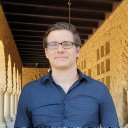
 Michael Moor
· 2 previous affiliations
- ETH ZurichSince 2024
- Assistant Professor · Since 2024
- Stanford University2022–2024
- Postdoc · 2022–2024
Research Overview
Michael Moor focuses on developing large-scale medical foundation models, multimodal clinical AI, and topological deep learning methods. His trajectory spans from early warning systems for intensive care to the creation of generalist medical agents capable of in-context learning. Currently, his work addresses complex reasoning, reinforcement learning, and collaborative autonomous research frameworks for clinical and scientific domains.
Research Trajectory
Moor’s early work centered on predictive modeling for critical care settings. In 2019, he developed Machine learning for early prediction of circulatory failure in the intensive care unit., introducing circEWS, an early warning system designed to predict circulatory failure up to eight hours in advance. By integrating high-resolution physiological data, this system maintained high recall while significantly reducing false alarms, contributing directly to the area of Temporal Suppression for Actionable Monitoring and Alarm Fatigue. He later expanded his focus on clinical diagnostics to medical imaging, developing deep learning approaches for rapid diagnosis in Accelerating Detection of Lung Pathologies with Explainable Ultrasound Image Analysis. Alongside developing new architectures, he continued the rigorous retrospective validation of predictive models across diverse populations, as demonstrated in Predicting sepsis using deep learning across international sites: a retrospective development and validation study.
Parallel to his clinical predictive modeling, Moor explored structural representation learning using algebraic topology. He introduced Topological Autoencoders, a method that forces latent representations to preserve the multi-scale connectivity and shape of the original data. By making persistent homology differentiable, this work advanced the research direction of Topology Preserving Dimensionality Reduction with Persistent Homology and the broader field of Differentiable Persistent Homology for Structural Learning. He subsequently participated in extending these topological concepts to graph structures in Topological Graph Neural Networks. This research contributed to the area of Vectorizing Topological Signatures for Machine Learning by incorporating global topological information into message-passing architectures, thereby increasing their expressive power beyond standard graph isomorphism tests.
A major shift in his trajectory involved the development of generalist medical AI and multimodal foundation models. He introduced Med-Flamingo: a Multimodal Medical Few-shot Learner, a foundation model pre-trained on medical textbooks and literature that is capable of in-context learning for complex visual diagnoses. This architecture advanced the direction of Aligning Visual Features with Language Model Embeddings by enabling the model to adapt to new clinical tasks using only a handful of examples. He also guided research on clinical text generation, developing a two-step approach in Style-Aware Radiology Report Generation with RadGraph and Few-Shot Prompting. This method separates the extraction of clinical findings from the stylistic verbalization of the report, improving the factual accuracy of automated radiology reporting.
Building on these foundation models, Moor’s focus expanded to interactive, agentic evaluation and collaborative AI. He participated in the development of AgentClinic: a multimodal agent benchmark to evaluate AI in simulated clinical environments, which shifted medical AI evaluation from static multiple-choice questions to dynamic multi-agent simulations where models must interactively gather information. To further formalize evaluation, he directed the creation of SMMILE: An expert-driven benchmark for multimodal medical in-context learning, curating specialized tasks to test how multimodal models adapt from limited context. Beyond clinical domains, he proposed AgentRxiv: Towards Collaborative Autonomous Research, a framework functioning as a preprint server for AI agents. This system allows autonomous research laboratories to share findings cumulatively, improving reasoning and discovering novel prompting techniques across domains.
Most recently, his work incorporates reinforcement learning and step-wise reasoning to improve model reliability in knowledge-intensive tasks. He contributed to RadVLM-GRPO: Enhancing Chest X-ray Report Generation and Visual Grounding via Reinforcement Learning, investigating how task-specific feedback and explicit intermediate reasoning can optimize vision-language models for radiology beyond standard supervised fine-tuning. He also participated in exploring how meta-reinforcement learning can encourage exploratory behaviors in language models in Meta-RL Induces Exploration in Language Agents. Finally, he directed work on Process Reward Agents for Steering Knowledge-Intensive Reasoning, introducing a method to guide frozen AI models through complex tasks by evaluating their logic step-by-step in real-time, significantly improving accuracy without retraining the base model.
Current Directions
The most recent papers in the evidence address the integration of reinforcement learning, process-based rewards, and agentic reasoning into medical and scientific AI. Current work investigates how explicit intermediate reasoning can steer knowledge-intensive tasks, decoupling the reasoning process from verification to improve the accuracy of language models without requiring extensive retraining. Additionally, recent research explores collaborative autonomous frameworks where AI agents can share findings and build upon each other's discoveries, alongside the ongoing development of rigorous, expert-driven benchmarks for evaluating multimodal in-context learning in dynamic clinical settings.
Profile updated
Loading new papers…
Other researchers whose papers cluster into the same research directions — a proxy for overlapping technical interests and shared intellectual neighborhoods.
See something wrong? Report a mistake