

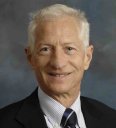
 Michael Huhns
· 1 previous affiliation
- University of South CarolinaCurrent
- Current
- Emeritus · 2014–2024
- Full Professor · 1995–2014
Research Overview
Michael Huhns focuses on the development of distributed artificial intelligence, multiagent systems, and the integration of autonomous agents into complex sociotechnical environments. His work has evolved from early foundational research in signal processing and computer vision toward the design of robust architectures for agent coordination, negotiation protocols in service-oriented computing, and the strategic management of information spread within social networks.
Research Trajectory
The trajectory of Huhns’s research reflects the broader evolution of artificial intelligence from centralized processing to distributed, autonomous systems. His early career in the 1970s and 1980s was rooted in electrical engineering, with a focus on image restoration, subpixel registration, and microwave-enhanced thermography for medical applications. This period established a rigorous methodological foundation in signal processing and pattern recognition, which later informed his approach to how agents perceive and interpret data in distributed environments.
By the mid-1980s, Huhns shifted his focus toward the emerging field of distributed artificial intelligence (DAI). During this period, he investigated the fundamental requirements for control and communication in systems where multiple computational entities must interact to solve problems. This transition is marked by work such as An architecture for control and communications in distributed artificial intelligence systems, which addressed the structural challenges of coordinating decentralized agents.
In the late 1980s and early 1990s, Huhns’s research deepened into the logical and inferential foundations of multiagent systems (MAS). He explored how agents could maintain consistent beliefs and make plausible inferences when operating with incomplete or distributed information. This era was characterized by a focus on truth maintenance and formal logic, ensuring that as agents exchanged data, the global state of the system remained coherent. His work at the Microelectronics and Computer Technology Corporation (MCC) on projects like Carnot and InfoSleuth further extended these concepts into enterprise integration and document retrieval in distributed office environments.
The mid-1990s to the mid-2000s saw a move toward the practical application of MAS in large-scale logistics and service-oriented architectures. Huhns investigated how autonomous agents could be deployed in high-stakes environments, such as Department of Defense distribution systems, and how they could engage in complex, multi-issue negotiations. This period emphasized the transition of MAS from theoretical frameworks to functional tools for managing real-world complexity, particularly in competitive or open environments where agents represent different stakeholders.
In his more recent work, Huhns has adopted a sociotechnical perspective, examining the intersection of AI, ethics, and social dynamics. This shift acknowledges that AI systems do not operate in isolation but are embedded within human social structures. His current research focuses on the accountability of AI decision-support tools and the use of automated planning to model and influence opinion dynamics in social networks. This work utilizes reinforcement learning and sophisticated planning ontologies to address modern challenges such as the mitigation of misinformation.
Current Directions
Huhns’s current research is increasingly concerned with the ethical and strategic dimensions of AI in social contexts. A primary focus is the development of "sociotechnical" perspectives on AI, which treat ethics and accountability as integral components of system design rather than afterthoughts. This involves analyzing how AI-driven tools, such as loan-processing systems or career coaches, interact with human users and societal norms.
Another significant current direction is the application of automated planning to social network dynamics. Huhns is investigating how to strategically influence the spread of information to combat "fake news" and misinformation. This involves creating expressive frameworks that combine opinion dynamics with Planning Domain Definition Language (PDDL) to simulate and visualize how different intervention strategies—such as "vaccinating" specific nodes with accurate information—can alter the collective opinion of a network. This work represents a synthesis of his long-standing expertise in MAS with modern machine learning techniques like deep reinforcement learning.
Representative Work
Huhns’s contributions to knowledge representation and logical consistency are exemplified by his early work on inference and truth maintenance. In Plausible Inferencing Using Extended Composition, he developed a formal method for determining when the composition of relations is plausible, providing an algebraic framework for deriving new information from existing data tuples. This was followed by Distributed Truth Maintenance, where he co-authored an algorithm to ensure logical consistency among a group of nonmonotonic reasoning agents. The algorithm guaranteed that while each agent maintained local consistency, any shared data remained globally consistent, a critical requirement for reliable distributed expert systems.
As the field moved toward practical deployment, Huhns served as the senior researcher on projects applying these theories to complex logistics. In A Multi-Agent Environment for Department of Defense Distribution, he oversaw the integration of cooperative autonomous agents with satellite communications to manage the global movement of personnel and equipment. This work demonstrated the scalability of agent technology and its ability to operate within the constraints of real-world communication infrastructures.
In the domain of agent interaction, Huhns contributed to the development of sophisticated communication protocols. An Extended Protocol for Multiple-Issue Concurrent Negotiation addressed the problem of agents needing to negotiate with multiple parties simultaneously over several issues. The protocol enabled service providers and requestors in a competitive environment to manage parallel bilateral negotiations, facilitating mutually beneficial agreements in service-oriented computing.
His recent focus on the societal impact of AI is reflected in Sociotechnical Perspectives on AI Ethics and Accountability. This work argues for a holistic view of AI systems that includes their human and organizational contexts, particularly when these systems are used for decision support in sensitive areas like finance and career development.
Finally, his recent work in social network interventions is represented by Towards Effective Planning Strategies for Dynamic Opinion Networks. As the senior author, Huhns guided the development of a two-pronged approach to combat misinformation. By combining supervised learning for node ranking with a reinforcement learning-based "Deep Value Network," the research produced planners capable of identifying optimal nodes for the dissemination of truthful information, thereby minimizing the spread of misinformation across large-scale dynamic networks. This work bridges the gap between traditional automated planning and modern social media challenges.
Profile updated
| Title | Venue | Year |
|---|---|---|
| Towards Effective Planning Strategies for Dynamic Opinion Networks | NeurIPS | 2024 |
| An Extended Protocol for Multiple-Issue Concurrent Negotiation | AAAI | 2005 |
| The Next Big Thing: Position Statements | IJCAI | 1997 |
| A Multi-Agent Environment for Department of Defense Distribution | Adaption and Learning in Multi-agent Systems | 1995 |
| Distributed Truth Maintenance | AAAI | 1990 |
| Plausible Inferencing Using Extended Composition | IJCAI | 1989 |
Loading new papers…
Other researchers whose papers cluster into the same research directions — a proxy for overlapping technical interests and shared intellectual neighborhoods.
See something wrong? Report a mistake