

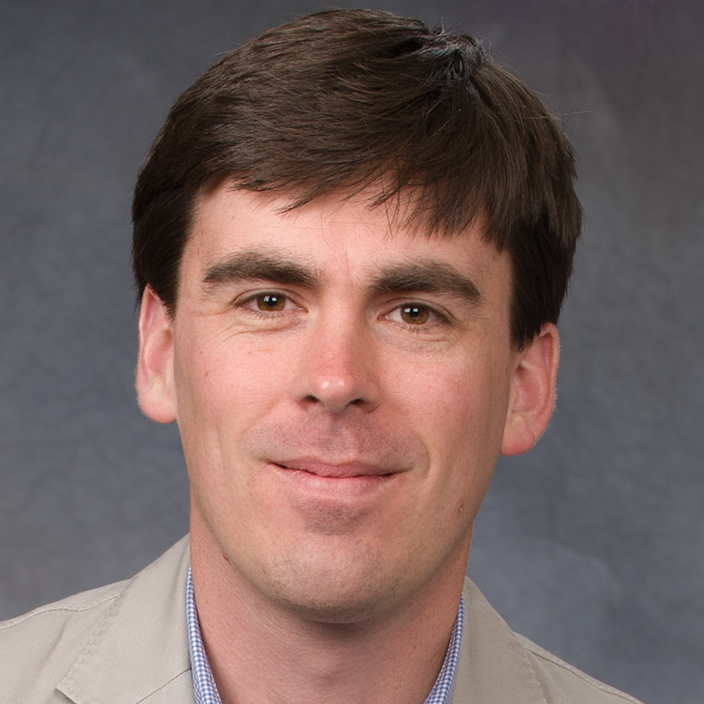
 Michael Hay
· 6 previous affiliations
- LinkedIn (United States)Since 2025
- Senior Staff Software Engineer, Machine Learning · Since 2025
- Colgate UniversityCurrent
- Current
- Associate Professor · 2012–2024
- Tumult Labs2019–2025
- Principal Researcher · 2019–2025
- United States Census Bureau2017–2019
- Research Data Scientist · 2017–2019
- Cornell University2010–2012
- Computing Innovation Fellow · 2010–2012
- University of Massachusetts Amherst2007–2010
- Doctor of Philosophy (Ph.D.), Computer Science · 2010
- Master of Science (MS), Computer Science · 2007
Research Overview
Michael Hay focuses on differential privacy, relational machine learning, and privacy-aware data management. His early research addressed statistical biases and structural learning in relational datasets before shifting toward the theoretical and practical challenges of data privacy. His current work emphasizes deploying robust differential privacy mechanisms for large-scale, real-world query engines and public data releases.
Research Trajectory
Michael Hay’s early research centered on the complexities of machine learning within relational domains, where data instances are interdependent rather than independently and identically distributed. In 2003, acting as senior author, he investigated how structural properties of relational datasets can confound learning algorithms. In Avoiding Bias when Aggregating Relational Data with Degree Disparity, he and his collaborators demonstrated that degree disparity—where the frequency of a relation correlates with target variables—can lead to misleading correlations when using standard aggregation functions, proposing novel hypothesis testing procedures to adjust for these effects. During this same period, he guided the development of Learning relational probability trees, which extended traditional probability estimation trees to relational settings by searching over a space of features that dynamically propositionalize data using aggregation functions.
By the early 2010s, his focus shifted toward the intersection of data management and privacy, particularly in the context of complex networks. As the first author of Privacy-aware data management in information networks (2011), he systematically surveyed the competing demands of enterprise data analysis and individual privacy. This work highlighted the challenges of releasing network data for utility while preserving sensitive relationships and identities, marking a clear transition into the field of differential privacy.
In the subsequent years, Hay’s work increasingly addressed the algorithmic and systems-level implementation of differential privacy. He participated as a co-author in research bridging privacy guarantees with complex statistical modeling, such as Differentially Private Learning of Undirected Graphical Models using Collective Graphical Models (2017). This work demonstrated that releasing noisy sufficient statistics via the Laplace mechanism could achieve a practical trade-off between privacy and utility, and it utilized the formalism of collective graphical models to overcome the pathologies of naive learning algorithms.
Moving toward database systems and practical deployment, Hay contributed to the development of privacy-preserving query infrastructure. He was a co-author on PrivateSQL: A Differentially Private SQL Query Engine (2019), reflecting an interest in making differential privacy accessible for standard database operations. Most recently, his trajectory has culminated in large-scale, real-world applications of these principles. In 2025, he co-authored Publishing Wikipedia usage data with strong privacy guarantees, which detailed the deployment of differential privacy to safely release fine-grained, daily page view statistics—including country of origin—for the Wikimedia Foundation, ensuring robust guarantees for users and editors while maintaining data utility for academic research.
Current Directions
The most recent papers in the evidence address the practical deployment and systems integration of differential privacy in large-scale environments. Recent work investigates how to bridge the gap between theoretical privacy guarantees and accessible data querying, particularly through the design of differentially private SQL engines and synthetic data generation frameworks. Additionally, this direction encompasses the application of robust privacy mechanisms to public-interest datasets. By focusing on the safe release of granular usage statistics for platforms like Wikipedia, current efforts emphasize balancing the utility required by researchers and analysts with strict, mathematically grounded anonymity for end users.
Profile updated
Loading new papers…
Other researchers whose papers cluster into the same research directions — a proxy for overlapping technical interests and shared intellectual neighborhoods.
See something wrong? Report a mistake