

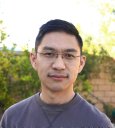
 Michael C. Yip
· 7 previous affiliations
- University of California San DiegoSince 2015
- Professor, Electrical and Computer Engineering · Since 2026
- Director, Medical Robotics Collaboratory at the Contextual Robotics Institute · Since 2020
- Full Professor · Since 2015
- Associate Professor, Electrical and Computer Engineering · 2021–2026
- Yip Consulting ServicesSince 2021
- President · Since 2021
- Atmosphere DataSince 2023
- Co-Founder · Since 2023
- Channel RoboticsSince 2023
- Co-Founder · Since 2023
- Kato MedicalSince 2023
- Board Advisor · Since 2023
- Stanford University2011–2015
- Doctor of Philosophy (PhD), Bioengineering · 2011–2015
- University of British Columbia2009–2011
- MASc, Electrical Engineering · 2009–2011
Research Overview
Michael C. Yip focuses on surgical robotics, robot learning, and the control of biomimetic and continuum manipulators. His trajectory spans early work in tissue tracking and model-less feedback control to the development of autonomous surgical perception and motion planning frameworks. Recently, his research emphasizes foundation models for robotic surgery, active sensing in deformable environments, and safe reinforcement learning for medical interventions.
Research Trajectory
Yip’s early research addressed the fundamental challenges of operating in constrained and unstructured environments, particularly within the human body. In Tissue Tracking and Registration for Image-Guided Surgery, he developed an integrated framework for the vision-based tracking of tissue, overcoming the difficulties of poorly lit, specular endoscopic images to enable stable augmented reality during surgical operations. Expanding into physical interaction, he introduced a task-space closed-loop controller in Model-Less Feedback Control of Continuum Manipulators in Constrained Environments. This work allowed continuum robots to safely navigate and comply with obstacles without relying on rigid, often inaccurate kinematic models.
By 2017, his work began exploring novel actuation methods and computational efficiency in robotic planning. He investigated the working principles of supercoiled polymer threads for high power-to-weight actuation in On the Control and Properties of Supercoiled Polymer Artificial Muscles. Concurrently, to address computational bottlenecks in robotics, his group developed Fastron: An Online Learning-Based Model and Active Learning Strategy for Proxy Collision Detection. This configuration space model functions as a proxy for kinematic collision detection, contributing directly to the broader research direction of Mitigating the Collision Checking Bottleneck in Motion Planning.
Moving toward complex perception and planning, Yip’s lab introduced SuPer: A Surgical Perception Framework for Endoscopic Tissue Manipulation With Surgical Robotics, which continuously maps deformable surgical fields and tracks rigid instruments. This aligns with his ongoing interest in the area of Dynamic 4D Reconstruction of Deformable Tissues. In the domain of algorithmic planning, he advanced the area of Neural Guided Search with Probabilistic Completeness through Motion Planning Networks: Bridging the Gap Between Learning-Based and Classical Motion Planners, an architecture that accelerates pathfinding by learning near-optimal heuristics. This was followed by Motion Planning Transformers: One Model to Plan them All, which applied transformer architectures to identify optimal map regions for path generation. During this period, he also explored multi-domain mobility, presenting a reconfigurable hyper-redundant robot in ARCSnake: Reconfigurable Snakelike Robot With Archimedean Screw Propulsion for Multidomain Mobility.
The most recent phase of his trajectory focuses heavily on autonomous surgical interventions and advanced control systems. He outlined a broad vision for the field in The robot will see you now: Foundation models are the path forward for autonomous robotic surgery. His lab has operationalized these concepts across several specific surgical tasks. In AutoPeel: Adhesion-Aware Safe Peeling Trajectory Optimization for Robotic Wound Care, his team combined differentiable physics-based simulation with model predictive control to automate wound dressing removal safely. Similarly, Autonomous Image-to-Grasp Robotic Suturing Using Reliability-Driven Suture Thread Reconstruction tackles noisy endoscopic images to improve grasping accuracy during suturing.
To handle the unpredictable nature of soft tissue, he developed JIGGLE: An Active Sensing Framework for Boundary Parameters Estimation in Deformable Surgical Environments, which uses a differentiable soft-body simulator to identify tissue attachment points. Further addressing the limitations of open-loop execution, Feedback Matters: Augmenting Autonomous Dissection with Visual and Topological Feedback introduces a closed-loop framework that actively stretches tissue to verify cuts and plan recovery actions. His recent contributions also include Optimal Motion Scaling for Delayed Telesurgery, addressing latency in remote operations, and SurgIRL: Toward Life-Long Learning for Surgical Automation by Incremental Reinforcement Learning, which explores continuous adaptation in surgical automation.
Current Directions
Recent work investigates the integration of foundation models and continuous learning into autonomous robotic surgery. The most recent papers in the evidence address the critical need for closed-loop feedback in unstructured medical environments, utilizing differentiable physics simulators and active sensing to manage deformable tissues. This includes developing frameworks that can reason about topological changes during dissection and suturing, as well as exploring incremental reinforcement learning to enable life-long adaptation in surgical robots. Additionally, ongoing research addresses the practical challenges of remote medical interventions, such as mitigating the effects of latency in delayed telesurgery and optimizing safe physical interactions between robots and human tissue.
Profile updated
| Paper | Venue | Year |
|---|---|---|
| Autonomous Navigation in Unknown Environments With Sparse Bayesian Kernel-Based Occupancy MappingGitHubthaipduong/ | IEEE Trans. Robotics | 2022 |
Loading new papers…
Other researchers whose papers cluster into the same research directions — a proxy for overlapping technical interests and shared intellectual neighborhoods.
See something wrong? Report a mistake