

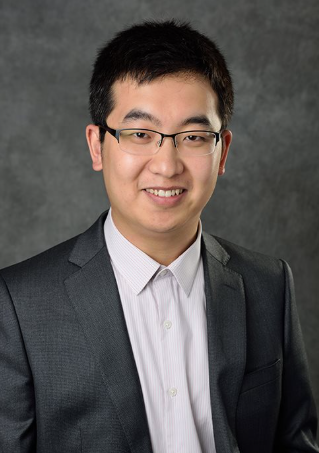
 Mi Zhang
· 7 previous affiliations
- The Ohio State UniversitySince 2022
- Associate Professor · Since 2022
- Michigan State University2014–2022
- Associate Professor · 2020–2022
- Assistant Professor · 2014–2020
- Cornell University2013–2014
- Postdoctoral Research Associate · 2013–2014
- Cornell Tech2013–2014
- Postdoc · 2013–2014
- University of Southern California2006–2013
- PhD student · 2006–2013
- Master of Science (MS), Computer Science · 2010
- Research Intern · 2010
- Peking University2002–2006
- Undergrad student · 2002–2006
2 other authors named Mi Zhang: Mi Zhang (Fudan University · 88 papers), Mi Zhang (Wuhan University · 1 paper)
Research Overview
Mi Zhang focuses on efficient artificial intelligence, edge computing, and the artificial intelligence of things (AIoT). His work spans the optimization of deep learning models for resource-constrained devices, neural-enhanced wireless communication, and automated machine learning. Recently, his research has centered on compressing large language models and developing efficient architectures for long-context reasoning and multimodal applications.
Research Trajectory
Zhang's early trajectory is characterized by efforts to optimize deep neural networks for resource-constrained environments. In 2019, he contributed to areas such as Searching for Heterogeneous Layer-Wise Neural Architectures and Weight Inheritance for Efficient Neural Architecture Search through HM-NAS: Efficient Neural Architecture Search via Hierarchical Masking. This work generalized weight-sharing approaches to expand the search space beyond hand-designed heuristics, advancing the broader area of Scaling Neural Architecture Search to Global Network Topologies. The following year, he outlined the vision for this domain in Deep Learning in the Era of Edge Computing: Challenges and Opportunities. This comprehensive analysis identified critical bottlenecks in moving artificial intelligence from the cloud to the edge, touching upon research directions such as Parameter Efficient Deep Learning for Edge Devices, Model Partitioning for Collaborative Edge Intelligence, and Model Compression for Efficient Edge Intelligence. The paper also explored Edge Intelligence for Real-Time Autonomous Systems and Unified Architectures for Efficient Multi-Task Perception.
Building on the theme of edge intelligence, Zhang expanded his focus to include automated machine learning, federated learning, and wireless communication. In 2021, he explored neural-enhanced demodulation for ultra-low SNR communication in NELoRa: Towards Ultra-low SNR LoRa Communication with Neural-enhanced Demodulation. He continued to advance automated ML pipelines with Deep AutoAugment in 2022, introducing a fully automated approach that progressively builds multi-layer data augmentation strategies from scratch by maximizing gradient similarity. During this period, he also addressed the challenges of distributed training across heterogeneous devices. He participated in the development of a fine-grained client selection framework in PyramidFL: a fine-grained client selection framework for efficient federated learning. Concurrently, he introduced FedRolex: Model-Heterogeneous Federated Learning with Rolling Sub-Model Extraction, which utilized a rolling extraction scheme to train global models larger than individual client capacities. This work contributed to directions like Inclusive Federated Learning for Heterogeneous Device Ecosystems and Rolling Sub-model Extraction for Heterogeneous Federated Learning. Returning to wireless systems in 2023, he collaborated on NELoRa-Bench: A Benchmark for Neural-enhanced LoRa Demodulation, treating signal demodulation as an image classification task to achieve significant SNR gains. This benchmark intersected with areas like Synthetic Data Generation for Wireless Intelligence and Time-Frequency Imaging for Deep Signal Analysis.
As the field shifted toward massive foundation models, Zhang's research adapted to address the efficiency bottlenecks of large language models (LLMs) and diffusion models. In 2024, he synthesized the state of the field in Efficient Large Language Models: A Survey, categorizing model-centric, data-centric, and framework-centric optimization techniques. This review covered critical areas such as Scaling Deep Learning with Low Precision Quantization, Sparse Activation for Scaling Large Neural Networks, and Paged Memory Management for LLM Inference Serving. He also continued his work on low-power wide-area networks with ChirpTransformer: Versatile LoRa Encoding for Low-power Wide-area IoT.
In 2025, Zhang published extensively on compressing and scaling generative models. He directed the design of $\text{D}_{2}\text{O}$: Dynamic Discriminative Operations for Efficient Long-Context Inference of Large Language Models, a fine-tuning-free method that dynamically allocates cache budgets to improve inference throughput. This advanced the directions of Adaptive Token Eviction and KV Cache Compression, as well as Scaling Transformer Context with Compressed Key Value Memory. He also introduced a mathematically grounded approach to model compression in SVD-LLM: Truncation-aware Singular Value Decomposition for Large Language Model Compression, achieving high compression ratios by aligning singular values with compression loss. This work contributed directly to the research direction Efficient Compression and Structural Pruning for Large Language Models and the broader area of Linearizing Federated Low-Rank Adaptation.
Alongside LLMs, Zhang surveyed generative vision models in Efficient Diffusion Models: A Survey, exploring areas like Temporal Redundancy and Feature Caching in Diffusion Transformers and Efficient Classifier Free Guidance for Real Time Generative Models. His ongoing interest in wireless communication yielded Morph: ChirpTransformer-based Encoder-decoder Co-design for Reliable LoRa Communication, which manipulated spreading factor configurations to improve noise tolerance, contributing to Index Modulation for High Efficiency Wireless Communication. Furthermore, he participated in enhancing the reasoning capabilities of LLMs at inference time through Enhancing Test-Time Scaling of Large Language Models with Hierarchical Retrieval-Augmented MCTS. This framework combined Monte Carlo Tree Search with retrieval systems, advancing System 2 Reasoning for Large Language Models and Grounding Generative Models in Specialized Knowledge Bases.
Looking toward alternative architectures for long-context tasks, Zhang developed Dynamic Linear Attention in 2026. This work addressed the limitations of standard linear attention by adaptively deciding when to store new information and merge old states, contributing to the areas of Linear and Sparse Attention for Long Contexts and The Memory Bottleneck in Linear Sequence Models.
Current Directions
The most recent papers in the evidence address the computational and memory bottlenecks of deploying massive generative models. Recent work investigates post-training compression techniques, such as truncation-aware singular value decomposition, to drastically reduce the footprint of large language models without sacrificing performance. Another major focus is the optimization of long-context inference, explored through dynamic key-value cache compression and adaptive linear attention mechanisms that intelligently manage historical context. Additionally, ongoing research examines test-time scaling strategies, integrating search algorithms and retrieval systems to enhance the complex reasoning capabilities of language models at inference time.
Profile updated
Loading new papers…
Other researchers whose papers cluster into the same research directions — a proxy for overlapping technical interests and shared intellectual neighborhoods.
See something wrong? Report a mistake