

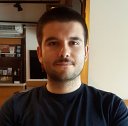
 Mert Bülent Sarıyıldız
· 2 previous affiliations
- NAVER Cloud (South Korea)Since 2020
- Researcher · Since 2023
- PhD student · 2020–2023
- PhD student · 2020–2023
Research Overview
Mert Bülent Sarıyıldız focuses on computer vision, visual representation learning, and transfer learning. His research trajectory spans from early work in zero-shot and self-supervised learning to the evaluation of concept generalization and the use of synthetic data for model training. Most recently, he investigates multi-teacher distillation to build universal encoders across heterogeneous visual tasks.
Research Trajectory
Mert Bülent Sarıyıldız’s research has consistently addressed the challenge of learning robust, general-purpose visual representations, particularly in scenarios where labeled data is scarce or where models must generalize to unseen concepts. His early work focused on zero-shot learning, exploring how generative models could bridge the distributional gap between supervised and zero-shot classes. In Gradient Matching Generative Networks for Zero-Shot Learning, he proposed a framework to synthesize training examples for unseen classes purely from their class embeddings. By leveraging gradient matching, this approach effectively reduced the zero-shot problem to a standard supervised classification task, allowing models to naturally learn from unsupervised examples.
As self-supervised learning emerged as a dominant paradigm for visual representation, Sarıyıldız shifted toward improving contrastive learning mechanisms. Recognizing the importance of data augmentation and negative sampling, he investigated feature-level mixing strategies in Hard Negative Mixing for Contrastive Learning. This work demonstrated that synthesizing novel examples through hard negative mixing forces networks to learn more robust features, significantly improving the transferability of the resulting representations.
A major theme of his subsequent research has been dedicated to rigorously evaluating how well these visual representations generalize. Moving beyond standard benchmarks, he sought to measure generalization based on the semantic distance between training and testing data. In Concept Generalization in Visual Representation Learning, he introduced the ImageNet-CoG benchmark. This analysis revealed that self-supervised models often outperform their supervised counterparts when evaluated on distant, unseen concepts, whereas standard supervised vision transformers tend to overfit to their specific training distributions.
Building on these insights, Sarıyıldız explored ways to close the performance gap between supervised and self-supervised models. In No Reason for No Supervision: Improved Generalization in Supervised Models, he analyzed the trade-offs inherent in training deep neural networks for a specific classification task while maintaining their ability to transfer to future tasks. By enriching the standard supervised training framework with techniques derived from self-supervised learning, he demonstrated improved generalization on transfer tasks without sacrificing primary task performance.
With the rapid advancement of generative AI, his focus expanded to the intersection of image generation and representation learning. He investigated whether synthetic images could replace human-curated datasets for training foundational vision models. In Fake it Till You Make it: Learning Transferable Representations from Synthetic ImageNet Clones, he utilized Stable Diffusion to generate entirely synthetic clones of the ImageNet dataset. By applying class-agnostic prompt engineering to fix semantic errors and ensure diversity, he showed that models trained from scratch on these synthetic clones could achieve highly transferable representations, performing competitively with models trained on real images.
Most recently, his trajectory has moved toward model consolidation and distillation. As pretrained models have become ubiquitous, Sarıyıldız has sought to combine their complementary strengths into single, highly capable architectures. In UNIC: Universal Classification Models via Multi-teacher Distillation, he introduced a multi-teacher distillation setup designed to train a unique encoder that absorbs knowledge from several distinct pretrained models. By enriching the encoder's architecture with a ladder of expendable projectors, this approach achieves stronger generalization across a wide variety of classification tasks. In parallel, Sarıyıldız contributed to visual localization in Weatherproofing Retrieval for Localization with Generative AI and Geometric Consistency, utilizing generative synthesis with geometric consistency to handle severe environmental variations within Generative Skeletal Synthesis for 3D Vision.
Expanding multi-teacher frameworks further, Sarıyıldız led DUNE: Distilling a Universal Encoder from Heterogeneous 2D and 3D Teachers, unifying diverse foundation models across 2D vision, 3D spatial understanding, and human perception into a single compact encoder. They also addressed continuous embodied robotics in Kinaema: a recurrent sequence model for memory and pose in motion, introducing an agent with an implicit recurrent latent memory that integrates continuous visual streams without fixed context-length limits. Recent work continues to advance model consolidation: in IDeaL: Data-Free Multi-Teacher Distillation via Improved Dead Leaves, Sarıyıldız co-developed a data-free distillation approach using tailored synthetic noise samples, while in Task Alignment: A Simple Proxy for Practical Model Merging Across Diverse Vision Tasks, they collaborated on a proxy to accelerate hyperparameter selection when merging models across heterogeneous vision tasks.
Current Directions
Recent work investigates the creation of unified visual encoders capable of operating across highly heterogeneous domains. Building on earlier multi-teacher distillation frameworks, the most recent papers in the evidence address the challenge of co-distillation from teacher models that vary significantly in both their design objectives and their training data. This includes efforts to bridge 2D and 3D perception tasks by distilling knowledge from specialized foundation models into a single, universal encoder. Additionally, ongoing research explores the application of generative AI to physical scene understanding, specifically using generative models to "weatherproof" image retrieval. By synthesizing targeted environmental variations—such as changes in weather, lighting, or season—while enforcing geometric consistency, this direction aims to improve the robustness of visual localization systems in changing real-world conditions.
Profile updated
Loading new papers…
Other researchers whose papers cluster into the same research directions — a proxy for overlapping technical interests and shared intellectual neighborhoods.
See something wrong? Report a mistake