

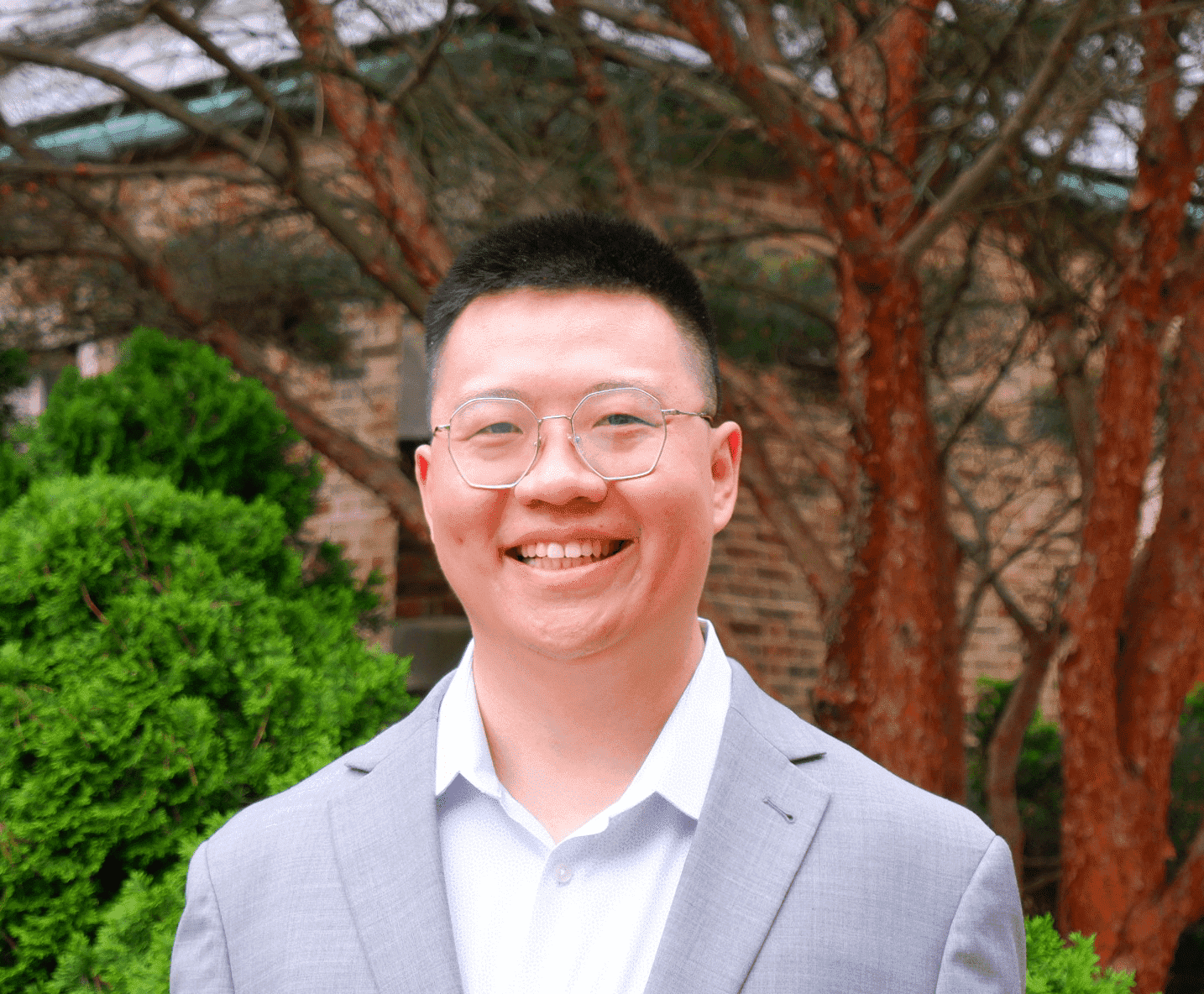
 Mengyu Liu
· 4 previous affiliations
- Weber State UniversitySince 2025
- Assistant Professor · Since 2025
- Washington State UniversityCurrent
- Current
- University of Notre Dame2023–2025
- PhD student · 2023–2025
- Syracuse University2020–2023
- PhD student · 2020–2023
Research Overview
Mengyu Liu focuses on the security of cyber-physical systems, formal specification fulfillment through reinforcement learning, and attack recovery mechanisms. Early work addressed hidden sensor attacks and real-time predictive recovery in complex physical environments. More recently, this focus has expanded to include the systematization of adversarial recovery strategies and automated weak label generation for clinical data programming.
Research Trajectory
Mengyu Liu’s documented research trajectory, spanning from 2022 to 2024, demonstrates a primary focus on the security, control, and recovery of Cyber-Physical Systems (CPS), alongside methodological contributions to reinforcement learning and data programming. The evolution of this work moves from detecting sophisticated adversarial attacks to formalizing how systems can autonomously recover from them.
In 2022, Liu led research on identifying subtle vulnerabilities in physical control systems. As first author of Fail-Safe: Securing Cyber-Physical Systems against Hidden Sensor Attacks, Liu addressed the limitations of binary attack detectors when faced with powerful adversaries. The research focused on threat models where attackers possess full knowledge of the system and its defensive mechanisms, allowing them to inject minute malicious signals into sensor measurements. Because these signals are small, they evade standard detection while accumulating over time to cause significant system deviations. To counter this, the paper proposed a specialized detection framework designed to identify these hidden attacks before they can drive the system into unsafe states.
In 2023, Liu’s focus expanded into formal methods and autonomous control. Leading a project on model-free reinforcement learning, Liu authored Fulfilling Formal Specifications ASAP by Model-free Reinforcement Learning. This work introduced the ASAP-Phi framework, which incentivizes autonomous agents to satisfy formal specifications as quickly as possible. The technical core of the framework relies on a piece-wise reward function that assigns quantitative semantic penalties to traces that violate specifications, while granting high constant rewards to successful traces. By training agents with actor-critic algorithms—specifically soft actor-critic (SAC) and deep deterministic policy gradient (DDPG)—the research provided mathematical proofs and empirical ablation studies demonstrating that the resulting policies prioritize rapid specification fulfillment across state-of-the-art benchmarks.
Concurrently in 2023, Liu participated as a middle author in collaborative research that shifted the CPS security paradigm from mere detection to active mitigation. The paper Real-Time Data-Predictive Attack-Recovery for Complex Cyber-Physical Systems introduced a data-predictive recovery system designed to safeguard life-critical applications. Assuming compromised sensors could be identified from data, the proposed system provided formal guarantees that the CPS would avoid unsafe states and smoothly return to a target operational set within a strict, conservative deadline.
This interest in system recovery culminated in a broader systematization of knowledge in 2024. Liu was a contributing author to Recovery from Adversarial Attacks in Cyber-physical Systems: Shallow, Deep, and Exploratory Works, a comprehensive survey published in ACM Computing Surveys. Noting that the majority of prior CPS security research neglected the physical restoration of the system post-attack, the survey analyzed thirty relevant papers to establish a new taxonomy. The work categorized existing recovery strategies into shallow, deep, and exploratory frameworks, providing a structured foundation for future research in CPS resilience.
Also in 2024, Liu’s collaborative work broadened to include applications of machine learning in the medical domain. As a co-author of Automating Weak Label Generation for Data Programming with Clinicians in the Loop, Liu participated in addressing the data-hungry nature of Deep Neural Networks (DNNs) in healthcare. Because high-quality labeled medical data is scarce, the research explored data programming techniques to combine multiple weak labeling functions provided by domain experts. The project demonstrated how automating this process with clinicians in the loop can yield training labels that outperform simple majority voting, thereby enabling more robust deep learning in smart health applications.
Current Directions
The most recent papers in the evidence indicate a dual focus on systematizing defensive frameworks for physical infrastructure and applying data-efficient machine learning techniques to healthcare.
In the domain of cyber-physical systems, recent work investigates the theoretical and practical boundaries of attack recovery. Rather than focusing solely on identifying malicious actors or isolating compromised sensors, this direction emphasizes the continuous, safe operation of physical systems under duress. By categorizing recovery mechanisms into shallow, deep, and exploratory methods, the current research agenda seeks to standardize how life-critical systems can autonomously navigate back to safe target states after an adversarial breach.
Simultaneously, recent collaborative efforts address the bottleneck of data annotation in medical machine learning. This direction explores how data programming can bridge the gap between the vast amounts of unlabeled clinical data and the massive data requirements of modern deep neural networks. By integrating domain expertise through clinician-in-the-loop weak labeling, this work aims to synthesize high-quality training signals without the prohibitive cost of exhaustive manual annotation.
Profile updated
Loading new papers…
Other researchers whose papers cluster into the same research directions — a proxy for overlapping technical interests and shared intellectual neighborhoods.
See something wrong? Report a mistake