

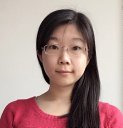
 Mengyu Chu
· 5 previous affiliations
- Peking UniversitySince 2022
- Assistant Professor · Since 2022
- Max Planck Institute for Informatics2020–2022
- Postdoc · 2020–2022
- Technical University of Munich2014–2020
- PhD student · 2014–2020
- Zhejiang University2011–2014
- MS student · 2011–2014
- Southeast University2007–2011
- Undergrad student · 2007–2011
Research Overview
Mengyu Chu focuses on physics-enhanced deep learning, fluid simulation, and dynamic scene reconstruction. Her research trajectory spans from data-driven synthesis of smoke flows and temporally coherent video generation to the integration of physical simulations with neural fields and 3D Gaussian splatting. Recent work investigates grid-free fluid solvers and the synthesis of complex environmental effects in real-world 3D reconstructions.
Research Trajectory
Chu's early research focused on enhancing fluid simulations and video synthesis using deep learning architectures. She introduced a data-driven algorithm for high-resolution flow simulations, utilizing convolutional neural networks to generate feature descriptors for smoke density and flow velocity in Data-driven synthesis of smoke flows with CNN-based feature descriptors. This work included a deformation-limiting patch advection method to robustly track fluid regions. She also contributed to volumetric generative adversarial networks for fluid flow super-resolution in tempoGAN: a temporally coherent, volumetric GAN for super-resolution fluid flow. Expanding into video generation, she developed TecoGAN, a framework addressing the long-standing trade-off between spatial detail and temporal stability. Detailed initially in Temporally Coherent GANs for Video Super-Resolution (TecoGAN) and later expanded in Learning temporal coherence via self-supervision for GAN-based video generation, this approach utilized a spatio-temporal discriminator and a novel "Ping-Pong" loss to mitigate the flickering and drifting artifacts common in recurrent generative models.
Moving into the early 2020s, her research expanded to rendering acceleration and fluid control. She developed a deep learning framework to accelerate global illumination by upscaling low-resolution geometric buffers while simultaneously inferring complex ambient occlusion effects in Volumetric Isosurface Rendering with Deep Learning-Based Super-Resolution. Addressing the challenge of interpreting and manipulating fluid motion from visual quantities, she proposed a conditional adversarial model in Learning meaningful controls for fluids. This generative approach enabled the derivation of plausible velocity fields from a single density frame, allowing for intuitive, visually-driven control over fluid simulations.
Subsequently, Chu focused on integrating physical laws directly into neural representations to reconstruct dynamic scenes. In Physics informed neural fields for smoke reconstruction with sparse data, she presented an end-to-end optimization method that leverages Navier-Stokes equations to reconstruct dynamic fluid phenomena from sparse multiview RGB videos, overcoming challenges posed by severe occlusion and unknown lighting conditions. To address the training instabilities inherent in such models, she introduced ConFIG (Conflict-Free Inverse Gradients) in ConFIG: Towards Conflict-free Training of Physics Informed Neural Networks. This optimization strategy ensures that parameter updates benefit all objectives simultaneously, advancing the research direction of Resolving Gradient Conflict in Physics-Informed Neural Networks. Building on these physics-informed approaches, her group developed Neural Characteristic Trajectory Fields in Physics-Informed Learning of Characteristic Trajectories for Smoke Reconstruction, utilizing Eulerian neural fields to implicitly model Lagrangian fluid trajectories and preserve long-term conservation.
Most recently, her work has explored grid-free solvers and the integration of physical simulations with 3D Gaussian Splatting (3DGS). She contributed to Gaussian Fluids: A Grid-Free Fluid Solver based on Gaussian Spatial Representation, which models fluid velocity using continuous, differentiable Gaussian functions to improve vorticity preservation and memory efficiency compared to traditional grid-based methods. Extending physical integration to environmental effects, her lab developed frameworks for dynamic scene synthesis. RainyGS: Efficient Rain Synthesis with Physically-Based Gaussian Splatting combines real-time 3D reconstruction with shallow-water physics to render interactive rain effects, contributing to broader areas such as Dimensionality Reduction for Efficient Physical Simulation. Similarly, she participated in the development of FieryGS: In-the-Wild Fire Synthesis with Physics-Integrated Gaussian Splatting, which embeds combustion simulations into 3DGS scenes and utilizes large language models to automatically infer material properties, enabling realistic, user-controllable fire synthesis in real-world captures.
Current Directions
Recent work investigates the intersection of physical simulation and advanced 3D scene representations, particularly 3D Gaussian Splatting. The most recent papers in the evidence address the development of grid-free fluid solvers that utilize continuous Gaussian functions to improve spatial adaptivity and vorticity preservation. Additionally, this research explores embedding complex environmental physics—such as shallow-water dynamics for rain and combustion mechanics for fire—directly into neural and splatting-based frameworks. By integrating these physical priors with real-time rendering and leveraging automated material property inference, these methods aim to enable the interactive, photorealistic synthesis of dynamic effects within reconstructed real-world environments.
Profile updated
| Title | Venue | Year |
|---|---|---|
| DDFKs: Fluid Simulation with Dynamic Divergence-Free Kernels | arXiv | 2026 |
| Floating-Point Robustness in Parametric Surface Continuous Collision Detection: From Algorithm to Benchmarking | ACM Trans. Graphics | 2026 |
| FieryGS: In-the-Wild Fire Synthesis with Physics-Integrated Gaussian Splatting | ICLR | 2026 |
| LagrangianSplats: Divergence-Free Transport of Gaussian Primitives for Fluid Reconstruction | Siggraph (conference Paper Track) | 2026 |
| JODA: Composable Joint Dynamics for Articulated Objects | NeurIPS | 2026 |
| Adaptive GPU Kinetic Solver for Fluid-Granular Flows | arXiv | 2026 |
| Research trends and major developments in 3D vision in 2024 | Journal of Image and Graphics | 2025 |
| FlowCapX: Physics-Grounded Flow Capture with Long-Term ConsistencyGitHub resource | Computer Graphics Forum | 2025 |
| Gaussian Fluids: A Grid-Free Fluid Solver based on Gaussian Spatial Representation | Siggraph (conference Paper Track) | 2025 |
| ConFIG: Towards Conflict-free Training of Physics Informed Neural Networks | ICLR | 2025 |
| Paper | Venue | Year |
|---|---|---|
| FlowCapX: Physics-Grounded Flow Capture with Long-Term ConsistencyGitHubtaoningxiao/ | Computer Graphics Forum | 2025 |
| Volumetric Isosurface Rendering with Deep Learning-Based Super-ResolutionGitHubshamanDevel/ | IEEE TVCG | 2021 |
| Learning temporal coherence via self-supervision for GAN-based video generationGitHubthunil/ | ACM Trans. Graphics | 2020 |
Loading new papers…
Other researchers whose papers cluster into the same research directions — a proxy for overlapping technical interests and shared intellectual neighborhoods.
See something wrong? Report a mistake