

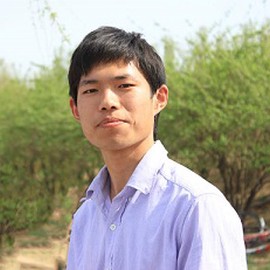
 Mengnan Du
· 4 previous affiliations
- Shenzhen Research Institute of Big DataSince 2026
- Assistant Professor · Since 2026
- Current
- New Jersey Institute of Technology2022–2025
- Assistant Professor · 2022–2025
- Texas A&M University2017–2022
- PhD student · 2017–2022
Research Overview
Mengnan Du focuses on trustworthy machine learning, with a primary emphasis on the explainability and fairness of deep neural networks and large language models. His trajectory spans from early work on feature attribution in computer vision to recent investigations into mechanistic interpretability and shortcut learning in natural language processing. Currently, he investigates dynamic sparsity and agentic frameworks to uncover the internal representations of large language models.
Research Trajectory
His early research primarily addressed the interpretability of deep neural networks, particularly in computer vision. Contributing to the research direction of Isolating Class Specific Evidence in Feature Attribution, he introduced Towards Explanation of DNN-based Prediction with Guided Feature Inversion, a framework that leverages intermediate network layers to generate more effective local interpretations. This focus on faithful visual explanations continued with the development of Score-CAM: Score-Weighted Visual Explanations for Convolutional Neural Networks, a gradient-free method that uses internal activation maps as masks to produce cleaner heatmaps. To synthesize the growing field, he also published a comprehensive survey, Techniques for interpretable machine learning, which categorized intrinsic and post-hoc methods while highlighting the gap between technical interpretability and human comprehension.
Expanding beyond visual explanations, his work began to address fairness, computational efficiency, and rigorous evaluation metrics in explainable AI (XAI). He proposed Fairness via Representation Neutralization, a mitigation technique that reduces model discrimination by debiasing only the task-specific classification head, avoiding the need for fully debiased encoders. To address the computational overhead of feature attribution, he collaborated on Accelerating Shapley Explanation via Contributive Cooperator Selection, introducing a method that drastically speeds up Shapley value computation for deep networks by isolating the most contributive feature interactions. Recognizing the lack of standardized evaluation in the field, he subsequently developed M4: A Unified XAI Benchmark for Faithfulness Evaluation of Feature Attribution Methods across Metrics, Modalities and Models, providing a systematic taxonomy and testing ground for explanation faithfulness.
As large language models (LLMs) became central to artificial intelligence, his research shifted toward understanding their internal mechanisms and vulnerabilities. He investigated how these models often rely on dataset artifacts rather than genuine comprehension in Shortcut Learning of Large Language Models in Natural Language Understanding. Continuing his foundational work in XAI, he explored theoretical unifications of existing methods in Unifying Fourteen Post-Hoc Attribution Methods With Taylor Interactions. To map the emerging landscape of LLM transparency, his group published Opening the Black Box of Large Language Models: Two Views on Holistic Interpretability, which bridges mechanistic interpretability—how knowledge is encoded in parameters—with representation-level analysis. This work directly engages with the broader area of Resolving Superposition with Sparse Autoencoders.
His most recent trajectory focuses heavily on mechanistic interpretability, dynamic representations, and agentic frameworks for LLMs. To detect data contamination, his lab introduced MemLens: Uncovering Memorization in LLMs with Activation Trajectories, a framework that analyzes layer-by-layer confidence to distinguish genuine reasoning from memorized shortcuts. In the domain of model steering and fairness, he investigated how in-context learning prompts influence outcomes in Strategic Demonstration Selection for Improved Fairness in LLM In-Context Learning, and proposed modeling concepts as multidimensional distributions rather than brittle single points in Beyond Single Concept Vector: Modeling Concept Subspace in LLMs with Gaussian Distribution.
A major theme in his 2025 work is advancing the research direction of Understanding Feature Superposition in Deep Neural Networks. He developed AdaptiveK Sparse Autoencoders: Dynamic Sparsity Allocation for Interpretable LLM Representations, which dynamically adjusts the number of active features based on semantic complexity to improve representational capacity. Furthermore, he has pioneered the use of multi-agent systems to automate and democratize model interpretability. This includes KnowThyself: An Agentic Assistant for LLM Interpretability, a conversational platform that simplifies probing black-box models, and participation in SAGE: An Agentic Explainer Framework for Interpreting SAE Features in Language Models, which treats feature interpretation as an iterative, hypothesis-driven scientific process driven by AI agents.
Current Directions
The most recent papers in the evidence point toward a strong focus on mechanistic interpretability and the internal representations of large language models. A primary current direction involves resolving feature superposition using sparse autoencoders (SAEs), specifically by developing dynamic sparsity allocation methods that adapt to the semantic complexity of input text. Alongside this, recent work investigates the use of multi-agent frameworks to automate the interpretability process, treating feature explanation as an iterative, hypothesis-driven scientific workflow rather than a manual task. Additionally, current research addresses the robustness of LLM representations, exploring multidimensional concept subspaces for better model steering and analyzing activation trajectories to detect memorization and data contamination in training pipelines.
Profile updated
Loading new papers…
Other researchers whose papers cluster into the same research directions — a proxy for overlapping technical interests and shared intellectual neighborhoods.
See something wrong? Report a mistake