

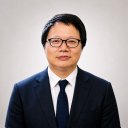
 Meng Fang
· 3 previous affiliations
- Eindhoven University of TechnologySince 2021
- Assistant Professor · Since 2021
- University of LiverpoolSince 2022
- Assistant Professor · Since 2022
- Tencent (China)2017–2020
- Research Scientist · 2017–2020
Research Overview
Meng Fang focuses on reinforcement learning, large language model evaluation, and safe multi-agent systems. His early work explored active learning and curriculum-based reinforcement learning before expanding into continual learning and sparse neural networks. Currently, he investigates the safety, reasoning capabilities, and social dynamics of autonomous language agents and multi-objective reinforcement learning frameworks.
Research Trajectory
His early research investigated methods for efficient data annotation and active learning. He developed Active Learning for Crowdsourcing Using Knowledge Transfer, which addressed the challenge of selecting data for crowdsourced labeling. Later, he reframed this heuristic process as a reinforcement learning problem in Learning how to Active Learn: A Deep Reinforcement Learning Approach, training a data selection policy in simulation that could transfer across different languages.
Moving into deep reinforcement learning, he introduced Curriculum-guided Hindsight Experience Replay, which improved off-policy learning in sparse-reward environments by adaptively selecting failed experiences based on goal proximity and exploration curiosity. Around this time, he collaborated on safe imitation learning, contributing to Lagrangian Generative Adversarial Imitation Learning with Safety. This work augmented GAIL with safety constraints, aligning with the broader area of Lagrangian Methods for Safe Reinforcement Learning. He also participated in research on model efficiency within the domain of Sparse Subnetworks and the Lottery Ticket Hypothesis, co-developing Superposing many tickets into one: A performance booster for sparse neural network training to optimize the performance-efficiency trade-off in sparse training. Expanding into embodied AI, he helped design COOM: A Game Benchmark for Continual Reinforcement Learning, a 3D visual environment suite that advanced the research direction of Continual Skill Acquisition for Embodied Agents.
In 2024, his work addressed visual reinforcement learning and structural sparsity. He investigated the area of Task-Relevant Abstractions for Robust Visual Control with MaDi: Learning to Mask Distractions for Generalization in Visual Deep Reinforcement Learning, introducing a lightweight masking network to filter task-irrelevant stimuli using only the reward signal. He also proposed (PASS) Visual Prompt Locates Good Structure Sparsity through a Recurrent HyperNetwork, leveraging visual prompting techniques to estimate channel significance for structural model pruning.
A major theme in his recent trajectory is the evaluation, safety, and alignment of large language models (LLMs). He led the development of MathOdyssey: Benchmarking Mathematical Problem-Solving Skills in Large Language Models Using Odyssey Math Data, contributing to the field of Shifting from Static Benchmarks to Dynamic Evaluation by rigorously testing models on advanced mathematical problems. He also explored LLM safety and bias, authoring Unmasking Style Sensitivity: A Causal Analysis of Bias Evaluation Instability in Large Language Models to show how informal language can mask underlying model bias. He further exposed the fragility of safety guardrails in Understanding Large Language Model Vulnerabilities to Social Bias Attacks, demonstrating how adversarial manipulation can force models into generating discriminatory content. To improve multilingual capabilities, he oversaw MuRating: A High Quality Data Selecting Approach to Multilingual Large Language Model Pretraining, a scalable framework for transferring high-quality data selection signals from English to other languages.
Concurrently, he has focused on autonomous agents and multi-agent reinforcement learning (MARL). He integrated LLMs into MARL safety with Safe Multi-agent Reinforcement Learning with Natural Language Constraints, translating natural language rules into mathematical safety signals. He also explored sociological phenomena in AI populations, demonstrating group polarization and conformity loops in Spiral of Silence in Large Language Model Agents. To evaluate multimodal agents reliably, he introduced WebArXiv: Evaluating Multimodal Agents on Time-Invariant arXiv Tasks, a static benchmark mitigating the instability of live-web environments. His recent multi-objective RL work includes Preference Controllable Reinforcement Learning with Advanced Multi-Objective Optimization, which moves beyond linear scalarization to capture nuanced trade-offs. Most recently, he contributed to Self-evolving LLM agents with in-distribution Optimization, enabling agents to learn efficiently from self-generated process rewards, and directed the development of MEAL: A Benchmark for Continual Multi-Agent Reinforcement Learning. This hardware-accelerated benchmark scales task sequences to reveal long-term coordination dynamics, advancing the area of Incremental Complexity Curricula for Robust Agent Training.
Current Directions
The most recent papers in the evidence address the evaluation, safety, and self-improvement of large language model agents and multi-agent systems. Current work investigates how LLM agents can autonomously optimize their behavior through in-distribution process rewards and how multi-agent reinforcement learning can be scaled and evaluated in continual learning settings. Additionally, ongoing research focuses on the robustness of language models, exploring vulnerabilities to adversarial bias attacks and developing stable, time-invariant benchmarks to reliably assess multimodal agent performance.
Profile updated
Loading new papers…
Other researchers whose papers cluster into the same research directions — a proxy for overlapping technical interests and shared intellectual neighborhoods.
See something wrong? Report a mistake