

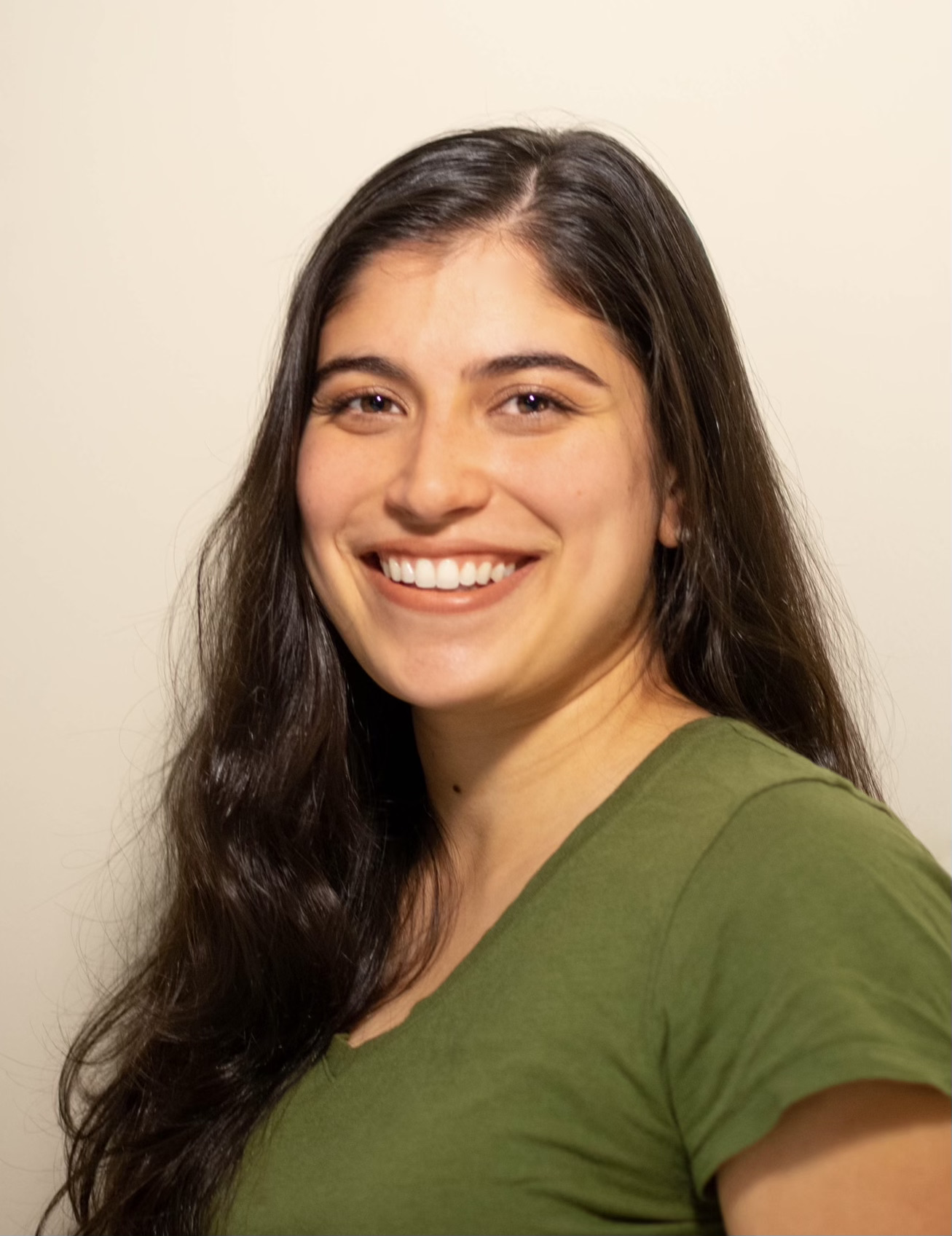
 Melanie Subbiah
· 5 previous affiliations
- Columbia UniversityCurrent
- Current
- PhD student · 2020–2022
- Research Intern · 2022
- OpenAI (United States)2019–2020
- Researcher · 2019–2020
- Apple (United States)2017–2019
- Machine Learning Research Engineer · 2018–2019
- Researcher · 2017–2018
- Williams College2013–2017
- Undergrad student · 2013–2017
Research Overview
Melanie Subbiah focuses on natural language processing, narrative understanding, and the evaluation of generative models. Her early work explored the scaling properties of large language models and physical safety in embodied AI systems. Recently, her research addresses the subjective evaluation of narrative text, the detection of harmful agendas, and the alignment of language models with human reasoning and fairness constraints.
Research Trajectory
Subbiah's early research investigated the capabilities of large-scale autoregressive models and the social dimensions of online communication. She contributed to the evaluation of GPT-3 in Language Models are Few-Shot Learners, a study demonstrating that scaling language models significantly improves task-agnostic, few-shot performance without gradient updates. Following this, she explored social reasoning in digital environments with Understanding Identity Signalling in Persuasive Online Text, analyzing how identity is communicated and leveraged in persuasive contexts.
In 2022, her focus expanded to the safety and alignment of generative models, particularly concerning the research direction of The Physical Safety Gap in Embodied AI. With collaborators, she developed SafeText: A Benchmark for Exploring Physical Safety in Language Models, which evaluates how models handle scenarios involving physical harm, contributing to the broader area of Pluralistic Alignment and the Subjectivity of Human Feedback. She further addressed safety vulnerabilities in Mitigating Covertly Unsafe Text within Natural Language Systems. This work investigated subtle forms of unsafe generation, intersecting with research areas such as Situational Safety for Embodied and Agentic AI and Systems-Theoretic Safety Analysis for Emergent Hazards.
Building on her interest in safe and interpretable systems, Subbiah introduced new frameworks for identifying malicious content and generating faithful explanations. She presented a new dataset and interpretable machine learning system in Towards Detecting Harmful Agendas in News Articles, distinguishing articles that aim to cause real-world harm from general misinformation. In parallel, she advanced the research direction of Selective Rationalization for Faithful Neural Interpretability through her work on Unsupervised Selective Rationalization with Noise Injection. This paper proposed a training technique that limits the generation of implausible rationales by injecting noise between the rationale generator and the predictor.
A major theme in Subbiah's recent trajectory is the evaluation of language models on complex, subjective narrative tasks. She addressed the limitations of standard human evaluation in abstractive summarization with STORYSUMM: Evaluating Faithfulness in Story Summarization, introducing a dataset with localized faithfulness labels to better detect challenging inconsistencies in story summaries. She extended this focus on narrative nuance in Reading Subtext: Evaluating Large Language Models on Short Story Summarization with Writers. By enlisting the original authors of unpublished stories as evaluators, the study demonstrated that advanced models struggle significantly with complex subtext. Recognizing that stories are inherently subjective, she and her collaborators subsequently proposed the Ambiguity Rewrite Metric in Is the Top Still Spinning? Evaluating Subjectivity in Narrative Understanding, which uses language models to translate ambiguous claims into objective ones to improve annotator agreement.
Alongside narrative understanding, her 2025 work investigates bias mitigation and the reliability of model reasoning. She contributed to AdvSumm: Adversarial Training for Bias Mitigation in Text Summarization, a framework that applies embedding-level adversarial perturbations to reduce political framing bias and hallucinations. Investigating the transparency of model outputs, she explored the counterfactual simulatability of generative tasks in Counterfactual Simulatability of LLM Explanations for Generation Tasks, a study relevant to the area of Incentivizing Semantic Diversity in Generative Models. This work revealed that models often act as unreliable narrators for knowledge-based tasks. Finally, she examined the intersection of reasoning and bias in Guiding LLM Decision-Making with Fairness Reward Models, addressing the phenomenon where chain-of-thought prompting can inadvertently increase stereotyping in high-stakes decision-making.
Subbiah's work in 2026 focuses on evaluating the interactional and psychological fidelity of synthetic text. In ToMStories: Interpreting Theory-of-Mind in Synthetic Narratives, Subbiah introduced an evaluation dataset of synthetic narrative vignettes to probe how well language models infer implicit character mental states, showing that models often simplify implicit psychological interpretation compared to humans. In addition, Subbiah contributed to Right Destination, Wrong Journey: Synthetic Counseling Dialogues Miss Human Interactional Dynamics, which analyzed process fidelity in LLM-generated mental health dialogues and revealed persistent shortfalls in turn-by-turn conversational responsiveness.
Current Directions
The most recent papers in the evidence indicate a strong focus on the evaluation of generative models in subjective and high-stakes domains. Current work investigates the limitations of large language models in understanding narrative subtext and handling inherent ambiguity in storytelling. This involves developing new evaluation paradigms, such as enlisting domain experts—like original authors—and designing metrics that account for subjectivity rather than relying on binary factuality. Additionally, recent research addresses the reliability and fairness of model reasoning, as well as the fidelity of synthetic interactions and narratives, assessing whether models can capture subtle Theory-of-Mind inferences and human-like conversational dynamics over extended interactions.
Profile updated
Loading new papers…
Other researchers whose papers cluster into the same research directions — a proxy for overlapping technical interests and shared intellectual neighborhoods.
See something wrong? Report a mistake