

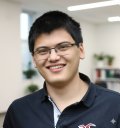
 Matthieu Kirchmeyer
· 5 previous affiliations
- GenentechSince 2023
- Researcher · Since 2023
- RocheCurrent
- Current
- Sorbonne Université2020–2023
- PhD student · 2020–2023
- Criteo (France)2017–2023
- Researcher · 2017–2023
- MS student · 2014–2017
Research Overview
Matthieu Kirchmeyer focuses on the development of generative and predictive machine learning models for molecular design, with a specific emphasis on de novo generation and out-of-distribution (OOD) generalization. His research trajectory has evolved from fundamental work in domain adaptation and robust regression to the application of implicit neural representations for physical dynamics and 3D molecular structures. Currently a Senior ML Scientist II at Genentech within the Prescient Design team, Kirchmeyer’s work integrates algorithmic improvements in model stability and functional diversity with the practical challenges of therapeutic protein and small molecule engineering.
Research Trajectory
Kirchmeyer’s early research centered on the challenges of training deep learning models under distribution shifts and missing data constraints. This period was characterized by an exploration of Generative Adversarial Networks (GANs) and optimal transport for domain adaptation. In Regression with Conditional GAN, he investigated the application of implicit probabilistic models to low-dimensional output spaces, addressing inductive learning problems where standard regression techniques often struggle to capture complex noise distributions. He further refined these approaches in the context of unsupervised domain adaptation (UDA). In Mapping conditional distributions for domain adaptation under generalized target shift, he proposed a method to align pretrained representations by learning an optimal transport map, circumventing the limitations of traditional representation invariance constraints.
Following his work on domain adaptation, Kirchmeyer’s focus shifted toward enhancing the robustness and generalization of deep learning models through ensemble methods and weight space analysis. This transition is closely linked to the study of Functional Diversity for Ensembles of Pre-trained Models and Merging Neural Networks via Linear Mode Connectivity. A key contribution during this phase was the development of Diverse Weight Averaging (DiWA), detailed in Diverse Weight Averaging for Out-of-Distribution Generalization. By averaging weights from independent training runs rather than a single trajectory, this work demonstrated that increasing functional diversity within an ensemble can significantly improve OOD performance. This research aligns with broader themes of Efficient Inference for Model Ensembles and Model Merging in the Parameter Space, providing a "free lunch" where the benefits of an ensemble are captured within a single set of parameters.
In parallel with his work on generalization, Kirchmeyer applied these principles to the modeling of physical systems. He addressed the "brittleness" of neural emulators in Generalizing to New Physical Systems via Context-Informed Dynamics Model, which sought to create models capable of simulating dynamics across varying physical parameters, such as viscosity or chemical reaction rates. This line of inquiry culminated in the development of DINo, presented in Continuous PDE Dynamics Forecasting with Implicit Neural Representations. DINo utilizes Implicit Neural Representations (INRs) to model partial differential equation (PDE) flows as continuous-time dynamics of spatially continuous functions. By decoupling spatial and temporal discretizations, this approach allows for flexible extrapolation at arbitrary spatiotemporal locations, a critical requirement for real-world applications like weather prediction and fluid dynamics.
Current Directions
Kirchmeyer’s current research focuses on Scaling Generative Models for 3D Molecular Structures. This work addresses the limitations of representing molecules as discrete graphs or voxel grids, which often struggle with the "cubic bottleneck" inherent in volumetric data. His recent work on Scaling 3D Representations Beyond the Memory Wall leverages neural fields to represent molecules as continuous atomic density fields.
In Score-based 3D molecule generation with neural fields, Kirchmeyer introduced FuncMol, a model that employs a "walk-jump" sampling strategy for unconditional 3D molecule generation. By encoding molecular fields into latent codes and using Langevin MCMC for sampling, FuncMol achieves all-atom generation that scales efficiently with molecule size, outperforming traditional point-cloud or voxel-based methods. This framework was further expanded in Unified all-atom molecule generation with neural fields (FuncBind), which provides a unified generative framework for small molecules, peptides, and antibody loops. FuncBind represents a shift toward multi-modal molecular design, demonstrating state-of-the-art results in silico and successful experimental validation in creating functional antibody binders.
Kirchmeyer also participates in broader efforts to benchmark and optimize therapeutic protein design. His involvement in Antibody DomainBed: Out-of-Distribution Generalization in Therapeutic Protein Design highlights the application of his OOD generalization expertise to the iterative cycles of ML-guided sequence design. In this context, he contributes to the evaluation of surrogate models that must remain robust despite the distribution shifts induced by experimental feedback and candidate selection.
Representative Work
Unified all-atom molecule generation with neural fields This work introduces FuncBind, a generative framework that utilizes neural fields to represent molecules as continuous atomic densities. It enables a single model to design diverse molecular modalities, including small molecules and antibody loops, and has been validated through wet-lab experiments.
Score-based 3D molecule generation with neural fields Introducing the FuncMol model, this paper proposes a walk-jump sampling strategy for 3D molecule generation. By representing molecules as continuous fields rather than discrete points, the model achieves significant speed improvements and scales to large macrocyclic peptides.
Continuous PDE Dynamics Forecasting with Implicit Neural Representations This paper presents DINo, a data-driven approach for PDE forecasting that uses implicit neural representations to embed spatial observations independently of discretization. The model drives these representations through a learned ODE, allowing for continuous-time dynamics modeling.
Diverse Weight Averaging for Out-of-Distribution Generalization Kirchmeyer co-developed DiWA, a strategy that improves OOD generalization by averaging the weights of neural networks obtained from independent training runs. The work demonstrates that increasing functional diversity in the weight space leads to more robust models.
Mapping conditional distributions for domain adaptation under generalized target shift This research addresses unsupervised domain adaptation under complex shifts by learning an optimal transport map between source and target representations. The approach avoids the restrictive assumptions of standard domain-invariant representation learning.
Regression with Conditional GAN An early contribution to implicit probabilistic modeling, this paper explores the use of Conditional GANs for regression tasks in small-dimensional output spaces, providing a framework for inductive learning where traditional methods may fail to capture the underlying data distribution.
Profile updated
Loading new papers…
Other researchers whose papers cluster into the same research directions — a proxy for overlapping technical interests and shared intellectual neighborhoods.
See something wrong? Report a mistake