

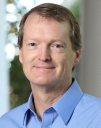
 Matthew B. Dwyer
· 4 previous affiliations
- University of VirginiaSince 2018
- Full Professor · Since 2018
- University of Nebraska–Lincoln2004–2018
- Full Professor · 2004–2018
- Kansas State University1995–2004
- Associate Professor · 1995–2004
- University of Massachusetts Amherst1990–1995
- PhD student · 1990–1995
Research Overview
Matthew B. Dwyer focuses on the formal verification of software systems, the automated synthesis of test oracles, and the rigorous analysis of deep neural networks. His trajectory spans foundational work in finite-state model checking for concurrent programs to modern frameworks for ensuring the safety of artificial intelligence systems. Currently, his research addresses the scalability of neural network verification and the integration of semantic scene understanding for autonomous driving.
Research Trajectory
The early arc of Dwyer’s research established foundational techniques for traditional software verification and model checking. In the 1990s and early 2000s, he introduced methods to streamline the analysis of complex codebases, beginning with Data Flow Analysis for Verifying Properties of Concurrent Programs. He subsequently formalized how developers articulate system requirements in Patterns in Property Specifications for Finite-State Verification. To bridge the gap between high-level source code and formal models, he and his collaborators developed tools for extracting finite-state models directly from Java, most notably Bandera: extracting finite-state models from Java source code. This work was complemented by contributions to extensible model checking architectures, such as Bogor: an extensible and highly-modular software model checking framework.
As machine learning systems became integral to critical software, his focus shifted toward the research direction of Verifying Neural Networks Beyond Piecewise Linear Activations. Recognizing the fragmentation of verification tools and input formats, his group developed DNNV: A Framework for Deep Neural Network Verification to standardize and evaluate different algorithms. This was followed by the creation of NeuralSAT: A High-Performance Verification Tool for Deep Neural Networks, which leverages the DPLL(T) framework to support a wide range of network architectures. To overcome the computational limits that cause standard verifiers to crash on large models, his work advanced the area of Scaling Neural Network Verification via Optimization Relaxations through Compositional Neural Network Verification via Assume-Guarantee Reasoning, a method that decomposes networks into manageable subnetworks. Complementing these formal proofs, he also explored requirements-based testing for neural networks using natural language specifications in RBT4DNN: Requirements-based Testing of Neural Networks.
Applying these safety principles to cyber-physical systems, a significant portion of his recent trajectory addresses autonomous driving. A major challenge in this domain is the semantic gap between raw sensor data (like images or point clouds) and high-level safety rules. To resolve this, he introduced The SGSM framework: Enabling the specification and monitor synthesis of safe driving properties through scene graphs, alongside the necessary simulation infrastructure detailed in Closing the Gap Between Sensor Inputs and Driving Properties: A Scene Graph Generator for CARLA.
Another major thread investigates the reliability of Large Language Models (LLMs) in software engineering and reasoning tasks. Contributing to the broader area of Automated Test Oracle Generation, he investigated how software documentation influences LLM-generated tests in Doc2OracLL: Investigating the Impact of Documentation on LLM-Based Test Oracle Generation. He also exposed critical flaws in code evaluation metrics that prioritize surface-level text similarity over actual functional correctness in LoCaL: Countering Surface Bias in Code Evaluation Metrics. Beyond code generation, he analyzed how syntactic misalignment—rather than a lack of underlying mathematical competence—causes reasoning failures in LLMs, as detailed in Syntactic Blind Spots: How Misalignment Leads to LLMs Mathematical Errors.
Finally, his recent collaborations extend into broader machine learning interpretability and representation. This includes isolating class-specific features to improve model explainability in CASE: Contrastive Activation for Saliency Estimation, optimizing latent dimensions for out-of-distribution detection in Optimizing Latent Dimension Allocation in Hierarchical VAEs: Balancing Attenuation and Information Retention for OOD Detection, and participating in the development of open-vocabulary monocular 3D detection frameworks like LabelAny3D: Label Any Object 3D in the Wild.
Current Directions
Based on his most recent work, Dwyer’s current research is heavily focused on the intersection of software engineering rigor and modern artificial intelligence. A primary direction is the scalable verification and testing of deep neural networks, where he continues to develop high-performance tools and compositional techniques to prove the safety of increasingly large models.
Simultaneously, he is addressing the safety assurance of autonomous systems by utilizing scene graphs to translate raw, high-dimensional sensor inputs into verifiable semantic properties. Finally, his work critically evaluates the deployment of Large Language Models in software engineering, focusing on creating robust, execution-based metrics for code generation and mitigating the syntactic vulnerabilities that hinder LLM reasoning.
Profile updated
| Paper | Venue | Year |
|---|---|---|
| DNNV: A Framework for Deep Neural Network VerificationGitHubdlshriver/ | Cav | 2021 |
Loading new papers…
Other researchers whose papers cluster into the same research directions — a proxy for overlapping technical interests and shared intellectual neighborhoods.
See something wrong? Report a mistake