

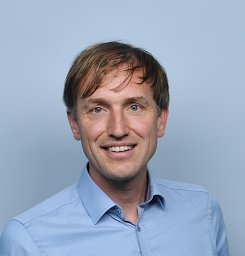
 Mathijs de Weerdt
· 4 previous affiliations
- Delft University of TechnologySince 1998
- Full Professor · Since 2022
- Associate Professor · 2014–2022
- Assistant Professor · 2004–2013
- Doctor of Philosophy (PhD), Computer Science · 1998–2003
- Centrum Wiskunde & Informatica2005–2016
- Scientific Staff Member · 2005–2016
- Almende (Netherlands)2003
- researcher · 2003
- Utrecht University1994–1998
- MSc, Computer Science · 1994–1998
Research Overview
Mathijs de Weerdt focuses on multi-agent planning, combinatorial optimization, and reinforcement learning, with a strong emphasis on real-world resource allocation problems. His trajectory spans foundational work in agent coordination to applied scheduling in smart grids and railway operations. Most recently, he investigates advanced reinforcement learning frameworks and optimization techniques for dynamic, partially observable environments.
Research Trajectory
De Weerdt’s early research established foundational approaches to multi-agent planning and coordination. He participated in developing methods for Plan coordination by revision in collective agent based systems (2002), exploring how distributed agents can adapt their plans in response to conflicts. He subsequently formalized the theoretical landscape of this domain, identifying the core computational characteristics and structural features of these systems in Multiagent Planning: Problem Properties that Matter (2006).
Moving into the 2010s, his focus expanded to the intersection of multi-agent systems and energy infrastructure, particularly electric vehicle (EV) charging and smart grids. He introduced novel navigation systems in Intention-Aware Routing to Minimise Delays at Electric Vehicle Charging Stations (2013), which utilized shared routing policies to predict and mitigate congestion at charging points. This practical focus was grounded in rigorous theoretical analysis, as seen in his work on the Complexity of Scheduling Charging in the Smart Grid (2018), which delineated the boundary between tractable scheduling scenarios and strongly NP-hard problems involving flexible charging windows. To support the broader research community in this area, his lab developed B-FELSA, an open-source framework detailed in Benchmarking Flexible Electric Loads Scheduling Algorithms under Market Price Uncertainty (2020). This tool evaluates demand response algorithms under volatile market conditions, contributing to the broader research direction of Managing Volatile Renewable Energy Production.
In the early 2020s, de Weerdt advanced both general combinatorial optimization techniques and domain-specific applications. He guided the development of IDONE, an algorithm for Black-box combinatorial optimization using models with integer-valued minima (2021), which avoids suboptimal rounding by constructing surrogate models with guaranteed integer minima. His group also explored evolutionary computation, analyzing linkage learning and gene-pool optimal mixing in On the impact of linkage learning, gene-pool optimal mixing, and non-redundant encoding on permutation optimization (2022). Concurrently, he applied multi-agent scheduling to complex railway operations. This included introducing a realistic event-based environment in TORS: A Train Unit Shunting and Servicing Simulator (2021) and optimizing infrastructure utilization in Increasing the effectiveness of the capacity usage at rolling stock service locations (2022).
His recent trajectory demonstrates a significant engagement with reinforcement learning (RL) and differentiable optimization. He applied deep RL to complex fluid dynamics problems in Deep Reinforcement Learning for Active Wake Control (2022). Returning to energy grids, he investigated partially observable environments in Surrogate DC Microgrid Models for Optimization of Charging Electric Vehicles under Partial Observability (2023), demonstrating how limited information about EV locations disrupts operation planning in tightly constrained DC networks.
In 2024 and 2025, his work addressed fundamental algorithmic bottlenecks in machine learning and multi-agent systems. He tackled the "zero-gradient problem" in predict-and-optimize frameworks with You Shall Pass: Dealing with the Zero-Gradient Problem in Predict and Optimize for Convex Optimization, proposing a local smoothing technique to prevent training from stalling. In the multi-agent domain, he developed methods for Replanning in Advance for Instant Delay Recovery in Multi-Agent Applications: Rerouting Trains in a Railway Hub, utilizing any-start-time safe interval planning to precompute routes and minimize disruption. He also introduced a novel theoretical framework for RL in To the Max: Reinventing Reward in Reinforcement Learning, shifting the objective from maximizing cumulative rewards to optimizing the single best reward achieved in an episode to overcome deceptive reward landscapes. Most recently, he collaborated on Bayesian Meta-Reinforcement Learning with Laplace Variational Recurrent Networks (2025), equipping recurrent meta-RL agents with Bayesian uncertainty estimation via the Laplace approximation.
Current Directions
The most recent papers in the evidence indicate a dual focus on advanced reinforcement learning architectures and robust optimization under uncertainty. Recent work investigates alternative reward formulations in RL—such as optimizing for maximum episodic reward rather than cumulative sums—to solve complex tasks without extensive reward engineering. Additionally, current research addresses the integration of Bayesian uncertainty quantification into meta-reinforcement learning agents, enabling more robust decision-making in novel environments. Alongside these learning-based approaches, ongoing work in multi-agent systems emphasizes proactive planning, such as precomputing safe intervals to allow for instant delay recovery in highly constrained logistical hubs like railway networks.
Profile updated
Loading new papers…
Other researchers whose papers cluster into the same research directions — a proxy for overlapping technical interests and shared intellectual neighborhoods.
See something wrong? Report a mistake