

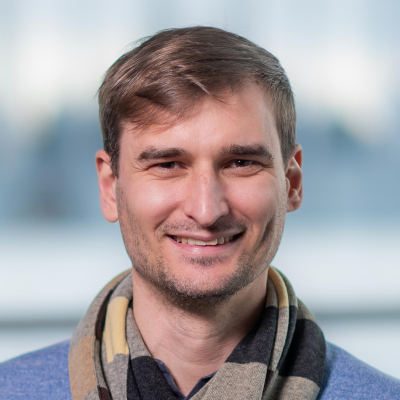
 Mathias Lécuyer
· 3 previous affiliations
- University of British ColumbiaSince 2021
- Assistant Professor · Since 2021
- Current
- Microsoft (United States)2019–2021
- Postdoc · 2019–2021
- Columbia University2013–2019
- PhD student · 2013–2019
Research Overview
Mathias Lécuyer focuses on differential privacy, machine learning security, and data transparency. His early work developed systems for auditing web services and managing privacy budgets, evolving into rigorous methods for certified adversarial robustness and data attribution. Currently, he investigates privacy auditing frameworks and differentially private optimization techniques for complex, real-world machine learning deployments.
Research Trajectory
Mathias Lécuyer’s early research concentrated on system-level transparency and accountability on the web. He introduced XRay: Enhancing the Web's Transparency with Differential Correlation (2014), a system utilizing differential correlation to pinpoint which specific user inputs drive targeted outputs like advertisements or recommendations. This work established foundational techniques for verifiable data sovereignty in untrusted cloud environments. He expanded on these auditing capabilities with Sunlight: Fine-grained Targeting Detection at Scale with Statistical Confidence (2015), developing methods to detect web targeting phenomena at scale with formal statistical confidence. Applying similar transparency analysis to emerging digital platforms, he also investigated the regulatory and operational complexities of decentralized services in Improving the Transparency of the Sharing Economy (2017).
Concurrently, his focus shifted toward formal privacy guarantees for large-scale data systems. In Pyramid: Enhancing Selectivity in Big Data Protection with Count Featurization (2017), he addressed the privacy-utility trade-off in differentially private learning by selectively managing data access to reduce exposure while maintaining model accuracy. This systems-level approach to privacy culminated in Privacy accounting and quality control in the sage differentially private ML platform (2019), which introduced block composition to bound the cumulative data leakage of machine learning models exposed to untrusted domains.
Around the same time, he began bridging differential privacy with adversarial machine learning. He developed Certified Robustness to Adversarial Examples with Differential Privacy (2019), providing the first certified defense capable of scaling to large neural networks and datasets by leveraging differential privacy mechanisms to guarantee robustness against norm-bounded attacks. Continuing to refine privacy systems, his research group explored resource allocation in Privacy Budget Scheduling (2021) and adaptive privacy spending in Practical Privacy Filters and Odometers with Rényi Differential Privacy and Applications to Differentially Private Deep Learning (2021). He also investigated system policy optimization using implicit feedback in Sayer: Using Implicit Feedback to Optimize System Policies (2021).
In 2022, he participated in work contributing to the area of Tracing Model Behavior to Training Data. The paper Measuring the Effect of Training Data on Deep Learning Predictions via Randomized Experiments framed data attribution as a sparse regression problem, introducing the Average Marginal Effect metric. This approach advanced the broader field of Data Attribution in Non-Convex Loss Landscapes and provided tools to mitigate vulnerabilities such as Backdoor Attacks through Training Data Poisoning.
His subsequent work deeply investigated the mechanics of differentially private optimization. With DP-Adam: Correcting DP Bias in Adam's Second Moment Estimation (2023), he identified and corrected biases introduced by differential privacy noise, contributing to the research direction of Bias-Corrected Adaptive Optimization for Differential Privacy.
More recently, his lab has focused on post-hoc privacy evaluation and adaptive defenses. He oversaw the development of PANORAMIA: Privacy Auditing of Machine Learning Models without Retraining (2024), a framework that uses generative models to estimate privacy loss via synthetic non-member data, advancing the field of Auditing Machine Learning Privacy through Empirical Attacks. In parallel, his group developed Adaptive Randomized Smoothing: Certified Adversarial Robustness for Multi-Step Defences (2024), which adapts defenses to specific inputs while maintaining rigorous safety guarantees, relevant to the area of Feature Dimensionality and the Adversarial Attack Surface.
Extending the analysis of private optimization to complex data distributions, he oversaw On the Performance of Differentially Private Optimization with Heavy-Tail Class Imbalance (2025), demonstrating how bias-corrected optimizers prevent ill-conditioning when learning low-frequency classes. Most recently, he participated in designing Private and Stable Test-time Adaptation with Differential Privacy (2026), a framework that applies per-sample gradient clipping to safely adjust models to new data on the fly without leaking sensitive test set information.
Current Directions
Recent work investigates the behavior of differentially private machine learning under complex, real-world deployment conditions. A major focus is the optimization dynamics of private learning algorithms when faced with heavy-tail class imbalances, exploring how second-order information and bias correction can preserve model utility for underrepresented data. Additionally, ongoing research addresses the challenges of test-time adaptation, seeking methods to allow deployed models to continuously adjust to new data streams while maintaining rigorous differential privacy guarantees and improving overall adaptation stability.
Profile updated
Loading new papers…
Other researchers whose papers cluster into the same research directions — a proxy for overlapping technical interests and shared intellectual neighborhoods.
See something wrong? Report a mistake