

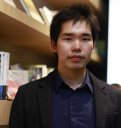
 Masatoshi Uehara
· 9 previous affiliations
- OpenAI (United States)Current
- Current
- EvolutionaryScale2025–2026
- Researcher · 2025–2026
- Genentech2023–2024
- Researcher · 2023–2024
- Postdoc · 2023
- Cornell Tech2019–2023
- PhD student · 2019–2023
- Intern · 2022
- Intern · 2018–2019
- Harvard University2017–2019
- MS student · 2017–2019
- The University of Tokyo2013–2017
- Undergrad student · 2013–2017
Research Overview
Masatoshi Uehara focuses on the algorithmic foundations of reinforcement learning, off-policy evaluation, and the alignment of large-scale generative models. His early work established statistically efficient and robust estimators for evaluating policies from historical data. More recently, his research centers on test-time search techniques and reinforcement learning-based fine-tuning for diffusion models, with applications to programmable biomolecular design.
Research Trajectory
Uehara’s early research established foundational methods for evaluating reinforcement learning policies using historical data without requiring active environmental interaction. In Intrinsically Efficient, Stable, and Bounded Off-Policy Evaluation for Reinforcement Learning, he introduced the REG and EMP estimators, which provide performance guarantees even when underlying models are misspecified. This focus on robust estimation extended to broader statistical challenges, such as parameter estimation for unnormalized models where maximum likelihood approaches are computationally infeasible, as detailed in A Unified Statistically Efficient Estimation Framework for Unnormalized Models.
A major theme in his early trajectory was mitigating the exponential error growth associated with long-horizon policy evaluation. He developed the Double Reinforcement Learning (DRL) framework in Double Reinforcement Learning for Efficient and Robust Off-Policy Evaluation, providing a semiparametrically efficient estimator for Markov Decision Processes. This work advanced the broader area of Breaking the Curse of Horizon in Off Policy Evaluation and contributed to the research direction of Doubly Robust Off-Policy Evaluation. He further explored function approximators for marginalized importance weights in Minimax Weight and Q-Function Learning for Off-Policy Evaluation, aligning with efforts toward Achieving the Theoretical Limit of Statistical Estimation Precision. Addressing offline reinforcement learning without full data coverage, he subsequently proposed the Constrained Pessimistic Policy Optimization (CPPO) algorithm in Pessimistic Model-based Offline Reinforcement Learning under Partial Coverage. Uehara also applied these rigorous statistical principles to causal inference, leading the development of Localized Debiased Machine Learning (LDML) in Localized Debiased Machine Learning: Efficient Inference on Quantile Treatment Effects and Beyond, a method that simplifies the estimation of complex causal effects by requiring only localized nuisance function estimation.
Transitioning toward generative AI, Uehara began addressing the challenge of fine-tuning large-scale diffusion models for specific downstream tasks. He introduced the SEIKO framework in Feedback Efficient Online Fine-Tuning of Diffusion Models, which uses optimistic reward modeling to discover high-value samples with minimal feedback. Treating fine-tuning as a problem of stochastic optimal control, he developed the ELEGANT framework in Fine-Tuning of Continuous-Time Diffusion Models as Entropy-Regularized Control. To prevent reward hacking when extrapolating beyond static datasets, he proposed the BRAID framework in Bridging Model-Based Optimization and Generative Modeling via Conservative Fine-Tuning of Diffusion Models, which penalizes reward uncertainty while keeping generations close to a pre-trained valid space.
Most recently, while affiliated with Evolutionary Scale, Uehara has focused heavily on inference-time alignment—steering pre-trained models without additional fine-tuning. He formalized this paradigm in Inference-Time Alignment in Diffusion Models with Reward-Guided Generation: Tutorial and Review, framing the denoising process as a reinforcement learning policy. He introduced the RERD framework in Reward-Guided Iterative Refinement in Diffusion Models at Test-Time with Applications to Protein and DNA Design, which leverages test-time computation to iteratively correct biological designs. He also developed DSearch, a tree-search approach for diffusion models, in Dynamic Search for Inference-Time Alignment in Diffusion Models. His research group further advanced the area of Steering Generative Models with Non Differentiable Rewards through the introduction of Soft Value-based Decoding (SVDD) in Derivative-Free Guidance in Continuous and Discrete Diffusion Models with Soft Value-based Decoding, enabling optimization for complex, physics-based simulations.
In collaborative work on biomolecular design, Uehara contributed to the VIDD framework in Iterative Distillation for Reward-Guided Fine-Tuning of Diffusion Models in Biomolecular Design, which replaces unstable reinforcement learning techniques with iterative distillation to improve structural diversity. He also participated in the development of RiboDiff, detailed in A Joint Diffusion Model with Pre-Trained Priors for RNA Sequence-Structure Co-Design, a generative framework that jointly designs RNA sequences and 3D structures by repurposing structure predictors as denoisers.
Current Directions
The most recent papers in the evidence indicate a strong focus on inference-time alignment and reward-guided generation for programmable biomolecular design. Uehara is actively investigating methods to steer both continuous and discrete diffusion models toward highly specific, non-differentiable objectives—such as protein binding affinity or RNA structural consistency—using test-time search and iterative refinement. This work increasingly bridges the algorithmic foundations of reinforcement learning with the practical demands of generative biology, seeking to optimize complex molecular structures without the computational overhead or instability of traditional model fine-tuning.
Profile updated
Loading new papers…
Other researchers whose papers cluster into the same research directions — a proxy for overlapping technical interests and shared intellectual neighborhoods.
See something wrong? Report a mistake