

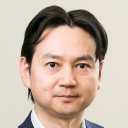
 Masataka Goto
· 1 previous affiliation
- Principal Researcher · Since 2001
- Current
Research Overview
Masataka Goto focuses on music information retrieval, singing information processing, and audio source separation. His trajectory spans foundational work in tensor factorization for audio mixtures to advanced techniques for singing voice conversion and lyric modeling. Recently, his research addresses the intersection of music and natural language processing, particularly in singable lyric translation and deep learning for vocal synthesis.
Research Trajectory
Masataka Goto’s early work in the provided evidence centers on advanced mathematical models for audio source separation. In 2013, he directed research proposing new factorization methods for mixture signals, introducing a novel class of tensor factorization in Infinite Positive Semidefinite Tensor Factorization for Source Separation of Mixture Signals. This approach decomposed positive semidefinite matrices into convex combinations of rank-one matrices to better isolate audio sources. Concurrently, he guided methodological advancements in Beyond NMF: Time-Domain Audio Source Separation without Phase Reconstruction, expanding the toolkit for isolating distinct audio components from complex mixtures.
During this same period, his research heavily emphasized singing voice conversion, particularly the manipulation of a singer's perceived age. He participated in An investigation of acoustic features for singing voice conversion based on perceptual age, a study that intersects with several distinct research areas, such as Closing the Vocal Age Gap in Speech Technology and the domain of Bridging the Acoustic Domain Gap Between Speech and Singing. This work also touched upon methodological areas like Gaussian Mixture Models for Spectral Feature Mapping, Decoupling Vocal Excitation from the Vocal Tract Filter, and the broader area of Fine-Grained Controllability for Expressive Speech Synthesis. The following year, he collaborated on Regression approaches to perceptual age control in singing voice conversion, further developing statistical techniques that allow singers to overcome physical constraints and dynamically alter their vocal timbre.
Around 2016, his focus expanded to include the structural and linguistic properties of music. He led research on Modeling Discourse Segments in Lyrics Using Repeated Patterns, contributing to the research direction of Hybrid Feature Fusion for Robust Linguistic Classification by analyzing how lyrical structures are organized. Building on this intersection of music and natural language processing, he later contributed to A Melody-Conditioned Lyrics Language Model in 2018, which investigated how musical context and melody can inform the computational generation and modeling of lyric text.
Returning to fundamental acoustic properties in 2020, he participated in research addressing the Unsupervised Disentanglement of Pitch and Timbre for Isolated Musical Instrument Sounds, seeking to isolate the core perceptual components of musical notes without relying on labeled data.
By 2022, he synthesized much of the field's progress, leading a comprehensive overview titled Deep Learning Approaches in Topics of Singing Information Processing. This work detailed modern representation learning techniques across singing skill evaluation, voice synthesis, separation, and lyrics synchronization. Continuing this focus on the intersection of language and music, he collaborated on A Computational Evaluation Framework for Singable Lyric Translation in 2023, developing quantitative metrics to balance semantic fidelity with the strict musical constraints required for translated lyrics to remain singable.
Current Directions
The most recent work in the evidence indicates a focus on the intersection of natural language processing and music information retrieval, particularly regarding the cross-cultural translation of music. This involves developing computational frameworks that can evaluate and generate singable lyrics by balancing linguistic semantics with strict musical constraints, such as syllable counts, phoneme repetition, and overarching musical structure. Additionally, his recent overview work suggests an ongoing interest in applying modern deep representation learning to various facets of singing information processing, including expressive voice synthesis, singing skill evaluation, and audio separation.
Profile updated
| Title | Venue | Year |
|---|---|---|
| RWC Revisited: Towards a Community-Driven MIR Corpus | Trans. Int. Soc. Music. Inf. Retr | 2026 |
| A Case Study of a Transparent and Controllable Music Recommender System with Multi-relational Layers | Mmm | 2026 |
| RWC Music Database | Dblp | 2026 |
| RWC Instruments Database | Dblp | 2026 |
| Augmenting Conventional Evaluation Charts with MCMC-Based Bayesian Probabilities | Eurovis (short Papers) | 2026 |
| A Computational Evaluation Framework for Singable Lyric Translation | arXiv | 2023 |
| Deep Learning Approaches in Topics of Singing Information Processing | IEEE/ACM Trans. ASLP | 2022 |
| Unsupervised Disentanglement of Pitch and Timbre for Isolated Musical Instrument Sounds | Ismir | 2020 |
| A Melody-Conditioned Lyrics Language Model | NAACL | 2018 |
| Modeling Discourse Segments in Lyrics Using Repeated Patterns | COLING | 2016 |
Loading new papers…
Other researchers whose papers cluster into the same research directions — a proxy for overlapping technical interests and shared intellectual neighborhoods.
See something wrong? Report a mistake