

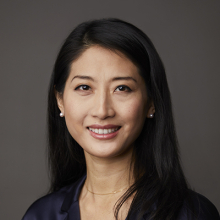
 Mary Kang
· 4 previous affiliations
- McGill UniversitySince 2018
- Associate Professor · Since 2024
- Assistant Professor · 2018–2024
- Stanford University2014–2017
- Postdoc · 2014–2017
- Princeton University2009–2014
- PhD student · 2009–2014
- University of Waterloo2004–2006
- MS student · 2004–2006
Research Overview
Mary Kang focuses on the intersection of groundwater hydrology, greenhouse gas emissions, and the environmental impacts of energy systems. Her work integrates field measurements, geospatial data analysis, and numerical modeling to characterize the subsurface-atmosphere exchange of fluids, with a particular emphasis on methane leakage from legacy energy infrastructure. As the Canada Research Chair in her field, she investigates the technical and policy challenges associated with the energy transition, specifically regarding the management of abandoned oil and gas wells and the protection of deep groundwater resources.
Research Trajectory
The evolution of Kang’s research reflects a transition from localized groundwater modeling to large-scale environmental assessments of energy infrastructure. Her early work was grounded in classical subsurface hydrology, focusing on the mathematical and statistical challenges of predicting contaminant transport. During this period, she addressed the uncertainties inherent in estimating contaminant arrival times at drinking water wells, emphasizing the need for precautionary decision-making in exposure assessments. This foundational work established her expertise in parameter estimation and uncertainty analysis within porous media.
Following her doctoral work, Kang’s focus shifted toward the environmental implications of large-scale energy development, particularly in California. She began investigating the characterization of deep groundwater aquifers, which are often overlooked but represent potential future water sources. This research highlighted the spatial overlap between oil and gas extraction activities and usable groundwater. A significant component of this phase involved evaluating the "base of fresh water" (BFW), a regulatory threshold used to determine the depth to which groundwater must be protected. Her analysis revealed significant discrepancies between regulatory definitions and actual salinity distributions, suggesting that current management frameworks may leave substantial volumes of usable groundwater vulnerable to contamination from energy-related activities.
In recent years, Kang has emerged as a leading voice in the quantification of methane emissions from non-producing and "orphaned" oil and gas wells. This work marks a methodological shift toward combining large-scale statistical analysis of state and provincial databases with direct field measurements. Her research has identified a systematic underestimation of methane leakage in national inventories in both the United States and Canada. By analyzing the attributes of high-emitting wells, she has contributed to the development of more effective mitigation strategies, such as prioritizing specific well types for plugging. Most recently, her work has expanded to explore the repurposing of abandoned infrastructure, such as evaluating the geothermal energy potential of decommissioned wells, thereby linking environmental remediation with sustainable energy development.
Current Directions
Kang’s current research program is characterized by three primary pillars: high-resolution methane quantification, the assessment of well integrity, and the environmental dimensions of the energy transition.
A central focus of her current work is the development and validation of methane measurement techniques. This includes testing component-level quantification methods, such as static chambers, and comparing them against mobile in situ concentration measurements and Gaussian plume modeling. These efforts aim to harmonize measurement methodologies to provide more accurate data for high-resolution methane inventories.
Furthermore, Kang is investigating the geochemical signatures of methane to distinguish between different subsurface origins. This research is critical for understanding the mechanisms of leakage—whether methane is migrating from deep target formations or shallower intermediate zones—which in turn informs the engineering requirements for effective well plugging.
Finally, her lab is increasingly involved in evaluating the trade-offs of various methane emission intensity metrics. As regulators and investors move toward "near-zero" emission targets, Kang’s work provides the analytical rigor necessary to ensure that these metrics accurately reflect environmental impact and do not inadvertently mask significant leakage sources.
Representative Work
In Parameter Estimation and Uncertainty Analysis of Contaminant First Arrival Times at Household Drinking Water Wells, Kang established a framework for assessing human exposure to groundwater contaminants. The study emphasized that while early arrival times may be low-likelihood events, they are critical for conservative environmental management. This work utilized groundwater flow and transport models to demonstrate how parameter uncertainty influences the duration and frequency of estimated exposure.
Kang’s research on California’s subsurface resources, detailed in Salinity of deep groundwater in California: Water quantity, quality, and protection, provided a comprehensive analysis of the intersection between oil and gas fields and deep aquifers. By analyzing thousands of chemical and geological data points, the study expanded the known volume of groundwater in California’s Central Valley and identified significant risks posed by industrial activities in deep subsurface zones. This was followed by Base of fresh water, groundwater salinity, and well distribution across California, which challenged the efficacy of using a fixed depth to manage groundwater. The findings showed that a substantial percentage of groundwater measurements exceeding fresh-water salinity thresholds occurred at depths shallower than the defined base of fresh water, complicating sustainable management efforts.
Addressing the scale of the legacy well problem, Documented Orphaned Oil and Gas Wells Across the United States provided a national-scale quantification of unplugged, non-producing wells. The research identified over 120,000 documented orphaned wells and developed a framework for optimizing mitigation efforts based on the environmental and health risks these wells pose. This work underscored the public responsibility for mitigating infrastructure left by insolvent owners.
In the Canadian context, Kang served as the senior author on Highly Uncertain Methane Leakage from Oil and Gas Wells in Canada Despite Measurement and Reporting. This study modeled wellbore methane emissions in British Columbia and Alberta, revealing that incomplete industry reporting and varying model assumptions lead to significant discrepancies in government inventories. The research highlighted the critical need for improved data transparency and standardized modeling to address well integrity issues.
More recently, Sevenfold Underestimation of Methane Emissions from Non-producing Oil and Gas Wells in Canada utilized a national-scale direct measurement database to demonstrate that actual methane emissions from non-producing wells are significantly higher than those reported in Canada’s National Inventory Report. This work provides a data-driven basis for revising national greenhouse gas estimates and informs the prioritization of high-emitting wells for environmental remediation.
Profile updated
Loading new papers…
Other researchers whose papers cluster into the same research directions — a proxy for overlapping technical interests and shared intellectual neighborhoods.
See something wrong? Report a mistake