

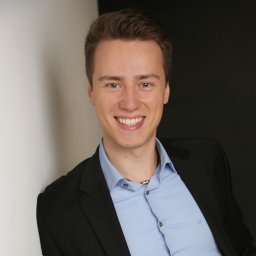
 Marvin Pförtner
· 3 previous affiliations
- University of TübingenSince 2019
- PhD Student · Since 2022
- Doktor, Computer Science · 2022
- Student Research Assistant · 2020–2022
- Master of Science, Machine Learning · 2019–2022
- Daimler (Germany)2018–2020
- Working Student · 2019–2020
- Development Engineer · 2019
- Research Intern · 2018–2019
- RWTH Aachen University2015–2018
- Student Research Assistant · 2017–2018
- Undergrad student · 2015–2018
- Student Teaching Assistant · 2016–2017
Research Overview
Marvin Pförtner focuses on Bayesian machine learning, numerical analysis, and scalable Gaussian process inference. His early work established foundational software and theoretical frameworks for treating numerical approximation as a statistical inference problem. Currently, he investigates probabilistic numerical methods for partial differential equations and Bayesian deep learning techniques to quantify uncertainty in scientific computing.
Research Trajectory
Pförtner's research trajectory begins with foundational contributions to the area of Probabilistic Numerical Methods for Statistical Inference. In 2021, he contributed to the development of ProbNum: Probabilistic Numerics in Python, an open-source library that treats numerical tasks like linear algebra and differential equations as statistical inference problems. This framework allows researchers to quantify the uncertainty that arises from finite computational budgets. Building on this theme of computational uncertainty, he collaborated on Posterior and Computational Uncertainty in Gaussian Processes in 2022, which advanced the research direction of Efficient Variance Estimation via Iterative and Structural Inference. This work provided a consistent method for estimating the combined uncertainty stemming from both limited data and the approximations required to scale Gaussian processes.
In 2023, Pförtner led research bridging Gaussian processes and mechanistic physical models. He introduced Physics-Informed Gaussian Process Regression Generalizes Linear PDE Solvers, which demonstrated that classical numerical solvers for partial differential equations (PDEs) can be generalized using probabilistic regression. This approach allows for the quantification of parameter and measurement uncertainty, which classical solvers often ignore, thereby making these solvers more robust when embedded into larger scientific models. The same year, he published Sample Path Regularity of Gaussian Processes from the Covariance Kernel, addressing a persistent gap in Gaussian process theory. This work analyzed the roughness of sample paths relative to the smoothness of their defining covariance kernels, providing a deeper theoretical understanding of the functions generated by these ubiquitous probabilistic models.
By 2024, Pförtner's focus expanded to deep learning and large-scale probabilistic PDE simulators. He participated in research on Uncertainty Quantification for Fourier Neural Operators, exploring methods for generating ensemble predictions in medium-term weather forecasting, where local dynamics are often lost due to coarse data resolution. He also collaborated on FSP-Laplace: Function-Space Priors for the Laplace Approximation in Bayesian Deep Learning, contributing to the broader area of Stochastic Process Priors for Bayesian Neural Network Behavior. This framework allowed domain-specific knowledge, such as smoothness or periodicity, to be baked directly into Bayesian Neural Networks by placing priors on the function space rather than on uninterpretable weights.
To address the computational bottlenecks of probabilistic PDE solvers, Pförtner developed Scaling up Probabilistic PDE Simulators with Structured Volumetric Information in 2024. This work introduced GP-FVM, a framework that replaces point-wise observations with volumetric integrals. By leveraging structured grids and Kronecker-product linear algebra, this research advanced the direction of Scalable Kernel Inference via Kronecker Covariance Factoring, enabling uncertainty-aware simulations at scales previously unreachable for Gaussian process models.
In 2025, Pförtner continued to refine scalable inference mechanisms for high-dimensional physical systems. He collaborated on Flexible and Efficient Probabilistic PDE Solvers through Gaussian Markov Random Fields, addressing the challenge of scaling Bayesian statistical models by utilizing sparse precision matrices instead of dense covariance matrices. He also introduced Computation-Aware Kalman Filtering and Smoothing, proposing a probabilistic numerical method for high-dimensional Gauss-Markov models that explicitly models the error introduced by computational approximations in spatiotemporal regression. Finally, his work expanded into the area of Mitigating Compounding Errors in Autoregressive Physical Simulators with Linearization Turns Neural Operators into Function-Valued Gaussian Processes. This research introduced LUNO, a framework that transforms trained neural operators into function-valued Gaussian processes via model linearization, providing reliable, resolution-agnostic uncertainty quantification for PDE solvers without requiring model retraining.
Current Directions
Pförtner's most recent work investigates scalable inference mechanisms and uncertainty quantification for high-dimensional physical systems and neural operators. A major focus is the development of flexible probabilistic PDE solvers that can handle large-scale problems by leveraging sparse precision matrices and structured linear algebra. He is actively exploring how to mitigate computational bottlenecks in classical inference algorithms, such as Kalman filtering, by explicitly modeling the error introduced by computational approximations. Additionally, his current research addresses the intersection of deep learning and mechanistic modeling, seeking to transform trained neural operators into probabilistic frameworks that provide reliable, resolution-agnostic uncertainty quantification for complex scientific simulations.
Profile updated
Loading new papers…
Other researchers whose papers cluster into the same research directions — a proxy for overlapping technical interests and shared intellectual neighborhoods.
See something wrong? Report a mistake