

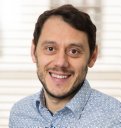
 Martin Urschler
· 4 previous affiliations
- Medical University of GrazSince 2022
- Associate Professor · Since 2025
- Assistant Professor · 2022–2024
- University of Auckland2019–2022
- Lecturer · 2019–2022
- Ludwig Boltzmann Institute for Clinical Forensic Imaging2015–2018
- Key Researcher · 2015–2018
- Postdoc · 2008–2014
- PhD student · 2004–2007
Research Overview
Martin Urschler focuses on medical image analysis, anatomical landmark localization, and automated biological age estimation. His early research emphasized nonlinear image registration techniques before transitioning to deep learning architectures for complex segmentation and localization tasks. His current work investigates generative models for synthetic data augmentation and few-shot learning approaches to reduce annotation dependencies in clinical imaging.
Research Trajectory
Martin Urschler’s early research addressed foundational challenges in medical image registration, particularly the alignment of complex anatomical structures subject to nonlinear deformation. He introduced a novel variational framework in Automatic Point Landmark Matching for Regularizing Nonlinear Intensity Registration: Application to Thoracic CT Images (2006), which combined sparse landmark correspondences with intensity-based registration to overcome the limitations of thin-plate spline interpolation. Expanding on this mathematical foundation, he subsequently developed fast and stable numerical schemes for registration, utilizing Total Variation regularization and duality principles to handle discontinuities and intensity variations in CT lung data, as detailed in A Duality Based Algorithm for TV- L 1-Optical-Flow Image Registration (2007).
By the mid-2010s, his focus shifted toward the automated assessment of biological and legal age using magnetic resonance imaging (MRI), a critical advancement for forensic and clinical applications seeking to avoid the ionizing radiation associated with traditional X-rays. He directed the development of automated pipelines for this purpose, beginning with Fully Automatic Bone Age Estimation from Left Hand MR Images (2014). This was closely followed by Determination of legal majority age from 3D magnetic resonance images of the radius bone (2014), which utilized a linear regression model based on the epiphyseal gap volume. As deep learning began to transform medical computer vision, his group integrated these techniques into their age estimation pipelines. In Automated Age Estimation from Hand MRI Volumes Using Deep Learning (2016), he proposed the use of deep convolutional neural networks (DCNNs) to mimic the visual staging schemes used by radiologists, significantly reducing the mean error in biological age estimation.
Concurrently, Urschler advanced the state of the art in anatomical landmark localization by modeling the spatial relationships between anatomical structures. He proposed the SpatialConfiguration-Net in Regressing Heatmaps for Multiple Landmark Localization Using CNNs (2016), an architecture that combined local appearance responses with global spatial configurations via heatmap regression. This approach was further refined and formalized in Integrating spatial configuration into heatmap regression based CNNs for landmark localization (2019). The utility of modeling relative anatomical positions was also extended to complex segmentation tasks; in Multi-label Whole Heart Segmentation Using CNNs and Anatomical Label Configurations (2017), his group developed a two-stage fully convolutional network pipeline that first localized a bounding box around the heart and then segmented structures by learning anatomically feasible configurations from relative label positions.
Moving into the late 2010s and early 2020s, his research broadened to encompass diverse segmentation architectures and large-scale benchmarking. He directed work on microscopic image analysis in Segmenting and tracking cell instances with cosine embeddings and recurrent hourglass networks (2019). Recognizing the need for standardized evaluation in the field, he participated in a large-scale collaboration to establish VerSe: A Vertebrae labelling and segmentation benchmark for multi-detector CT images (2021), contributing to the broader research area of Native 3D Volumetric Feature Extraction by evaluating algorithms against morphological variations in the spine. Continuing to explore novel neural network paradigms, he proposed OnlyCaps-Net, a Capsule only Based Neural Network for 2D and 3D Semantic Segmentation (2022), which introduced new squashing functions to make capsule networks competitive with traditional CNNs in multi-label semantic segmentation tasks.
Most recently, Urschler’s trajectory has addressed the persistent bottleneck of data scarcity in medical machine learning. In Synthetic Augmentation for Anatomical Landmark Localization Using DDPMs (2024), his group explored denoising diffusion probabilistic models to generate high-quality synthetic medical images and corresponding annotations, offering a robust alternative to traditional data augmentation. Similarly, he collaborated on Gaussian Process Emulators for Few-Shot Segmentation in Cardiac MRI (2024), integrating few-shot learning with U-Net architectures and Gaussian Process Emulators to drastically reduce the dependency on large, labeled datasets for cardiac function assessment. Addressing the risk of silent model failures under domain and population shifts, Urschler's group introduced post-hoc failure detection schemes in Foundation Model and Radiomics Distance Scores for Post-Hoc Segmentation Failure Detection (2026), leveraging Mahalanobis distance scores derived from radiomic shape features or frozen foundation model representations without requiring internal model access or image registration.
Current Directions
The most recent papers in the evidence indicate a strong focus on mitigating the high costs and tedious nature of medical data acquisition and annotation. Recent work investigates advanced generative AI and probabilistic modeling to train highly accurate medical vision systems with limited ground-truth data. Specifically, this involves the application of denoising diffusion probabilistic models (DDPMs) for synthetic data augmentation in anatomical landmark localization, as well as the integration of Gaussian Process Emulators into few-shot learning frameworks for complex tasks like cardiac MRI segmentation. Additionally, their recent research addresses post-hoc failure detection and quality control for deployed black-box segmentation models under clinical distribution shifts.
Profile updated
Loading new papers…
Other researchers whose papers cluster into the same research directions — a proxy for overlapping technical interests and shared intellectual neighborhoods.
See something wrong? Report a mistake