

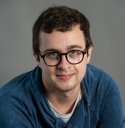
 Martin Nicolas Everaert
· 11 previous affiliations
- École Polytechnique Fédérale de LausanneSince 2019
- Assistant-doctorant · Since 2021
- Doctorat, Informatique · 2021–2025
- MS student · 2019–2021
- intern · 2025
- International Computer Vision Summer School (ICVSS)2024
- Vision par ordinateur (Computer Vision) · 2024
- Thales (Canada)2021
- Intern · 2021
- CentraleSupélec2017–2021
- MS student · 2017–2021
- CEA Paris-Saclay - Etablissement de Saclay2019
- Stage d’élève-ingénieur · 2019
- Intern · 2019
- TCL2018
- Stage opérateur (Première année d’école d’ingénieurs) · 2018
- Université Paris-Sud2017–2018
- Undergrad student · 2017–2018
- TCL (China)2018
- Intern · 2018
- Lycée Saint-Louis2015–2017
- Undergrad student · 2015–2017
Research Overview
Martin Nicolas Everaert focuses on computer vision and generative modeling, with a primary emphasis on the adaptation of deep learning models to non-photorealistic domains and the optimization of text-to-image diffusion pipelines. His research explores the intersection of image-to-image translation, monocular depth estimation, and the architectural biases of diffusion models to improve style matching and control in synthetic image generation. By investigating how models interpret and generate artistic content, Everaert’s work addresses fundamental challenges in sample efficiency, domain adaptation, and the exploitation of latent signal discrepancies.
Research Trajectory
Everaert’s early research, beginning around 2021, focused on the technical challenges of interpreting non-photorealistic imagery, specifically within the comics domain. This work addressed the inherent difficulties of monocular depth estimation in artistic media, where ground-truth depth annotations are absent and visual styles vary significantly in terms of sparsity and noise. During this period, he contributed to methods that utilized unsupervised image-to-image translation to bridge the gap between artistic styles and natural images, allowing models to leverage existing depth datasets from the physical world.
Starting in 2023, Everaert’s focus shifted toward the burgeoning field of latent diffusion models. His work in this area has been characterized by an effort to make large-scale generative models more accessible and controllable. He has specifically targeted the problem of style adaptation, moving away from computationally expensive fine-tuning processes toward more sample-efficient methods. This transition involved a deep dive into the internal mechanics of models like Stable Diffusion, identifying how initial latent tensors and inference-time biases influence the final output.
His most recent work (2023–2024) investigates the "signal-leak bias" within diffusion pipelines. Rather than treating these biases as errors to be corrected, Everaert’s research demonstrates how they can be exploited to provide users with finer control over image attributes such as brightness, color, and stylistic fidelity. This trajectory reflects a broader interest in understanding the discrepancy between training and inference distributions to improve the precision of generative AI.
Representative Work
Everaert’s contributions to the field are documented across several key publications that highlight his evolution from image interpretation to generative control.
In the domain of non-photorealistic computer vision, Everaert co-authored research on Estimating Image Depth in the Comics Domain. This work addresses the lack of depth data in artistic media by employing an unsupervised image-to-image translation framework. By translating comic panels into a natural image domain, the researchers were able to apply an attention-guided monocular depth estimator trained on real-world data. A significant technical contribution of this work was the model's ability to distinguish between textual elements (speech bubbles and captions) and visual content, thereby reducing artifacts in the resulting depth maps. This research established a foundation for handling the stylistic variance and noise typical of hand-drawn or digital art.
As a lead researcher in generative modeling, Everaert introduced Diffusion in Style, a method designed to adapt Stable Diffusion to specific artistic styles using minimal target data. The core insight of this work is that the style of a generated image is heavily influenced by the initial latent tensor. Everaert demonstrated that traditional fine-tuning is often slow and impractical when only a few style samples are available. By adapting the initial latent tensor alongside the model weights, the "Diffusion in Style" approach achieves significantly higher sample efficiency and faster convergence than previous methods. This work represents a shift toward making high-quality style transfer more computationally feasible for specialized domains.
Everaert has also explored the expansion of model capabilities through text-based interventions. In VETIM: Expanding the Vocabulary of Text-to-Image Models only with Text, he investigated methods for broadening the conceptual range of generative models without requiring additional image-based training data. This research contributes to the ongoing effort to make text-to-image models more versatile and responsive to complex linguistic prompts.
His recent investigations into the internal mechanics of generative pipelines led to the development of Exploiting the Signal-Leak Bias in Diffusion Models. This research identifies a systematic bias in the inference pipeline of most diffusion models, caused by a signal leak that deviates from the expected noise distribution. Everaert’s work shows that this bias is particularly pronounced when models are fine-tuned for specific styles, often leading to sub-optimal results. Rather than attempting to eliminate this leak, the proposed method exploits it to allow for greater control over the generated output. This enables the generation of images with more varied brightness levels and improved color matching, providing a technical solution to the common problem of "washed out" or stylistically inconsistent generations in diffusion-based workflows.
Through these projects, Everaert has established a research program that balances the theoretical understanding of model biases with practical applications in artistic and generative domains. His work continues to focus on the refinement of diffusion processes and the development of more efficient, controllable AI tools for visual synthesis.
Profile updated
| Title | Venue | Year |
|---|---|---|
| Exploiting the Signal-Leak Bias in Diffusion Models | WACV | 2024 |
| Diffusion in Style | ICCV | 2023 |
| VETIM: Expanding the Vocabulary of Text-to-Image Models only with Text | BMVC | 2023 |
| Estimating Image Depth in the Comics Domain | WACV | 2021 |
Loading new papers…
Other researchers whose papers cluster into the same research directions — a proxy for overlapping technical interests and shared intellectual neighborhoods.
See something wrong? Report a mistake