

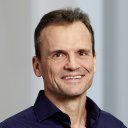
 Markus Püschel
· 1 previous affiliation
- ETH ZurichSince 2010
- Full Professor · Since 2010
Research Overview
Markus Püschel focuses on program generation for performance, algebraic signal processing, and the intersection of Fourier analysis with machine learning. His foundational work established automated methods for deriving highly optimized computing kernels and generalized linear signal processing through algebraic frameworks. More recently, his research addresses causal structure learning, directed graph signal processing, and the application of sparse Fourier techniques to combinatorial markets and neural network verification.
Research Trajectory
His early research concentrated on automating the creation of highly optimized computing kernels for digital signal processing. He developed Automatic derivation and implementation of signal processing algorithms and subsequently contributed to SPIRAL: Code Generation for DSP Transforms, establishing a long-standing methodology for hardware-aware program generation. In the mid-2000s, he introduced a comprehensive mathematical framework in Algebraic Signal Processing Theory: An Overview. This work axiomatically built signal processing on top of signal models—defined by algebras of filters and modules of signals—encompassing standard time processing while generalizing to multidimensional space processing.
By the late 2010s, his research expanded into program analysis and the certification of machine learning models, contributing to the area of Formal Verification of Adversarial Robustness with work such as An abstract domain for certifying neural networks.
Entering the 2020s, he explored novel forms of Fourier analysis and graph signal processing. He addressed a fundamental bottleneck in the research direction of Spectral Analysis of Directed Graphs by developing algorithms to make directed graph shift operators diagonalizable. By leveraging matrix perturbation theory, this approach, detailed in Digraph Signal Processing With Generalized Boundary Conditions, enabled stable spectral analysis for large-scale networks. His group also applied Fourier techniques to combinatorial problems, introducing efficient algorithms for modeling complex interactions in Learning Set Functions that are Sparse in Non-Orthogonal Fourier Bases. This mathematical approach extended into the area of Learning to Clear Combinatorial Markets, where he and collaborators designed a hybrid iterative combinatorial auction that mitigates the curse of dimensionality by treating bidder preferences as Fourier-sparse set functions in Fourier Analysis-based Iterative Combinatorial Auctions.
Between 2022 and 2023, his focus on Fourier-sparse learning intersected with causal discovery. He leveraged causal Fourier analysis to learn directed acyclic graphs (DAGs) from data. In Learning DAGs from Fourier-Sparse Data, he proposed minimizing the L1 norm of the spectrum to recover DAGs from linear structural equation models. He further demonstrated that the classical Moebius transform acts as a causal Fourier transform on DAGs in Learning Fourier-Sparse Functions on DAGs, applying this framework to dynamic contact tracing networks. Advancing the broader area of Differentiable Acyclicity Constraints for Causal Structure Learning, his group introduced the SparseRC algorithm in Learning DAGs from Data with Few Root Causes, which recovers graph structures by assuming data is driven by a few root cause events rather than dense independent noise.
Continuing his long-standing theme of program generation, his group developed QIGen in Generating Efficient Kernels for Quantized Inference on Large Language Models, an automatic system for creating custom CPU kernels for quantized LLMs. This focus on automated performance optimization recently extended to cryptography with SPHGen: A Program Generator for Fast Polynomial Hash Functions, a tool designed to generate high-performance, verified polynomial hash functions that rival hand-optimized assembly.
Simultaneously, his research in causal discovery has advanced to handle complex time-series data. He introduced the SpinSVAR framework in Learning DAGs and Root Causes from Time-Series Data and further detailed its maximum likelihood estimator in SpinSVAR: Estimating Structural Vector Autoregression Assuming Sparse Input. By modeling system inputs as independent Laplacian variables rather than Gaussian noise, this work enforces sparsity and leverages GPU acceleration to scale structural vector autoregression to thousands of nodes, successfully identifying causal links in high-dimensional environments.
More recently, Püschel has investigated machine unlearning and concept erasure in generative models through generalized loss formulations. In BEM: Learning Bregman Divergences for Concept Erasure in Flow Matching Models, they co-developed a bi-level optimization approach that learns Bregman divergences to erase unsafe or copyrighted concepts in flow matching models while preserving overall utility. Extending this principle to training-data memorization, BEND: Spectral Bregman Losses for Multi-Image Unlearning in Diffusion Models introduces spectral Bregman divergences learned via a bilevel loop to erase multiple memorized images simultaneously without degrading generative quality.
Current Directions
Recent work indicates a focus spanning scalable causal structure learning, domain-specific program generation, and machine unlearning in generative models via learned Bregman divergences. In the realm of causal inference, current work investigates structural vector autoregression for high-dimensional time-series data, specifically exploring how sparse input assumptions and Laplacian noise models can improve the accuracy and scalability of causal discovery in complex systems. Parallel to this mathematical modeling, ongoing research in systems and performance optimization continues to advance automated code generation. This includes developing precise performance models to automatically synthesize and verify highly optimized kernels for modern cryptographic libraries and machine learning inference, bridging the gap between high-level algorithmic specifications and hardware-aware assembly code.
Profile updated
Loading new papers…
Other researchers whose papers cluster into the same research directions — a proxy for overlapping technical interests and shared intellectual neighborhoods.
See something wrong? Report a mistake