

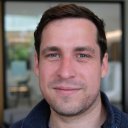
 Markus Marks
· 7 previous affiliations
- Researcher · Since 2026
- FAIR (Meta AI)Current
- Current
- Meta (United States)2025–2026
- Researcher · 2025–2026
- California Institute of Technology2022–2024
- Postdoc · 2022–2024
- ETH Zurich2015–2020
- PhD student · 2015–2020
- Imperial College London2013–2014
- MS student · 2013–2014
- Technische Universität Dresden2010–2013
- Undergrad student · 2010–2013
Research Overview
Markus Marks focuses on computer vision and machine learning, particularly their applications to scientific discovery in biology and medicine. His trajectory spans early work in neurotechnology and animal behavior tracking to the development of large-scale self-supervised models for biomedical data. Currently, his research addresses foundation models for cell segmentation and self-supervised learning techniques that reduce the need for manual data annotation.
Research Trajectory
Markus Marks's early research engaged with neurotechnology and preclinical imaging, focusing on methods to improve data acquisition and analysis. In 2020, he participated in a collaborative effort to develop Non-invasive molecularly-specific millimeter-resolution manipulation of brain circuits by ultrasound-mediated aggregation and uncaging of drug carriers, which demonstrated a method for delivering drugs to specific brain regions without surgical intervention. Concurrently, he explored foundational machine learning problems, co-developing Robust Disentanglement of a Few Factors at a Time. This work introduced population-based training for variational autoencoders to improve the consistency and quality of disentangled representations. Continuing his work in preclinical imaging, he contributed to An optimized registration workflow and standard geometric space for small animal brain imaging in 2021, helping to establish a transparent, benchmarked registration pipeline for mouse MRI data.
Moving into 2022, his focus shifted toward the automated analysis of complex animal behavior using deep learning. He introduced SIPEC in Deep-learning-based identification, tracking, pose estimation and behaviour classification of interacting primates and mice in complex environments. This architecture enabled the classification of individual and social behaviors directly from raw video frames, overcoming challenges in tracking multiple animals in complex settings without continuous human supervision. Building on this theme, he co-developed MABe22: A Multi-Species Multi-Task Benchmark for Learned Representations of Behavior in 2023. This large-scale benchmark dataset was designed to evaluate unsupervised and self-supervised learning models on multi-species interactions, intersecting with the broader research direction of Linear Probing for Evaluating Pretrained Representations.
By 2024, his work increasingly emphasized self-supervised learning (SSL), foundation models, and model interpretability. He investigated the foundational properties of SSL in Probing the Mid-level Vision Capabilities of Self-Supervised Learning, introducing benchmark protocols to assess how well these models handle generic object localization and 3D geometric understanding. Applying SSL to his ongoing interest in biological tracking, he guided the development of Learning Keypoints for Multi-Agent Behavior Analysis using Self-Supervision. This research presented B-KinD-multi, an approach that leverages pre-trained video segmentation models to discover keypoints in multi-agent scenarios, effectively removing the need for manual annotations when studying interacting organisms of the same species.
During this period, he also explored generative models and network interpretability. In Text-Image Alignment for Diffusion-Based Perception, he and his collaborators demonstrated that automatically generated captions could significantly enhance cross-attention maps and perceptual performance in diffusion models. Addressing the need for interpretable AI, he co-authored Less is More: Discovering Concise Network Explanations, which introduced a method to generate diverse, human-comprehensible visual explanations for deep neural image classifiers by optimizing for conciseness.
In 2025 and 2026, his research consolidated around the application of large-scale models to specialized, noisy, or domain-specific data. He led a comprehensive evaluation of SSL methodologies in A Closer Look at Benchmarking Self-supervised Pre-training with Image Classification, addressing the feasibility of evaluating pre-trained models across diverse downstream tasks. Expanding into foundation models for biology, he contributed to CellSAM: a foundation model for cell segmentation, which adapted the Segment Anything Model to achieve robust performance across various cell types and imaging modalities. Most recently, he directed research on SAVeD: Learning to Denoise Low-SNR Video for Improved Downstream Performance, introducing a self-supervised method that exploits motion differences to denoise low-signal-to-noise-ratio videos, such as ultrasound, without requiring clean reference data.
Current Directions
The most recent papers in the evidence indicate a strong focus on adapting generalized artificial intelligence techniques to the specific constraints of biological and medical imaging. A primary theme is the development of domain-specific foundation models that can generalize across diverse imaging modalities, significantly reducing the bottleneck of manual data annotation in bioimage analysis. Additionally, current work investigates self-supervised methods for processing highly noisy, low-signal-to-noise-ratio video data. By leveraging inherent statistical properties—such as motion differences between foreground and background—these approaches aim to improve downstream perception tasks like object detection and tracking in challenging environments where clean reference data is unavailable.
Profile updated
Loading new papers…
Other researchers whose papers cluster into the same research directions — a proxy for overlapping technical interests and shared intellectual neighborhoods.
See something wrong? Report a mistake