

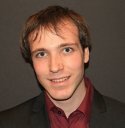
 Markus Kliegl
· 9 previous affiliations
- Nvidia (United States)Since 2024
- Researcher · Since 2024
- Cosavant2023–2024
- Co-Founder · 2023–2024
- Apple (United States)2019–2023
- Researcher · 2019–2023
- Google DeepMind (United Kingdom)2018–2019
- Research Engineer · 2018–2019
- Google (United Kingdom)2018–2019
- Researcher · 2018–2019
- Baidu (China)2016–2018
- Research Scientist · 2016–2018
- Princeton University2012–2016
- PhD student · 2012–2016
- University of Chicago2010–2011
- MS student · 2010–2011
- Swarthmore College2006–2010
- Undergrad student · 2006–2010
Research Overview
Markus Kliegl focuses on efficient neural network architectures, embedded speech recognition, and data curation strategies for language model pre-training. His early work addressed the optimization of recurrent and convolutional models for small-footprint devices, emphasizing low-latency inference and parameter efficiency. More recently, his research has expanded to automated data mixture bootstrapping for large-scale language models.
Research Trajectory
Markus Kliegl's research trajectory begins with a strong focus on optimizing deep learning models for resource-constrained environments, particularly in the domain of audio and speech processing. In 2017, he contributed to the development of efficient architectures for embedded devices, as detailed in Convolutional Recurrent Neural Networks for Small-Footprint Keyword Spotting. This work combined the local feature extraction capabilities of convolutional neural networks with the temporal context modeling of recurrent neural networks. The resulting system achieved high accuracy with a significantly reduced parameter count, advancing the research direction of Efficient Neural Architectures for Always On Keyword Spotting and the broader area of Hybrid Convolutional Recurrent Networks for Audio Processing. This research also touched upon themes in the area of Aligning Model Capacity with Data Scale and the research direction of Alignment Free Sequence Training with Connectionist Temporal Classification.
During the same period, he led efforts to accelerate large-scale speech recognition models for embedded deployment. In Trace norm regularization and faster inference for embedded speech recognition RNNs, he introduced a dual approach to model optimization. By applying trace norm regularization during training, the method automatically discovered low-rank structures within the network, contributing to the area of Automated Layer-wise Sparsity Allocation for Deep Networks. To translate these theoretical compressions into practical speedups, the work utilized custom ARM assembly kernels optimized for small batch sizes. This practical implementation highlighted the gap between theoretical metrics and actual hardware performance, a challenge central to the research direction exploring Why Theoretical FLOPs Fail to Predict Real Latency.
Following this foundational work in embedded speech systems, his research focus later shifted toward the optimization of large-scale foundation models. In 2025, he collaborated on Nemotron-CLIMB: Clustering-based Iterative Data Mixture Bootstrapping for Language Model Pre-training. This research addressed the critical challenge of data curation for language models by introducing an automated framework that discovers optimal data mixtures. By semantically clustering data and iteratively refining the mixtures using proxy models, the framework enables efficient domain adaptation without relying on manual curation.
Current Directions
The most recent papers in the evidence indicate a shift toward the data-centric challenges of large language model pre-training. Current work investigates automated methodologies for data curation, specifically focusing on how to dynamically bootstrap and refine data mixtures. By leveraging semantic clustering and iterative proxy model evaluation, this research aims to improve model performance and facilitate efficient domain adaptation without the need for extensive manual data labeling or curation.
Profile updated
Loading new papers…
Other researchers whose papers cluster into the same research directions — a proxy for overlapping technical interests and shared intellectual neighborhoods.
See something wrong? Report a mistake